Key takeaways:
- YouTube Shorts offers better long-term growth, search discoverability, and monetization.
- TikTok excels in virality, engagement, and trend-driven content.
- The best platform depends on your goals: sustainable audience building vs. rapid exposure.
Short-form video platforms now play a central role in how businesses connect with potential customers online. A Wyzowl research indicates that approximately 63% of consumers prefer short-form video when exploring products or services, underscoring the significant influence these platforms have on the buying journey.
Among the platforms leading this shift are TikTok and YouTube Shorts, both of which offer powerful ways to publish bite-sized content. These platforms differ in how they drive discovery, engagement, monetization, and long-term growth. For businesses, choosing the right platform comes down to aligning these strengths with their specific goals and resources.
This comparison breaks down YouTube Shorts vs. TikTok across key areas, including features, audience demographics, monetization options, and performance potential. Whether your focus is building a sustainable audience, capitalizing on trends, or driving brand awareness, this guide will help you decide which platform makes the most sense for your strategy.
What are YouTube Shorts?
YouTube Shorts is YouTube’s short-form video feature that lets creators publish vertical, bite-sized videos up to three minutes long.
It was first introduced in 2020, with a wider rollout in 2021, initially limiting videos to 60 seconds. Since then, the format has evolved as YouTube expanded Shorts to support longer short-form video content.
Shorts are designed primarily for vertical viewing on mobile devices and commonly feature captions, music, voiceovers, or simple edits that make videos easy to consume without sound.
While Shorts can now be longer, performance data and creator guidance suggest that shorter videos often perform best, with many high-performing Shorts falling well under one minute. This makes the format especially useful for quick tips, product highlights, behind-the-scenes clips, and trend-driven content.
YouTube Shorts pros and cons
YouTube Shorts offers several advantages for businesses, especially those already active on YouTube. However, it also has limitations that can impact how quickly content gains traction. The table below highlights the key pros and cons at a glance.
| Pros | Cons |
|---|---|
Integrated into the broader YouTube ecosystem, allowing Shorts to support long-form videos and channel growth | Strong competition from established channels |
Strong search and discoverability through YouTube Search and recommendations | Weaker trend-driven discovery compared to TikTok |
Clear monetization options tied to YouTube’s existing creator programs | Requires consistency and patience to see long-term results |
Useful for long-term audience building and evergreen content | Shorts’ performance can be inconsistent for newer channels |
What is TikTok?
TikTok is a platform built around vertical, bite-sized content, where users discover videos primarily through an algorithm-driven “For You” feed. The platform enables creators to publish short videos designed to capture attention quickly.
TikTok was launched globally in 2017 and began gaining widespread popularity around 2019, as short-form video consumption surged worldwide. From the outset, the platform focused on short, highly engaging clips, initially limiting videos to shorter time frames before gradually increasing the maximum video length.
Today, TikTok supports videos up to 10 minutes long; however, most content on the platform remains much shorter and is optimized for quick viewing. Videos are typically vertical and often rely on trending sounds, captions, filters, and in-app effects that make content easy to create and consume.
While the platform supports longer video content, shorter clips tend to perform best on TikTok, especially those that capture viewers’ attention within the first few seconds. This makes the platform particularly well-suited for trend-driven content, quick product highlights, and creative storytelling designed to spark fast engagement.
TikTok pros and cons
TikTok is renowned for rapidly surfacing content and driving high engagement, even for new accounts. At the same time, its fast-paced, trend-driven nature can make long-term consistency more challenging. The table below summarizes the key advantages and limitations.
Pros | Cons |
|---|---|
Strong potential for rapid reach and viral exposure | Trends move quickly, making content short-lived |
High engagement through comments, shares, and replies | Requires frequent posting to stay visible |
Powerful discovery for new or smaller accounts | Limited long-term visibility once trends fade |
Built-in creative tools that make content easy to produce | Less control over content lifespan compared to YouTube |
YouTube Shorts vs TikTok: Key differences
YouTube Shorts and TikTok may look similar, but they offer distinct strengths in features, audiences, and growth opportunities. The comparison below outlines how each platform supports different business needs.
Category | YouTube Shorts | TikTok |
|---|---|---|
Platform features | Integrated with YouTube’s broader ecosystem, including channels, subscriptions, comments, Community posts, live streaming, Q&A stickers, and collaboration features | Built around short-form video with native features like Duet, Stitch, in-app effects, sound library, live streaming, and trend-based formats |
Userbase and target audience | Broader age range, with strong adoption among Millennials and Gen X; often appeals to users aged 25–44+; major markets include India, the U.S., and Brazil | Younger, with strong Gen Z and younger Millennial presence (18–34); major markets include the U.S., Brazil, and Indonesia |
Content creation opportunities | Supports educational, evergreen, behind-the-scenes, product explainers, and clips repurposed from long-form videos | Favors trend-driven content, challenges, reactions, storytelling, humor, and culturally relevant or timely formats |
Algorithm | Prioritizes watch time, viewer behavior, content relevance, and search intent; discovery often builds gradually over time | Heavily driven by user interaction signals such as likes, comments, shares, rewatches, and trend participation, enabling rapid discovery |
Engagement and analytics | Offers advanced YouTube Analytics, including views, likes, subscribers, traffic sources, audience retention, and revenue insights | Tracks views, likes, comments, shares, follower growth, and watch time, with strong real-time performance feedback |
Monetization | Integrated with the YouTube Partner Program, including ad revenue, memberships, Super Chats, and YouTube Premium revenue | Monetization includes creator programs, brand partnerships, live gifts, affiliate features, and TikTok Shop |
Advertising | Integrated with Google Ads, allowing Shorts ads to be managed alongside broader YouTube and search campaigns | Offers native ad formats such as In-Feed Ads, Spark Ads, and branded content designed to blend into the feed |
User interface and experience | Shorts appear within the YouTube app alongside long-form videos, subscriptions, and search results, creating multiple discovery paths | Centered around the “For You” feed, with a swipe-based experience designed for continuous content discovery |
Editing capabilities, tools, and interface | Basic in-app editing tools, creation suggestions, captions, and music, often paired with external editing tools | Robust native editing tools, effects, filters, templates, and sound integration designed for fast, mobile-first creation |
Copyright and intellectual property | Clear content ownership rules tied to YouTube’s long-standing copyright and Content ID systems | Encourages sound reuse and remixing, but enforces copyright policies through takedowns and moderation tools |
Platform features
Both TikTok and YouTube Shorts support the creation and discovery of short-form, vertical videos. Each platform offers tools for editing, audio, engagement, and live interaction. Where they differ is in how these features support either trend-driven participation or long-term content visibility.
TikTok’s key features and their uses
- In-app editing tools: TikTok offers a robust set of native editing features, including filters, effects, transitions, text overlays, voiceovers, and templates. These tools enable creators to produce polished, engaging videos directly within the app, often without requiring third-party editing software.
- Extensive sound library: The platform provides access to a large collection of licensed music, sound effects, and trending audio clips. Sounds play a significant role in discovery, often serving as the primary catalyst for viral trends.
- Duet feature: Duet allows users to record their video alongside another creator’s content. This feature encourages interaction and helps content spread across multiple audiences.
- Stitch feature: Stitch lets creators clip a portion of another video and incorporate it into their own, allowing them to react to, explain, or build on content that’s already gaining attention.
- Live streaming: TikTok Live enables real-time engagement through comments, Q&A sessions, and virtual gifts. For businesses, live streams are often used for product showcases, tutorials, and interactive promotions.
- Creator Care tools: TikTok has introduced updated tools that help creators filter offensive or unwanted comments, manage interactions, and maintain healthier conversations. These features support safer engagement and community management.
- Content Check (pre-posting review): Creators can preview whether a video may be eligible for broader recommendation before publishing, helping you adjust content to improve discoverability.
- Feed personalization and topic controls: New self-care and content control features allow you to customize your “For You” feed by adjusting topic preferences and filtering keywords. While user-focused, these tools influence how content is distributed and discovered.
- AI-assisted creation tools: TikTok is rolling out AI-powered features that help with planning and editing, such as outlining video structure or breaking longer clips into shorter, optimized segments, making content production faster and more efficient.
YouTube Shorts features and their uses
- Collab: YouTube Shorts’ Collab feature enables creators to invite up to five collaborators to appear in a YouTube or Shorts video. When collaborators accept the invitation, their names and subscribe buttons appear on the video, allowing it to be recommended to audiences of all participating creators and facilitating cross-promotion.
- Q&A Stickers: Creators can add question prompts directly into Shorts, encouraging viewers to respond in the comments. Select responses can be highlighted, helping drive interaction and engagement.
- Vertical live streaming (Shorts-friendly live): YouTube is expanding its mobile-first vertical live streaming feature, which integrates with the Shorts experience, allowing creators to reach audiences in real-time while remaining within the Shorts ecosystem.
- Remix: The Remix feature lets creators reuse content from existing YouTube videos, Shorts, or even photos to create new Shorts. Creators can clip segments, add their own commentary, or build new Shorts around existing visuals, making it easier to participate in conversations, react to content, or repurpose material.
- Built-in captions and accessibility tools: Automatic captions and language support help Shorts reach broader audiences and improve watchability, especially for viewers watching without sound.
- Integration with YouTube’s broader platform: Shorts benefit from YouTube’s channel structure, including subscriptions, comments, search, and recommendations, which enable short-form videos to support long-term content marketing strategies alongside long-form uploads.
| YouTube Shorts | TikTok |
|---|---|
| Part of a broader video ecosystem that supports long-term content visibility and search-driven discovery | Short-form-first platform designed for fast discovery, trends, and creative participation |
Userbase and target audience
Both TikTok and YouTube Shorts reach massive global audiences, but the type of users, how they consume content, and what they expect from creators differ in meaningful ways. Understanding which platforms naturally resonate with which audience can help you determine where your content is more likely to gain traction and drive results.
TikTok demographics
According to TikTok user demographics and engagement data from DataLook, the platform’s audience skews younger overall, with strong representation among young adults and high engagement levels across several global markets.
Age distribution (U.S.)
TikTok’s audience in the United States is concentrated among younger age groups, with the largest share comprising young adults.
- 25–34 years: 35% of users
- 18–24 years: 25% of users
Together, these groups comprise the majority (60%) of TikTok’s American audience, highlighting the platform’s core appeal to younger adults.
Older age groups are also engaging with the platform, with smaller but notable shares in the 35–44 (19%) and 45–54 (13%) brackets, and even 14% of those aged 55 or older, reflecting a growing multigenerational reach.
Gender distribution
TikTok’s global user base shows a slight skew toward female users.
- Female users: 56.2%
- Male users: 43.8%
This indicates a slightly female-leaning audience, which is consistent across multiple demographic studies for 2025.
User engagement
In terms of user engagement, Finland leads globally in TikTok usage, with the highest average monthly sessions per user.
- Finland: 587.7 average monthly sessions per user
- Austria: 552.3 average monthly sessions per user
- Croatia: 521.7 average monthly sessions per user
- Bulgaria: 489.1 average monthly sessions per user
- Romania: 481.1 average monthly sessions per user
YouTube Shorts demographics
The platform attracts a broader and more evenly distributed audience across age groups, reflecting YouTube’s long-established global user base and widespread adoption across generations.
Age distribution (global)
YouTube Shorts viewers span multiple age groups, with adults making up the largest share of the audience.
- 25–34 years: 21.5% of viewers
- 35–44 years: 17.9% of viewers
These two age groups together represent the largest portion of the YouTube Shorts audience, indicating strong adoption among working-age adults.
Younger viewers are also well represented, with 18–24-year-olds accounting for 15.7% of the audience. Older age groups continue to engage as well, including 45–54 (12.9%), 55–64 (9.4%), and 65+ (9.5%), highlighting YouTube Shorts’ broad, multigenerational reach.
Gender distribution
YouTube Shorts’ audience shows a slight skew toward male viewers.
- Male viewers: 54.3%
- Female viewers: 46.7%
This gender split reflects YouTube’s wider platform trends and remains relatively consistent across regions.
User engagement
YouTube Shorts benefits from YouTube’s massive global footprint and frequent daily usage across markets, with Shorts content appearing across search results, subscriptions, and recommendations within the main YouTube app.
- Over 200 billion daily views across YouTube Shorts globally
- Strong engagement across regions, including India, the United States, and Brazil, which are among YouTube’s largest markets.
TikTok | YouTube Shorts |
|---|---|
Skews younger overall, with a strong concentration of users aged 18–34 and a slightly female-leaning audience. Engagement levels are high across s | Reaches a broader, more evenly distributed audience across age groups, with strong adoption among working-age adults and a slightly male-leaning user base. |
Content creation opportunities
Both platforms support short-form video, but the types of content that perform well and the creative flexibility each platform allows differ significantly. These differences affect how you plan your content, experiment with different formats, and scale what works.
TikTok
TikTok thrives on trend-driven and culturally relevant content. Videos that align with trending sounds, formats, or visual styles tend to gain traction more quickly, especially when creators act early in a trend’s lifecycle.
Common content formats that perform well on TikTok include:
- Trend participation using popular sounds or challenges
- Reaction videos and commentary on trending topics
- Short storytelling clips with strong hooks
- Behind-the-scenes or informal brand moments
- User-generated and community-driven content
TikTok also encourages experimentation. Content does not need to be highly polished to perform well, and creative risks are often rewarded through the platform’s discovery-first algorithm.
YouTube Shorts
YouTube Shorts supports a wider range of content types, particularly content that provides value beyond immediate trends. Shorts can perform well both as standalone videos and as extensions of longer content.
Common content formats that perform well on YouTube Shorts include:
- Educational tips and how-to clips
- Product highlights and explainers
- Repurposed highlights from long-form YouTube videos
- Evergreen content that remains relevant over time
- Series-based Shorts that build ongoing interest
Because Shorts live within YouTube’s broader ecosystem, creators can reuse content across formats and guide viewers toward longer videos, playlists, or channels.
TikTok | YouTube Shorts |
|---|---|
TikTok prioritizes trend-driven and experimental content, rewarding quick and informal storytelling over high production value. | YouTube Shorts supports educational, product-focused, and evergreen content, with Shorts often complementing long-form videos. |
Algorithm
TikTok and YouTube rely on sophisticated recommendation systems to determine which content to display to users. While both platforms tailor feeds based on user behavior, they use different priority signals to optimize recommendations. These signals influence how content performs and how easily you can reach your target audiences.
TikTok
TikTok’s algorithm powers the For You Page (FYP) and is designed to surface content that keeps users engaged by predicting what they are most likely to watch and enjoy. It does this by evaluating multiple signals that reflect user behavior and interaction patterns.
Key signals TikTok uses to recommend content:
- User interactions: What users watch, like, share, comment on, rewatch, or skip, with completion rates being a particularly strong indicator of interest.
- Video information: Metadata, such as captions, hashtags, sounds, and trending elements, helps the system categorize content.
- Device and account settings: Language, location, and device type that help tailor recommendations to local preferences.
TikTok’s algorithm doesn’t depend on follower counts. Even new accounts can go viral if their content resonates with viewers and earns strong engagement signals.
Overall, the TikTok algorithm:
- Personalizes recommendations intensely based on individual user behavior.
- Rewards viewer retention and engagement over popularity alone.
- Operates quickly, giving trend-aligned content rapid exposure.
YouTube algorithm
YouTube’s recommendation system powers what users see across search results, the Home feed, Suggested videos, and Shorts. It uses machine learning to personalize recommendations by analyzing what individual users are most likely to watch, enjoy, and continue engaging with.
Core elements the YouTube algorithm considers:
- Viewer behavior and watch history: What users frequently watch or search for, which guides what videos the system suggests next
- Engagement signals: These include likes, comments, shares, watch time, and audience retention (the duration users spend watching)
- Search relevance and metadata: Titles, descriptions, and tags continue to help the algorithm understand and match content with user intent
YouTube doesn’t rely solely on channel size or subscriber count; a video with strong engagement and retention can still be widely recommended, even for newer creators.
Overall, the YouTube algorithm:
- Personalizes recommendations based on viewer behavior and interaction
- Prioritizes watch time and retention as strong indicators of content quality
- Integrates search intent into discovery across its ecosystem
TikTok | YouTube Shorts |
|---|---|
Highly personalized FYP driven by engagement signals and trend participation | Personalized recommendations across search, Home, Suggested, and Shorts, emphasizing watch time and viewer retention |
Engagement and analytics
Engagement and analytics influence how creators assess the success of their content and determine what to publish next. While both TikTok and YouTube Shorts track performance, they differ in the depth of analytics, engagement signals, and how those insights are used.
Let’s explore how these platforms measure various metrics and help you achieve your marketing objectives.
TikTok engagement metrics
TikTok places a strong emphasis on real-time engagement signals. Creators can quickly see how videos perform based on views, likes, comments, shares, and watch time, often within minutes of posting. This immediate feedback makes it easier to test ideas, spot trends early, and adjust content direction quickly.
TikTok’s analytics dashboard provides insights into:
- Views: Shows how many times your video has been watched
- Likes: Indicates the number of viewers who reacted positively to your content
- Comments: Reflects the level of audience interaction and conversation around the video
- Shares: Shows how often viewers shared your video with others
- Follower growth: Tracks how your follower count changes over time
- Watch time: Measures the total amount of time viewers spent watching your content
- Video completion rate: Shows the percentage of viewers who watched the video from start to finish
- Traffic source types: Reveals where viewers discovered your video, such as the For You page, Following feed, profile, or search
- Audience demographics: Provides insights into viewer age, gender, and location
- Profile views: Shows how many viewers visited your profile after watching the video
Because TikTok’s algorithm responds quickly to engagement patterns, short-term performance often plays a significant role in how widely a video is distributed.
YouTube Shorts engagement metrics
YouTube Shorts benefits from YouTube’s more advanced analytics infrastructure, offering creators a deeper view of content performance over time. In addition to standard engagement metrics, Shorts analytics are integrated with broader channel data, making it easier to track long-term trends.
YouTube provides insights such as:
- Views: The total number of times your Short has been watched, indicating its overall reach
- Likes: The number of thumbs-up your Short receives, showing positive viewer response
- Comments: Shows how actively viewers are engaging with and responding to your content
- Subscribers gained: Tracks how many viewers subscribed to your channel after watching the Short, reflecting its ability to convert viewers into followers
- Watch time: Measures the total amount of time viewers spent watching your Short, which helps signal content quality to YouTube’s algorithm
- Audience retention: Shows how long viewers stayed engaged with your Short and where drop-offs occur
- Shown in feed: Indicates how often your Short is surfaced in viewers’ personalized feeds, affecting overall discoverability
- Traffic sources: Reveals where viewers found your Short, such as the Shorts feed, search, channel pages, or recommendations. YouTube Analytics provides creators with detailed insights into these metrics, enabling them to understand audience behavior, optimize content strategies, and enhance video performance
This level of detail in the analytics from both platforms helps you understand how your video performs and its contribution to your channel’s overall growth.
TikTok | YouTube Shorts |
|---|---|
Focuses on immediate engagement signals and fast feedback, making it easier to test content ideas and respond quickly to performance trends. | Offers deeper, long-term analytics that connect Shorts’ performance to broader channel growth, audience behavior, and retention |
Monetization
The way each platform approaches monetization reflects its overall ecosystem. While both TikTok and YouTube Shorts offer ways to earn, their monetization models differ in structure and consistency. TikTok emphasizes performance- and commerce-driven opportunities, while YouTube Shorts builds on a more established revenue structure.
Understanding these differences can help you choose the platform that aligns better with your content goals.
YouTube Partner Program & Ad Revenue
YouTube Shorts monetization is now part of the YouTube Partner Program (YPP), which ties short-form earnings into YouTube’s broader revenue-sharing system rather than the old Shorts Fund.
To qualify for Shorts monetization, creators must meet the YPP eligibility criteria:
- At least 1,000 subscribers on the channel
- Either:
- 10 million valid public Shorts views in the last 90 days, or
- 4,000 valid public watch hours on long-form videos in the last 12 months
Once accepted into YPP, creators can earn from multiple income streams, including:
- Ad revenue sharing: Creators receive a share of ad revenue generated from ads shown between videos in the Shorts feed. Revenue is pooled and distributed based on your share of total Shorts engaged views, after music licensing and YouTube’s cut are taken.
- YouTube Premium revenue: A portion of subscription fees from Premium members who watch your Shorts is allocated to you.
- Channel memberships: Viewers can pay for channel memberships, providing creators with a recurring monthly income in exchange for perks such as badges, emojis, or members-only content.
- Super Chats & Super Stickers / Super Thanks: Audience contributions during live streams or on Shorts content through these fan-funding tools add to creator earnings.
- YouTube Shopping (if eligible): Creators with enabled shopping features can tag products in videos, earning from sales and affiliate commissions through YouTube’s commerce integrations.
TikTok monetization
TikTok offers several monetization opportunities, but earnings vary by region, audience size, content performance, and eligibility. The platform’s revenue-sharing system is still evolving, and TikTok monetization tends to be more decentralized than YouTube’s.
Primary monetization options on TikTok:
- TikTok Creativity Program: In 2023, TikTok phased out the older Creator Fund and introduced the TikTok Creativity Program (also called the Creator Rewards/Creator Rewards Program). This program rewards creators for producing high-quality, creative content. Eligibility includes:
Exact requirements can vary by region and program updates, so creators should confirm eligibility in TikTok’s Creator Tools.
- At least 18 years old
- Minimum follower count (10,000 followers)
- Minimum video views threshold (100,000 views in the past 30 days)
- Brand sponsorships and partnerships: Many creators earn income through paid collaborations, sponsored posts, and product integrations. These deals depend on the niche, audience size, and level of engagement.
- Live gifts and tipping: During TikTok Live sessions, viewers can send virtual gifts, which creators convert into earnings. TikTok retains a percentage as a platform fee.
- TikTok Shop and commerce integrations: TikTok Shop allows creators and businesses to sell products directly in the app through affiliate links, in-video product tags, or full storefronts. This has become a significant revenue source for product-focused creators.
Which platform pays more?
There isn’t a single platform that consistently pays more across the board. TikTok and YouTube Shorts pay differently, depending on how creators earn and their stage of development.
TikTok can generate higher short-term payouts for creators who hit strong engagement or succeed with brand deals, live gifting, or in-app commerce. Earnings often spike around viral moments or successful campaigns, but they can be inconsistent and heavily dependent on factors such as timing, reach, and region.
YouTube Shorts, on the other hand, tends to offer more predictable and cumulative earnings once creators qualify for full monetization. Revenue is tied to ad sharing, Premium views, and channel-level monetization features, which can build steadily over time as content continues to get views.
TikTok | YouTube Shorts |
|---|---|
Performance- and opportunity-driven through creator programs, brand deals, live gifts, and in-app commerce | Structured revenue through the YouTube Partner Program, including ad sharing and fan funding |
Advertising
Advertising on TikTok and YouTube Shorts is designed around short-form video, but each platform approaches ad delivery, targeting, and campaign management in distinct ways. These differences impact the level of creative freedom advertisers have, the optimization of campaigns, and the measurement of results.
Advertising on TikTok
TikTok’s advertising platform is built to help brands blend into the user experience rather than interrupt it. Ads are designed to resemble and blend in with organic TikTok content, placing a strong emphasis on creative execution.
Key aspects of TikTok advertising include:
- In-Feed Ads, which appear natively within the “For You” feed and follow the same vertical, full-screen format as organic videos
- Spark Ads, which allow brands to promote existing organic posts, either from their own account or from creators they partner with
- Creator-led campaigns, where brands collaborate with creators to produce content that aligns with platform trends and visual styles
TikTok Ads Manager supports audience targeting based on demographics, interests, behaviors, and custom audiences.
TikTok advertising tends to work best for brands that are comfortable testing multiple creatives and adapting quickly based on performance feedback.
Advertising on YouTube Shorts
YouTube Shorts ads are part of YouTube Ads and the broader Google Ads ecosystem, giving advertisers access to familiar campaign structures and reporting tools. Shorts ads appear between videos in the Shorts feed, maintaining a vertical, mobile-first format without interrupting playback.
Key aspects of YouTube Shorts advertising include:
- Shorts Ads delivered through Google Ads, alongside other YouTube and search campaigns
- Automated placement, where ads can appear across Shorts, in-stream, and in-feed formats depending on campaign settings
- Advanced targeting options, powered by Google’s audience data, including interests, intent, demographics, and remarketing
Because Shorts ads are integrated into Google Ads, advertisers benefit from consistent measurement, attribution, and brand safety controls. This makes YouTube Shorts advertising well-suited for businesses running structured campaigns that prioritize performance tracking and scalability.
TikTok | YouTube Shorts |
|---|---|
Advertising on TikTok focuses on native, creator-style ads that blend seamlessly into the feed and perform best when aligned with trends and the platform’s culture. | Advertising on YouTube Shorts is integrated into Google Ads, providing a more structured and measurable approach that aligns with broader video and search campaigns. |
User interface and experience
The way users navigate a platform shapes how content is discovered, consumed, and revisited. While TikTok and YouTube Shorts both rely on vertical, swipe-based feeds, their interfaces are designed around different viewing behaviors and user expectations.
User interface and experience on TikTok
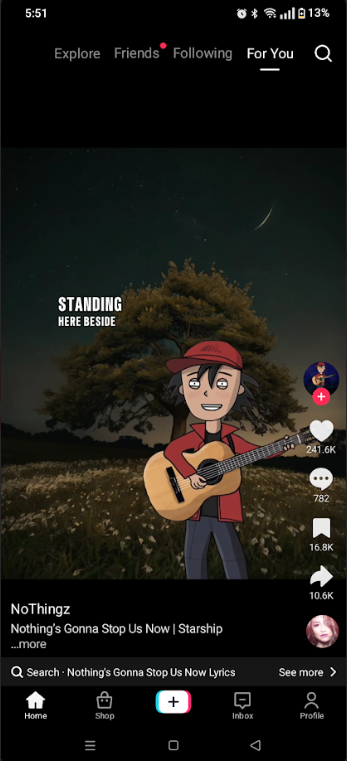
TikTok’s interface is built around the For You feed, which opens by default and immediately surfaces content from accounts users may not follow. Navigation is minimal and designed to encourage continuous scrolling, with most interactions taking place directly on the video screen.
Key characteristics of TikTok’s user experience include:
- A full-screen, swipe-first feed focused almost entirely on discovery
- Prominent on-screen controls for likes, comments, shares, and creator profiles
- Easy access to sounds, hashtags, and creator profiles directly from videos
- A low-friction path to consuming large volumes of content quickly
For creators and businesses, TikTok’s interface favors content that captures attention instantly, as users can move on with a single swipe.
User interface and experience on YouTube Shorts
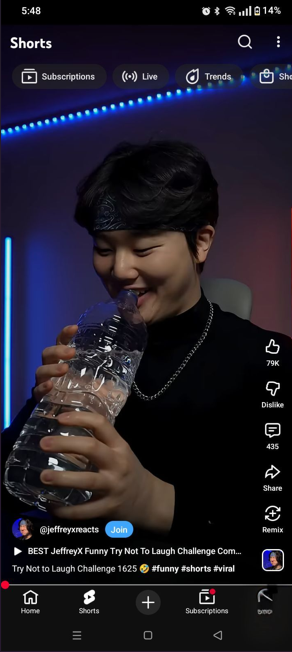
YouTube Shorts resides within the broader YouTube app, providing a more layered navigation experience. While Shorts uses a vertical feed similar to TikTok, users can easily move between Shorts, long-form videos, subscriptions, and search.
Key characteristics of YouTube Shorts’ user experience include:
- A Shorts feed integrated into YouTube’s main navigation
- Clear pathways to creator channels, long-form videos, and playlists
- Discovery is influenced by both recommendations and search behavior
- A viewing experience that encourages switching between short and long content
For creators and businesses, this interface supports content discovery beyond the Shorts feed, allowing videos to surface through multiple entry points over time.
TikTok | YouTube Shorts |
|---|---|
A swipe-first, immersive interface centered on the For You feed that prioritizes rapid content discovery and continuous viewing | An integrated experience within YouTube that blends Shorts with long-form videos, search, and subscriptions for more flexible exploration |
Editing capabilities, tools, and interface
Editing tools play a significant role in determining how quickly content can be produced and the level of creative control creators have. TikTok and YouTube Shorts both offer in-app editing. However, the depth of tools and ease of use differ between the two platforms.
Editing tools on TikTok
TikTok is built with creation-first editing tools that allow videos to be filmed, edited, and published entirely within the app. The interface is designed for speed and experimentation, making it easy to assemble content without external software.
Key characteristics of TikTok’s editing experience include:
- A wide range of native effects, filters, transitions, and text tools
- An extensive sound and music library integrated directly into the editing workflow
- Templates and auto-edit features that help creators produce content quickly
- A timeline-style editor that supports trimming, layering, and timing adjustments
These tools make TikTok especially accessible for creators who want to produce content quickly and iterate often.
Editing tools on YouTube Shorts
YouTube Shorts provides a simpler, more streamlined editing experience, focusing on basic creation and repurposing rather than full in-app production. Many creators rely on external editing tools before uploading Shorts.
Key characteristics of YouTube Shorts’ editing experience include:
- Basic trimming, text overlays, and music selection
- Cut and Remix features for repurposing existing YouTube videos into Shorts
- Creation suggestions that surface trending audio and effects
- A clean interface that prioritizes uploading and publishing efficiency
YouTube Shorts’ editing tools work best for creators who already produce longer videos or prefer to edit externally and upload finished clips.
TikTok | YouTube Shorts |
|---|---|
Offers robust, creation-first editing tools designed for fast, in-app production and experimentation | Provides a lightweight editing interface focused on basic creation and repurposing content from longer videos |
Copyright and intellectual property
Copyright rules shape what creators can safely publish, reuse, and monetize. TikTok and YouTube Shorts handle ownership and enforcement differently, which can affect how content is reused and protected over time.
TikTok
TikTok’s content policies are designed to strike a balance between creator ownership and a culture of reuse and remixing, which influences how videos are shared, adapted, and protected on the platform.
Content ownership
- Creators retain ownership of their original content.
- By uploading content, creators grant TikTok a broad license to use, distribute, and promote videos across the platform and its services.
- TikTok’s design encourages reuse through features like Duet and Stitch, unless creators manually disable them.
Copyright issues and requirements
- TikTok provides access to a licensed music and sound library for in-app use.
- Content using sounds outside TikTok’s licensed library may be muted, removed, or restricted.
- Copyright enforcement relies on automated detection systems and takedown requests, which may vary in transparency depending on the case.
Intellectual property rights
- Remixing and reuse are built into the platform culture, making content more likely to be adapted or referenced by others.
- Creators should expect limited control over how others interact with their content unless reuse features are restricted.
- Reposting TikTok videos with licensed music to other platforms may result in copyright issues outside TikTok.
YouTube Shorts
YouTube Shorts adopts a more structured approach to content ownership and copyright, featuring clear attribution, enhanced enforcement, and a focus on original content.
Content ownership
- Creators retain full ownership of their original content.
- Uploading content grants YouTube a license to host and distribute videos, consistent with its standard platform terms.
- Shorts are closely tied to creator channels, reinforcing ownership and attribution.
Copyright issues and requirements
- YouTube uses Content ID, an automated copyright management system that scans videos for copyrighted material.
- Rights holders can choose to monetize, block, or track content that includes their material.
- Shorts using unlicensed music, reused content, or watermarked videos may face monetization restrictions or removal.
Intellectual property rights
- YouTube places stronger emphasis on originality, particularly for monetization eligibility.
- Creators receive clearer notifications for copyright claims and have formal dispute options.
- Content protection is generally more structured and transparent compared to short-form-first platforms.
TikTok | YouTube Shorts |
|---|---|
Emphasizes reuse and remixing through built-in collaboration features, with flexible use of licensed content but less control over how videos are adapted by others | Emphasizes originality, clear ownership, and structured enforcement, with stronger copyright protection and more transparent claim and dispute processes |
TikTok vs YouTube Shorts: Which platform should you choose?
The right platform depends on what you want short-form video to do for your business or brand. TikTok and YouTube Shorts serve different purposes, despite sharing a similar format.
Choose TikTok if your goal is rapid exposure and trend participation
TikTok is a strong fit if you want to:
- Reach new audiences quickly through algorithm-driven discovery
- Tap into trends and cultural moments
- Experiment with informal, creative, or reactive content
- Drive engagement through community interaction and creator collaborations
The platform rewards speed, experimentation, and relevance, making it well-suited for awareness-focused campaigns and brands targeting younger, trend-aware audiences.
But if you want to check out other platforms similar to TikTok, check our article about the top 7 best TikTok alternatives.
Choose YouTube Shorts if your goal is long-term growth and content longevity
YouTube Shorts makes more sense if you want to:
- Build a sustainable content library with ongoing visibility
- Reach a broader, more evenly distributed audience
- Connect short-form content to long-form videos, search, and subscriptions
- Monetize through a more structured and predictable system
Shorts works best when used as part of a wider YouTube strategy, supporting discoverability, channel growth, and long-term value.
If you want to know the best tips for creating your YouTube channel to upload your Shorts, read our guide for becoming a YouTuber in 2026.
The short answer
Neither platform is inherently better as they solve different problems. TikTok prioritizes rapid reach and cultural relevance, while YouTube Shorts focuses on durability, integration, and sustained growth. Your choice should reflect whether your priority is short-term momentum or long-term content strategy.
Frequently asked questions
There is no single “better” platform. The right choice depends on your goals, audience, and how you plan to use short-form video. TikTok is better suited for fast exposure and trend participation, while YouTube Shorts is more effective for long-term visibility and supporting a broader content strategy.
Both platforms can support business growth, but in different ways. TikTok works well for brand awareness, product launches, and trend-driven campaigns that benefit from rapid reach. YouTube Shorts is better suited for businesses that want to create short-form content to support search visibility, complement long-form videos, and achieve steady audience growth over time.
TikTok generally has a younger audience, with a strong concentration of Gen Z and younger Millennials. YouTube Shorts reaches a broader age range, including older Millennials and Gen X, making it a better fit for businesses targeting mixed or more mature audiences.
YouTube Shorts are directly connected to creator channels and can link viewers to long-form videos, playlists, and subscriptions. This makes Shorts useful for repurposing highlights and promoting more insightful content.
Yes, but you should adapt them for each platform. TikTok favors trend-aligned sounds, fast hooks, and informal presentation, while YouTube Shorts benefits from evergreen topics and content that complements long-form videos. Simply reposting without optimization may limit performance.
TikTok is generally easier for rapid growth because its algorithm can quickly surface content to large audiences, even for new accounts. YouTube Shorts often requires more strategic planning, such as consistent posting, strong titles, and alignment with broader channel content, but growth tends to be more sustainable over time.
You can enhance your short-form strategy by following reputable digital marketing blogs, watching creator tutorials on YouTube, and analyzing platform analytics. Studying high-performing content in your niche and testing different formats is often the most effective way to learn what works.
Turning short-form strategy into long-term growth
Short-form video has become a powerful way to reach audiences, but as this comparison illustrates, TikTok and YouTube Shorts serve distinct purposes.
TikTok excels at fast discovery, trend participation, and cultural relevance, while YouTube Shorts supports long-term visibility, broader audiences, and deeper integration with search, analytics, and monetization. The right choice depends on your priorities and how short-form content fits into your overall content strategy.
Once you’ve chosen which platform to grow, the next step is making sure everything you build points back to something you own. That’s where your website becomes the foundation. You can secure your custom domain, build a reliable website, and host your content securely in one place with us.
Big reach gets attention. Build something you own to turn that attention into lasting growth.