
Key takeaways:
- B2B e-commerce makes online sales easier to manage by supporting bulk orders, repeat purchases, and account-based pricing in one place.
- The right B2B business model supports long-term growth through tools built for approvals, custom pricing, and longer buying cycles.
- Strong platforms with excellent customer support help businesses grow faster and provide buyers with a smoother B2B e-commerce experience.
Remember when business deals meant long phone calls with sales reps? Those days are gone. Now companies are placing big orders online without ever picking up the phone. And this not only drives massive growth in B2B e-commerce but also changes how small businesses sell to other businesses.
Just look at the numbers: global B2B e-commerce is estimated to hit $47.54 trillion by 2030. For small businesses, that’s your chance to sell at scale with a single e-commerce platform that handles bulk orders, purchase orders, and self-service tools. But buyers expect speed and easy reordering, so make sure your process is frictionless.
That’s exactly what this guide is here for: to walk you through what B2B e-commerce is, how the model works, and what it takes to build a successful B2B business. You’ll get real-world examples, common setups, and a look at the key benefits and challenges to help you determine if this approach fits your next move.
What is B2B e-commerce?
B2B e-commerce is a model where businesses sell products or services to other businesses online. Instead of selling to individual shoppers, you’re selling to other businesses through an e-commerce website or e-commerce platform built for how companies actually buy. That usually means handling bulk orders, custom pricing, and purchase orders, rather than simple one-click checkouts.
Here’s what makes B2B different: the buying experience. Business buyers place repeat orders, need approval workflows, and want tools that save them time. Modern B2B setups focus on self-service tools, transparent account pricing, and smooth reordering for wholesale customers. The whole point is to make buying easier for your customers while helping your business sell more with less manual work.
What’s the difference between B2B and B2C e-commerce?
The biggest difference between B2B and B2C e-commerce comes down to who you’re selling to and how they buy. B2B e-commerce focuses on selling to other businesses, while B2C e-commerce sells directly to individual consumers. Because of that, the buying process, pricing, and payment setup look completely different.
In a B2B setup, business buyers often place larger or repeat orders, work within budgets, and need approval before purchasing. Orders might include custom pricing, negotiated terms, and purchase orders, especially when selling to wholesale customers. B2C shoppers, on the other hand, usually make quick, one-time purchases with fixed prices and immediate payment. Both models rely on digital commerce, but they serve very different needs.
B2B vs. B2C e-commerce: Key differences
B2B and B2C e-commerce both happen online, but that’s where the similarities end. Everything from order sizes to payment terms works differently. Here’s how they compare:
Feature | B2B e-commerce | B2C e-commerce |
|---|---|---|
Buyer |
| Individual consumers |
Order quantity |
|
|
Sales cycle | Longer, often ongoing relationships |
|
Decision-making |
| One person decides |
Pricing |
|
|
Payment |
|
|
If you’re still exploring which approach makes sense, check out this breakdown of the types of e-commerce business models so you can better compare your options and find the right fit.
The 4 common types of B2B e-commerce business models
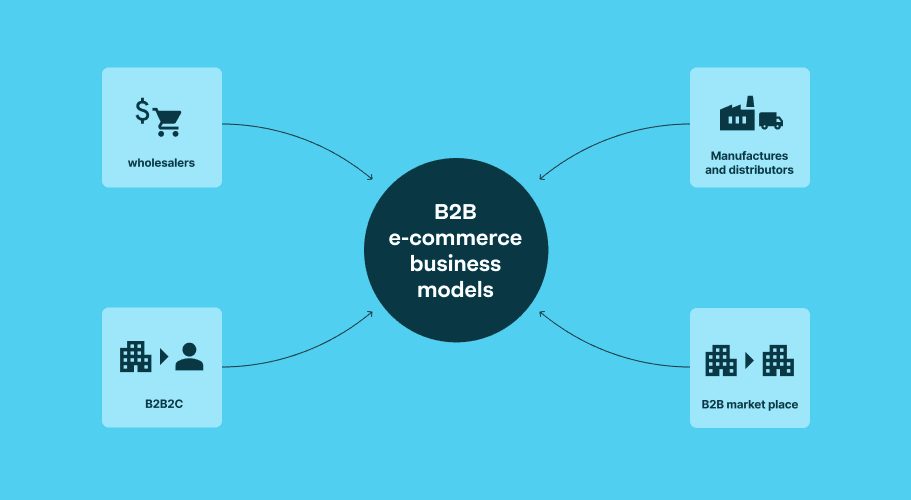
A B2B e-commerce business model defines who you sell to, how orders flow, and how your online setup supports buyers, pricing, and payments. While every business is different, most B2B e-commerce sites fall into one of four common models based on how they manage online sales and relationships.
Here are the four main types you’ll see:
- Wholesalers
- Manufacturers and distributors
- B2B2C businesses
- B2B marketplaces
Wholesalers
Wholesale e-commerce is all about moving products in large quantities to other businesses, usually at reduced or negotiated pricing. Buyers typically reorder regularly, need internal approvals before checkout, and work with contract pricing linked to their account.
Take a restaurant supplier running an e-commerce site, for example. Buyers log in to view their personalized pricing, stock up on bulk items, and select custom payment methods. Behind the scenes, customer data and customer relationship management tools help sales teams nurture ongoing customer relationships and boost customer satisfaction.
Manufacturers and distributors
Manufacturers and distributors sell directly to other businesses instead of relying only on offline sales representatives. This model supports complex catalogs, large orders, and recurring purchasing.
A manufacturer might use an e-commerce platform that connects with existing systems like inventory, enterprise resource planning (ERP), and fulfillment. Buyers place orders online while sales operations stay aligned across teams. This setup reduces manual work and supports complex business processes without slowing buyers down.
B2B2C businesses
B2B2C businesses sell to another business that then sells to the end customer. Consumers see the final storefront, but the first sale happens business-to-business.
Here’s how it works: a brand might sell products to a retail partner through a B2B portal, and that partner takes care of selling to consumers. This model relies on connected digital channels, easy access to customer data, and strong coordination between sales teams to keep the overall customer experience smooth.
B2B marketplaces
B2B marketplaces bring multiple sellers and multiple buyers together on one platform. Instead of managing their own stores, businesses list products on shared e-commerce sites that handle discovery and transactions.
An industrial marketplace may allow procurement teams to compare suppliers, place purchase orders, and use flexible payment options. These platforms appeal to businesses that want reach and built-in traffic without dealing with all the technical setup themselves.
Stages of B2B e-commerce businesses
B2B e-commerce businesses rarely start at full scale. They grow through stages. Each one brings different priorities, tools, and challenges, especially as your order volume climbs and customers want more. Figure out where you are now so you can choose the right tools without wasting money on things you won’t use yet.
Here’s how B2B e-commerce businesses typically progress:
- Selecting a B2B e-commerce platform
- Managing sales and customer relationships
- Streamlining operations and inventory
- Scaling and expanding the business
Selecting a B2B e-commerce platform
The first step is getting online in a way that matches how businesses really buy. That usually means setting up an online store that supports business pricing, repeat orders, and account-based access for returning customers.
From there, focus on a flexible platform that can handle volume pricing, simple payment options, and future growth. Many businesses also plan early for ERP integration, which helps keep inventory and orders aligned as sales pick up.
If you’re just getting started with e-commerce, our guide on how to build an e-commerce site (step-by-step) walks you through everything you need to know.
Managing sales and customer relationships
Once orders start coming in, the focus shifts to keeping buyers satisfied and encouraging repeat business. B2B businesses often work with different customer groups, including wholesale buyers and long-term accounts that follow specific pricing rules.
This stage is about understanding customer behavior, supporting long sales cycles, and using tools that empower buyers to reorder on their own. The right setup also helps sales teams maintain strong supplier relationships while keeping the buying experience smooth across sales channels.
Streamlining operations and inventory
As order volume grows, manual work starts to slow things down. At this point, businesses look for ways to streamline operations and manage inventory without adding extra work or staff.
Many connect their e-commerce site to an ERP system to track stock, reduce errors, and handle complex product configurations. Having access to real-time data insights also helps teams stay ahead of changing demand, adjust pricing based on real data, and prevent fulfillment issues before they affect customers.
Scaling and expanding the business
In the final stage, the focus shifts to growth without added friction. Businesses may start selling across more sales channels, move into niche markets, or manage multiple brands from a single system.
Here, teams adjust pricing with dynamic pricing, improve mobile optimization, and explore ways to sell directly to customers while still supporting B2B buyers. The right setup helps you grow without making things harder for buyers or your team.
Real-world B2B e-commerce examples
B2B e-commerce spans everything from global marketplaces to custom platforms for business buyers. Below are real-world examples that show how different B2B business models work in practice.
Amazon Business
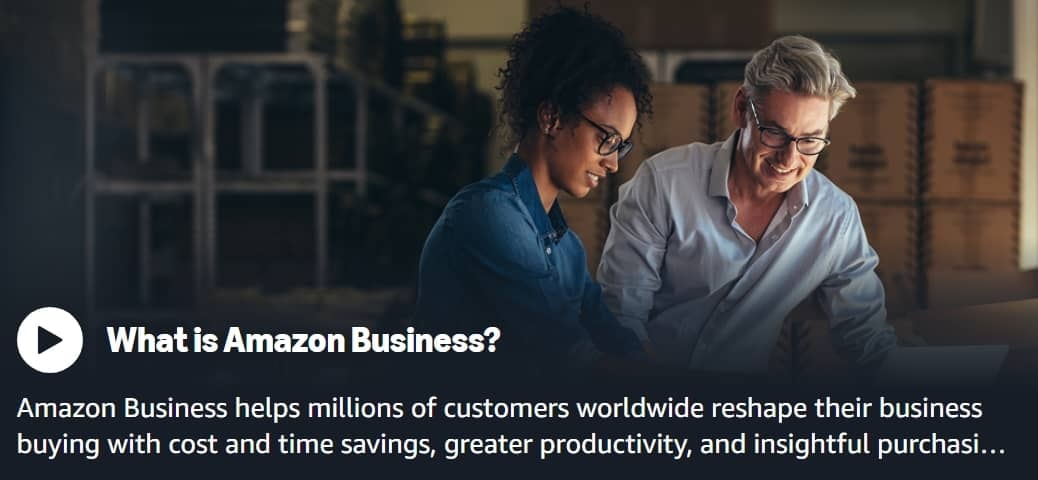
Amazon Business is a B2B version of Amazon designed for companies buying at scale. It makes bulk ordering easier with account-based pricing and tools that help sales reps and procurement teams move faster. Features like self-service tools, business-only pricing, and spend controls improve the customer experience while supporting everyday digital procurement. It’s a good example of how digital commerce can simplify complex buying without removing the human touch that sales relationships still need.
Alibaba
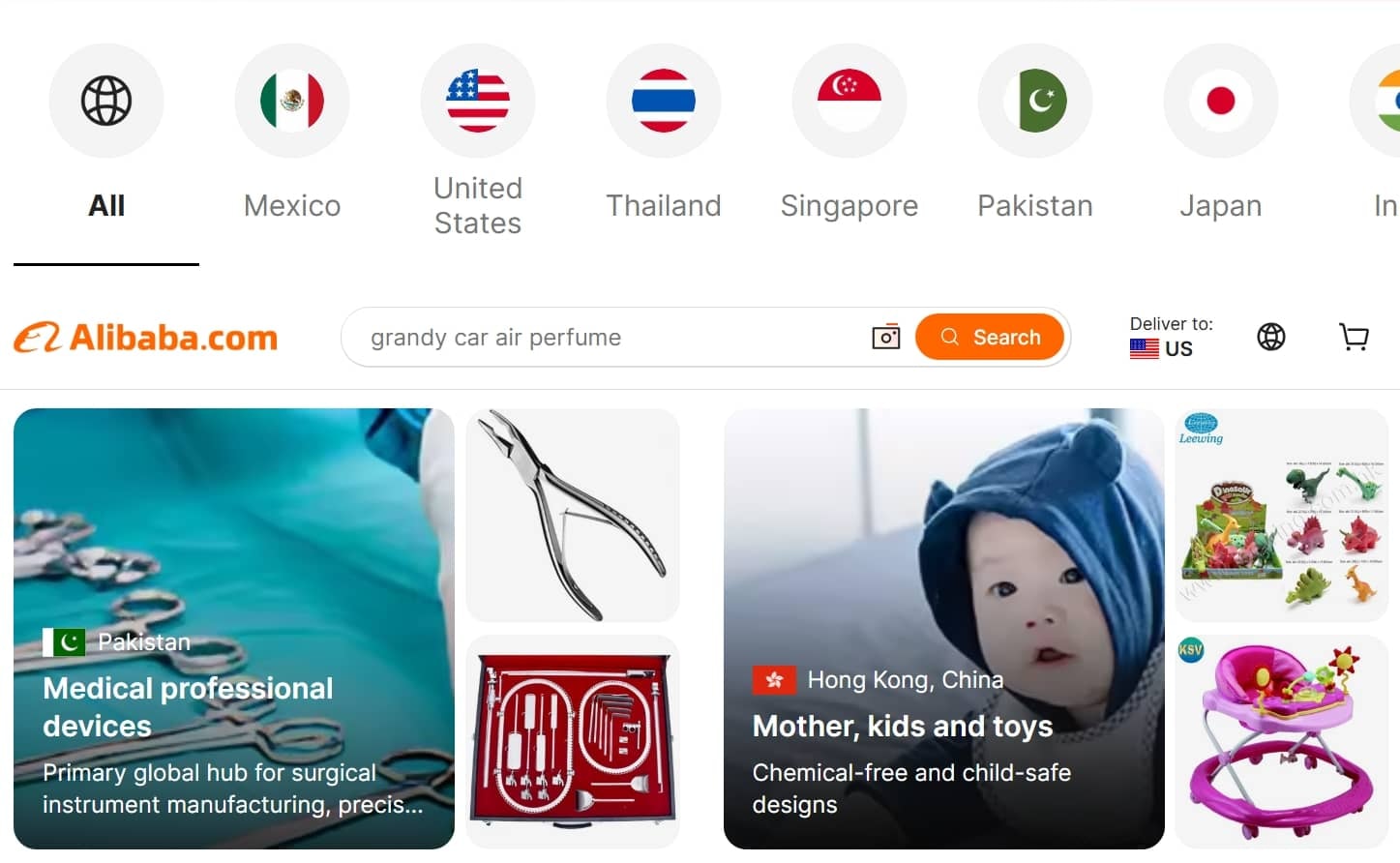
Alibaba is a global B2B marketplace that helps businesses connect with manufacturers and suppliers, especially for wholesale and custom orders. Many buyers use Alibaba to source products in bulk, compare suppliers across digital channels, and manage orders from one place. It’s a great example of how niche marketplaces and cross-border digital transformation can help businesses scale sourcing and support a long-term growth strategy without adding unnecessary complexity.
Grainger
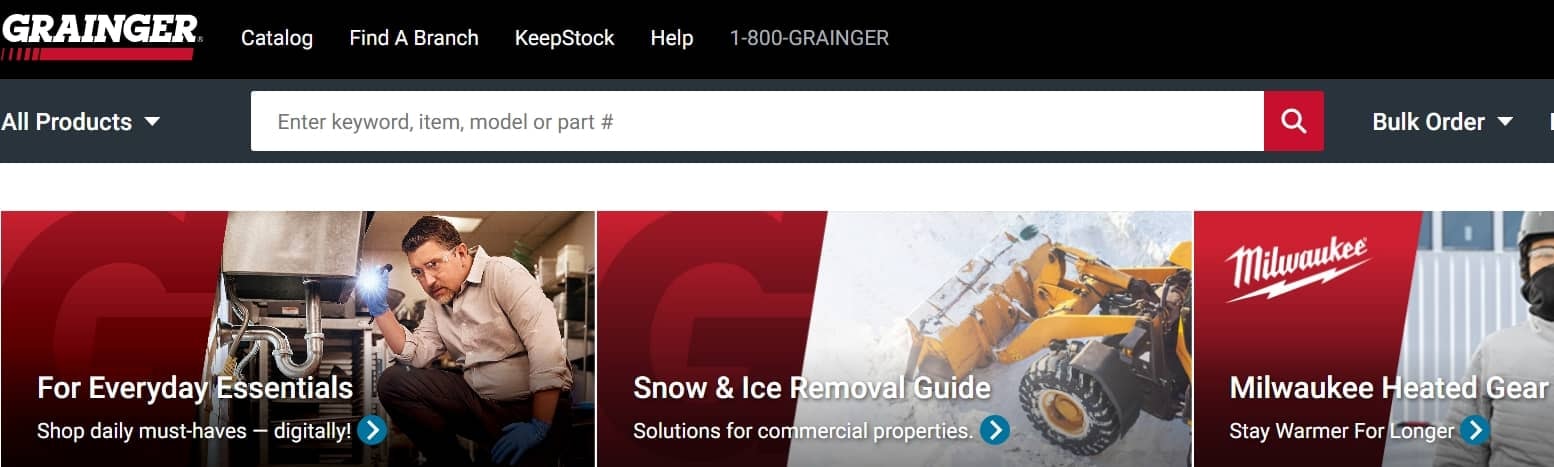
Grainger sells industrial and maintenance supplies directly to other businesses through its e-cBuyers can browse custom catalogs, quickly reorder items they use often, and manage purchasing across teams. It pairs easy-to-use digital tools with reliable logistics and support, which helps improve conversion rate optimization and makes complex processes like repeat orders and inventory planning easier to manage.
Salesforce

Salesforce is a well-known Software-as-a-Service (SaaS) B2B company that sells subscription-based tools to other businesses. Its platform helps teams manage customer data, automate tasks, and support long buying journeys that often involve sales reps. Salesforce is a good example of how B2B e-commerce can focus on digital products, where the right key features help teams work more efficiently, support modern buying behavior, and make complex sales easier to manage.
B2B e-commerce marketing strategies
Most B2B buyers have already conducted thorough online research before your sales team contacts them. That’s why your marketing can’t just sit back and wait. It needs to show up early, answer real questions, and walk buyers through complex decisions involving multiple stakeholders. What you’re really doing is building credibility, educating potential customers, and helping them feel ready to commit.
Here are practical B2B e-commerce marketing strategies that work well across industries:
- Content that supports long buying decisions
- SEO built around buyer intent
- Email and account-based outreach
- Social proof and industry presence
- Paid advertising for high-intent buyers
- Platform-led personalization
Content that supports long buying decisions
B2B buyers want straight answers, not sales pitches. Useful guides, comparison pages, and real success stories win over buyers who are researching major purchases. Quality content also attracts new markets by addressing questions they’re already searching for online.
SEO built around buyer intent
B2B SEO performs best when it targets what buyers actually need instead of chasing high-traffic keywords. Product pages, FAQs, and resources that solve real problems bring in qualified visitors and boost average order value over time. This strategy enables smarter, data-driven decisions throughout your marketing.
Email and account-based outreach
Email is still one of the most reliable B2B channels, especially for staying connected with existing accounts. Personalized messages, reorder reminders, and updates based on buyer activity keep relationships strong and encourage account-level purchasing. This complements custom pricing and personalized catalogs.
Social proof and industry presence
B2B buyers want to see that you understand their business. Sharing customer stories, real examples, and what goes on behind the scenes across your online presence shows you know what you’re doing. These trust signals keep buyers confident and moving ahead, even when decisions take months.
Paid advertising for high-intent buyers
Paid search and social ads help you reach decision-makers who are already looking for solutions. When paired with strong landing pages and clear value, paid campaigns can support direct-to-customer outreach while still fitting into a broader B2B strategy.
Platform-led personalization
Modern B2B e-commerce platforms make it easier to tailor the experience for each account. Features like tailored catalogs, account pricing, and seamless integrations with other tools help buyers find what they need faster. These also take care of security basics like data encryption that buyers expect.
Benefits and challenges of B2B e-commerce
Running a B2B e-commerce business comes with some real wins. But let’s be honest. There are obstacles, too. Seeing the full picture helps you decide if this B2B e-commerce model is the right fit for what you’re trying to build, who’s on your team, and where you’re headed.
Benefits of B2B e-commerce
B2B e-commerce opens up opportunities that just aren’t possible with traditional sales models. Here’s what makes it worth considering:
- Reach new markets faster: A digital storefront helps B2B brands sell beyond local networks and enter new markets, especially as online buying becomes the default for business buyers discovering suppliers through Google Search.
- Support rapid business growth: Many B2B companies are experiencing rapid growth by moving sales online. Automation reduces manual work and allows teams to handle more orders without adding headcount.
- Sell direct to customers: A B2B site makes it easier to go direct to customers, cutting friction in reorders, pricing requests, and account management while keeping sales reps focused on high-value deals.
- Operate with modern platforms: Cloud-based, software-as-a-service platforms like Adobe Commerce support flexible pricing, customer accounts, and integrations without heavy infrastructure costs.
Challenges of B2B e-commerce
B2B e-commerce isn’t all smooth sailing. There are real hurdles to navigate, and here’s what to expect:
- Longer and more complex buying cycles: B2B purchases often involve approvals, contracts, and multiple decision-makers, which slow conversions compared to consumer shopping.
- Higher expectations for customization: Business buyers expect account-level pricing, payment terms, and product access. Delivering this consistently takes the right platform and setup.
- Technology and integration hurdles: Connecting e-commerce with ERP, inventory, and accounting systems can be challenging, especially for businesses transitioning from offline or manual processes.
- Balancing digital and human sales: Even with e-commerce in place, many B2B companies still rely on sales teams. The challenge is blending self-service tools with relationship-driven selling.
Frequently asked questions
The four main types of B2B buyers are producers, resellers, governments, and institutions. They buy goods or services to make products, resell to others, support public services, or run organizations like schools, hospitals, and nonprofits.
B2B e-commerce is when businesses sell products or services to other businesses through online platforms. It supports bulk orders, custom pricing, approvals, and system integrations that help companies buy and sell more efficiently than traditional sales methods.
B2B e-commerce works by letting one business sell products or services to another through an online platform. Buyers log in to see custom pricing, place bulk orders, request quotes or approvals, and pay using business-specific terms, while the system handles orders, payments, and fulfillment in the background.
Ready to step into the world of B2B e-commerce?
B2B e-commerce is growing fast, and small businesses have a real shot at tapping into this massive market. The key is choosing the right business model and platform. One that supports online sales at scale while making buying easy for your customers.
Look for setups that handle bulk orders, custom pricing, and repeat business without constant manual work. And don’t underestimate the value of great customer support. Having experts available when questions come up or things need tweaking makes all the difference.
We help small businesses build B2B e-commerce sites designed for growth. Ready to explore what’s possible? Check out our Website Builder to get started or talk to our professional web design experts about your goals.