

Key takeaways:
- Facebook algorithm ranks posts based on predicted relevance and engagement, so both content quality and audience response matter.
- Original, native, and conversation-driven content is more likely to strengthen organic reach than repetitive or overly promotional posts.
- Facebook Insights can help you understand your audience, measure performance, and refine what you publish over time.
It’s frustrating when you constantly post on your Facebook Page only to see little reach or engagement. If you are wondering, “Why is my Facebook post not reaching anyone?” the answer is rarely one simple issue.
Facebook does not show every post to every follower. Its news feed system looks at factors such as how relevant the content seems, how people respond to it, what format you use, and how consistently you post.
There is no single tactic that guarantees more reach. However, there are several ways to improve your engagement and reach, such as creating stronger content, encouraging genuine conversations, using native formats, posting consistently, and reviewing performance data.
Lucky for you, we compiled 10 efficient ways to get your posts seen on Facebook. If you want to know all of them, then you better read on
10 tips on how to get Facebook posts seen
You do not need to change your entire Facebook strategy overnight. Start with two or three of the tips below, track how your audience responds, and build on what works.
- Check who can see your Facebook posts
- Create original content that gives people a reason to stop
- Use native photos, videos, Stories, and Reels
- Ask questions that start genuine conversations
- Respond to comments while the conversation is active
- Post consistently without sacrificing quality
- Publish when your audience is most likely to be active
- Use Facebook Insights to repeat what works
- Share posts in relevant groups and tag people carefully
- Test one variable at a time and refine your approach
Small, informed changes are often more useful than trying every tactic at once.
1. Check who can see your Facebook posts
Before blaming the Facebook algorithm, make sure your settings are not limiting who can see your Facebook post. On a personal profile, the audience selector may restrict a post to friends or a custom audience instead of making it public.
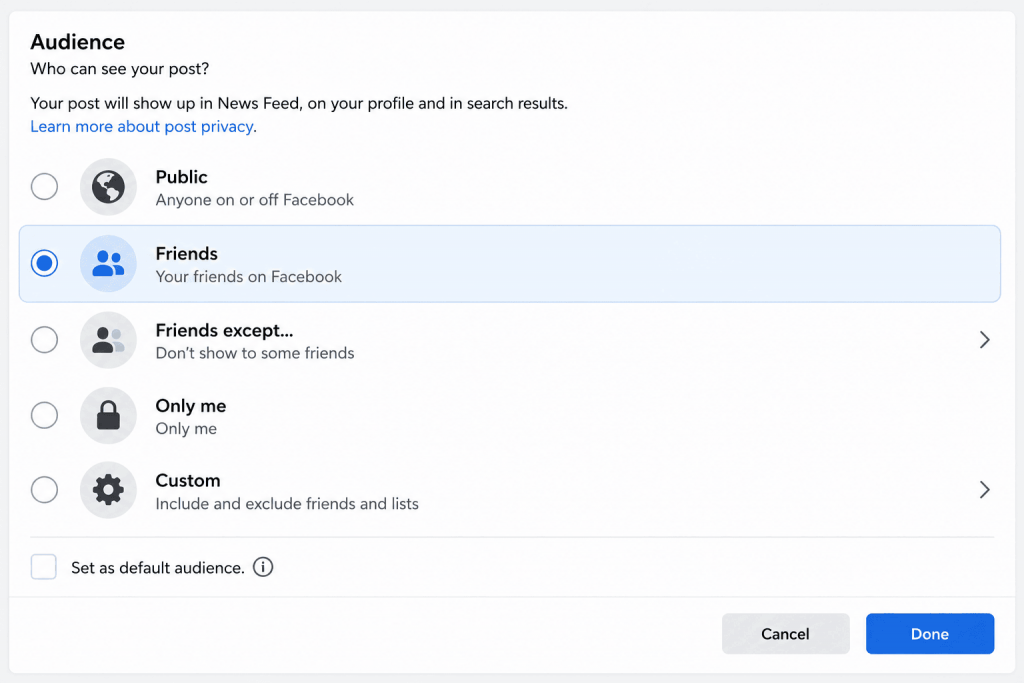
Facebook Page posts are generally public, but your Page status, age or country restrictions, and account access settings may still affect visibility. Review the relevant settings for your Facebook business page before changing your content strategy. Because menu options can differ between personal profiles, Pages, and Meta Business Suite, focus on confirming that the right audience can access your post.
2. Create original content that gives people a reason to stop
People scroll quickly, so your Facebook post needs to offer something worth pausing for. Original content does not have to be complicated. It could be a lesson you learned firsthand, a customer success story, a behind-the-scenes look at your business, or a helpful answer to a question customers often ask.
Original does not always mean starting from scratch. The Original Tamale Company, for example, put its own brand-specific spin on a popular online joke. Its humorous short video turned the trend into an ad for the family-run restaurant, earning more than 22 million views and helping drive customer traffic.
Start with an opening line that makes the value clear, then support it with a relevant photo, image, or short video. A distinctive point of view based on real experience can also help your brand feel more credible and memorable.
Lead with a clear opening line that tells people why the Facebook post matters. Relevant images, photos, or a short video can also help your status update get noticed as people scroll through their feeds. Avoid copying competitors or repeatedly resharing content that adds nothing new. The goal is to give customers a helpful or memorable reason to pay attention to your business.
Check out our article on the 9 types of posts that get the most engagement on Facebook.
3. Use native photos, videos, Stories, and Reels
Native content is media you upload directly to Facebook instead of only sending people to another website or social media platform. This can include photos, short videos, Facebook Reels, Stories, and concise text updates.
These formats let people view and respond to your content without leaving Facebook right away. Native videos and photos can also help improve reach, as Facebook generally prioritizes content that keeps users engaged on the platform rather than directing them elsewhere. Some followers may prefer quick videos, while others respond better to images, Stories, or simple written posts.
Facebook Stories are another format worth including in your strategy. Posting Stories regularly can help keep your brand visible to followers throughout the day since they often appear in a prominent position within the app.
Test a few formats and compare the results instead of assuming that video marketing will always outperform everything else. You can still include links when they genuinely support the goal of the post. The key is to choose the format that makes your message easiest to understand and act on.
4. Ask questions that start genuine conversations
The best questions are easy to answer and connected to something your audience has actually experienced. Instead of chasing likes or one-word comments, use open-ended prompts that invite people to share an opinion, story, preference, or useful response.
For example, “Do you agree?” is too broad and gives people little reason to join in. A stronger question is, “What is the biggest challenge you face when planning a week of social content?” It is specific, relevant, and easier for readers to answer from experience.
Make sure the question fits naturally with the topic of your Facebook post. Avoid manipulative prompts that ask users to comment, tag friends, or share only to trigger engagement. The goal is a useful conversation, not inflated vanity metrics.
5. Respond to comments while the conversation is active
When people comment on your Facebook Page, thoughtful replies show that your business is listening. Answer direct questions, thank customers for useful input, and ask relevant follow-up questions when there is room to keep the conversation going.
Avoid replying with the same emoji or generic phrase on every comment. A more personal response can strengthen engagement and make your community feel more valued. When someone raises a sensitive customer-service issue, acknowledge it publicly, then move the discussion to a private message.
Comments can also reveal what your audience cares about. Pay attention to repeated questions or concerns, as they may give you useful ideas for future content.
6. Post consistently without sacrificing quality
Posting consistently gives your audience more chances to see and engage with your content, but that does not mean you need to publish every day. Choose a schedule your business can realistically maintain, even if that starts with only a few high-quality posts each week.
A simple content calendar can help you plan topics, batch content in advance, and avoid scrambling for ideas at the last minute. As you build your posting schedule, prioritize visual content such as photos, graphics, and videos. Visuals can make your posts more memorable and easier to understand, helping audiences retain key information. You can also use scheduling tools to prepare content ahead of time and keep your routine manageable.
Native photos and videos are especially valuable because they are uploaded directly to Facebook rather than linking users to another site. These formats often receive greater visibility than posts that rely primarily on external links. If you’re creating videos, keep in mind that many Facebook users watch without sound, so captions and on-screen text can help ensure your message gets across.
Start with a repeatable weekly schedule, then use Facebook Insights to see how your audience responds. One useful, relevant post is more valuable than several rushed ones. As you learn what works, you can gradually adjust your posting cadence while continuing to focus on quality and engagement.
Plan your next post with less guesswork
Organize ideas, schedule content, and keep your Facebook posting routine on track with tools designed to make social media easier to manage.

7. Publish when your audience is most likely to be active
There is no single best time to post on Facebook for every business. The right timing depends on your audience, time zone, industry, and the type of content you share.
Timing matters because Facebook’s algorithm determines which posts appear in users’ feeds, and not every follower will see every update you publish. In fact, organic reach for business pages is often limited, making it important to post when your audience is most likely to be active and engage with your content.
Use Facebook Insights or Meta Business Suite to review when your audience is online and how posts perform at different times. Instead of changing your schedule randomly, test a few consistent posting windows over several weeks and compare the results. Don’t be afraid to experiment with less crowded time slots, as posting outside peak hours can sometimes help your content gain additional visibility.
Look for patterns in reach and engagement, then adjust your posting schedule based on what your own Facebook Page data shows. Consistent posting can help keep your page active and provide more opportunities for engagement. Remember that timing can help a strong post get noticed, but it cannot make irrelevant or low-quality content perform well. Posts that continue receiving likes, comments, and shares can also resurface in feeds after they’re published, extending their lifespan beyond the initial posting window.
8. Use Facebook Insights to repeat what works
Facebook Insights helps you understand how your page posts are performing instead of relying on guesswork. Reach shows how many people saw a post, while engagement covers actions such as reactions, comments, shares, and clicks. Tracking these metrics is especially important because organic visibility on Facebook can be limited, meaning only a small portion of your audience may see any individual post.
Do not judge your results based on one post alone. Compare several posts and record the topic, format, posting time, reach, comments, shares, video views, and clicks. Since Facebook’s algorithm evaluates thousands of content signals before deciding what appears in users’ feeds, analyzing performance trends over time can reveal valuable insights that a single post cannot.
As you review your data, pay close attention to content formats. Visual content often captures attention more effectively and can make information more memorable, while video posts frequently generate higher engagement than many other post types. These patterns can help you identify the formats your audience prefers and where to focus your efforts.
For example, you may find that customer stories attract more comments, or that short videos reach a larger audience and encourage more interactions. Remember that high reach is not always the best result. A post is successful when its performance supports your business goal, whether that means building awareness, driving traffic, generating leads, or increasing sales.
9. Share posts in relevant groups and tag people carefully
Relevant Facebook Groups can help more people discover your content, but only when your posts genuinely contribute to the conversation. Organic reach on Facebook can be limited, so participating in communities where your target audience is already active can help expand your visibility beyond your existing followers. Before sharing anything, review the group’s rules and spend time engaging with discussions instead of posting promotional content right away.
Tags and mentions should also feel natural. Tag a person, business, or Facebook Page only when they are directly connected to the post or would reasonably want to be included. Thoughtful interactions and meaningful engagement are more likely to encourage responses than broad, untargeted outreach.
The goal is to contribute something useful, not simply put your business in front of more people. Facebook prioritizes content that generates authentic engagement, so focusing on helpful discussions and relevant community participation can improve your visibility over time. When you need to reach a more specific audience, Facebook ads can complement your organic efforts by targeting users based on factors such as demographics, interests, and behaviors.
10. Test one variable at a time and refine your approach
Improving reach is easier when you can tell which change made a difference. Test one meaningful variable at a time, such as the opening line, image versus video, question format, posting time, or link placement.
Avoid changing several elements at once because the results will be harder to interpret. Compare a reasonable number of posts before deciding that one approach works better, and record what you learn in Facebook Insights or another tracking tool.
As patterns begin to emerge, turn the strongest ideas into repeatable templates you can use again. Better engagement rarely comes from one perfect Facebook post. It usually comes from a series of informed improvements that help you optimize your content, sharpen your focus, and respond more effectively to your audience.
Frequently asked questions
Start by checking your audience settings and recent performance data. Low views can also come from weak relevance, limited engagement, inconsistent publishing, or relying on the same content format too often. It does not automatically mean Facebook has penalized your page.
Publish useful original content, use native formats, invite genuine conversation, respond to comments, and post consistently. Review Facebook Insights to see what your followers respond to, then use those patterns to guide future content instead of relying on one-off tactics.
Relevant hashtags may help categorize a Facebook post or add context, but they should not be your main reach strategy. Use a small number only when they genuinely relate to the content. Stronger reach usually depends more on relevance, useful content, audience response, and consistent publishing.
There is no universal posting frequency that works for every Facebook business. Choose a sustainable weekly schedule that allows you to protect content quality, then adjust it based on your resources, audience response, and Facebook Insights. Posting consistently matters more than forcing yourself to publish every day.
Facebook Reels can help you reach people who prefer short-form videos, but they do not always outperform every other post type. Test Reels alongside photos, native videos, Stories, and text updates with the same audience. Judge each format by whether it supports your business goal, not reach alone.
Either placement can work, so focus first on clarity and user experience. A useful website link does not need to be hidden in the comments because of an unverified algorithm claim. Test both options and compare reach, clicks, engagement, and conversions to see which placement works better for your audience.
Don’t just post. Build momentum.
Better Facebook reach usually comes from a series of small, informed improvements, not one perfect post. Choose two ideas from this guide, test them over the next two weeks, and use Facebook Insights to see how your audience responds.
As your engagement grows, make sure that visibility leads somewhere useful. Our Social App can help you plan and track your content, while our Website Builder gives your business a space it fully controls beyond any one social media platform.
Start with a few stronger posts, learn from the response, and keep building the visibility your business deserves.