
Key takeaways:
- You don’t have to spend a lot to get a great domain. Cheap domain names—some even under $1—are widely available.
- Look beyond price and check renewals and extras. First-year deals are great, but be sure to check long-term renewal costs.
- An affordable domain is preferable if you’re just starting out with building your brand.
Finding a cheap domain name sounds simple until you start comparing options. One registrar advertises a $1 domain, another promises “free,” and suddenly you’re stuck decoding renewal rates, bundled add-ons, and dozens of extensions that all claim to be the best deal. What looks affordable upfront can quietly turn expensive a year later, which is where most people get caught off guard.
This guide breaks down what “cheap” actually means when it comes to domain names. You’ll learn how pricing structures work beyond the first year, how to choose the right extension without overpaying, and when a low-cost paid domain makes more sense than a free one bundled with hosting. By the end, you’ll know how to compare domain options confidently, avoid long-term cost surprises, and choose a domain that fits both your budget and your plans for the site.
Find the perfect domain
Ready to register a domain name? Check domain availability and get started with Network Solutions today.
What is a free domain name?
The idea of a free domain name is understandably appealing. If you’re just getting started, avoiding upfront costs can feel like a smart move. But “free” in domain registration rarely means the domain itself has no strings attached, and this is where the confusion usually starts.
In most cases, a free domain is offered as part of a bundle, commonly with a web hosting plan or a website builder subscription. The registrar covers the first year of domain registration while you pay for another service. You are still registering a real domain name, and it functions the same way as a paid one, but the domain cost is offset rather than removed entirely.
This is different from low-cost paid domains, where you pay a small registration fee upfront and manage the domain independently of other services. With paid domains, pricing and renewal terms are usually more transparent from the start, while free domains often depend on ongoing subscriptions to remain “free.”
Ownership and renewal terms matter here. Even with a free domain, you should retain ownership and control, but renewals typically revert to standard pricing after the first year. Understanding when the free period ends, what the renewal cost will be, and whether the domain is tied to a specific provider helps prevent surprises later on.
What free domain extensions may you see offered?
Free domains usually come with specific conditions. They are not pulled from the full range of extensions available on the market, and the options you see are often chosen for promotional or practical reasons rather than flexibility.
Some free domains come from lesser-known or restricted extensions that are offered on a standalone basis. These may work for short-term projects or testing ideas, but they often come with trade-offs around recognition and long-term branding. Because these extensions are less familiar, visitors may not immediately trust or remember them, limiting their usefulness as primary domains.
More commonly, popular extensions are offered free for the first year when bundled with hosting or a website plan. This usually includes widely recognized extensions that people already associate with businesses and content sites. The domain itself is standard, but the free offer depends on keeping the bundled service active.
It’s also important to understand the limitations that can come with free domains. Branding flexibility may be narrower, domain transfer rules can be more restrictive, and renewal pricing is rarely discounted after the initial term. Knowing these constraints upfront helps you decide whether a free domain fits your goals or whether a low-cost paid option gives you more control in the long run.
When does a free domain make sense? When does it not?
A free domain can be a practical choice in the right situation. The key is matching the option to your intent, not just the price tag. This section helps you self-qualify whether a free domain aligns with your goals or whether paying a small upfront cost provides greater long-term value.
A free domain can make sense if you are:
- Launching a brand-new site and want to test an idea before committing long-term
- Working on a personal project, prototype, or short-term campaign
- Keeping upfront costs as low as possible while you validate your plans
- Already choosing a hosting plan where a free domain is included, and you’re comfortable with the renewal terms
A low-cost paid domain is usually the better option if you are:
- Building a brand, business, or professional website
- Planning to use the domain for the long term
- Prioritizing full control, easier transfers, and provider flexibility
- Trying to avoid dependency on a hosting bundle just to keep the domain active
How hosting bundles factor into the decision:
- A free domain with hosting can reduce setup costs if you need hosting anyway.
- Bundles simplify getting started, but may limit flexibility later.
- Understanding renewal pricing and ownership terms upfront helps avoid surprises.
Focusing on how you plan to use the domain, rather than just the price, makes it easier to choose an option that supports your site now and as it grows.
Free domain names with hosting plans from Network Solutions
This is one example of how the free-with-hosting model works in practice. Some providers include a domain name at no cost for the first year when you purchase an annual hosting or website builder plan, which can reduce upfront expenses when launching a site.
We include a free domain automatically when you sign up for an eligible annual hosting or website builder plan. There’s no separate redemption process. The domain is registered alongside your hosting account and functions the same way as a standard paid domain during the first year.
The free domain offer typically includes commonly used extensions such as:
- .com: widely recognized and commonly used across business and personal sites
- .net, often associated with tech, services, and online platforms
- .org, frequently chosen for nonprofits and community-focused projects
- .info, used for informational or content-driven sites
- .biz, a functional option for small businesses
- .us, suited for sites targeting a U.S.-based audience
After the first year, the domain renews at the standard rate for the chosen extension. At that point, the domain becomes a regular ongoing cost separate from the initial promotion. Reviewing renewal pricing in advance helps determine whether this approach aligns with your longer-term plans.
Used intentionally, a free domain bundled with hosting can simplify setup and lower initial costs. Like any bundled offer, it works best when the terms match how long you expect to keep both the domain and the hosting service.
Affordable and cheap domain extensions available at Network Solutions in 2026
Beyond free domains bundled with hosting, we also offer several lower-cost domain extensions that can reduce first-year expenses. Pricing varies by extension and promotion, and renewal rates may differ after the initial term. This section focuses on first-year affordability while highlighting considerations to keep in mind if you plan to keep the domain long term.
The extensions below are commonly chosen by site owners who want a functional, professional domain without paying premium pricing upfront:
- .us
- .business
- .work
- .company
.us
The .us extension is the official country-code top-level domain for the United States. Our first-year pricing for a .us domain is typically $8.99.
This extension is often used by businesses, creators, or organizations that primarily serve a U.S.-based audience. Because it signals geographic relevance, it can help set expectations around location and market focus.
Registration does come with eligibility requirements. To register a .us domain, you must be a U.S. citizen, resident, or have a valid business presence in the United States. After the first year, the domain renews at the standard rate for the extension.
.business
A .business domain offers a clear, descriptive option for commercial sites. Our first-year pricing for a .business domain starts at $9.99.
This extension is commonly used by startups, freelancers, consultants, and small companies that want their domain name to clearly reflect their site’s purpose. There are no registration restrictions, which makes it accessible regardless of location or business structure.
While it does not have the same history as .com, it provides a straightforward alternative when more traditional extensions are unavailable or outside your budget. Renewal rates apply after the first year.
.work
The .work extension is designed around careers, employment, and professional services. Your first-year pricing for a .work domain from our domain services starts at $9.99.
It is often used for job boards, portfolios, consulting services, staffing-related sites, or pages focused on career opportunities. There are no sign-up or eligibility restrictions, which keeps registration simple.
As with other extensions, the initial price applies to the first year, with standard renewal pricing in subsequent years.
.company
A .company domain is positioned for businesses that want a clean, professional web address without additional qualifiers. First-year pricing from our domain registrar is typically $9.99.
This extension works well for small businesses, agencies, and product-focused brands that want a domain name that clearly communicates business intent. There are no registration restrictions, and ownership terms are the same as other standard domains.
After the first year, renewal rates apply based on the extension’s standard pricing.
Note: The first-year prices referenced here are current as of publication and may change. Renewal rates are separate and should be reviewed before registration.
How to register a cheap domain with Network Solutions
Registering a domain is a straightforward process and does not require a long-term commitment up front. Whether you’re choosing a low-cost standalone domain or pairing one with another service, the steps are designed to be quick and flexible.
- Search for your domain name
- Compare extensions and pricing
- Choose your domain package
- Review and complete checkout
Step 1: Search for your domain name
Start by entering your desired domain name into the Domain Name Search tool. It checks availability across multiple extensions at once, so you can quickly see whether your first choice is available or if alternatives are worth considering.
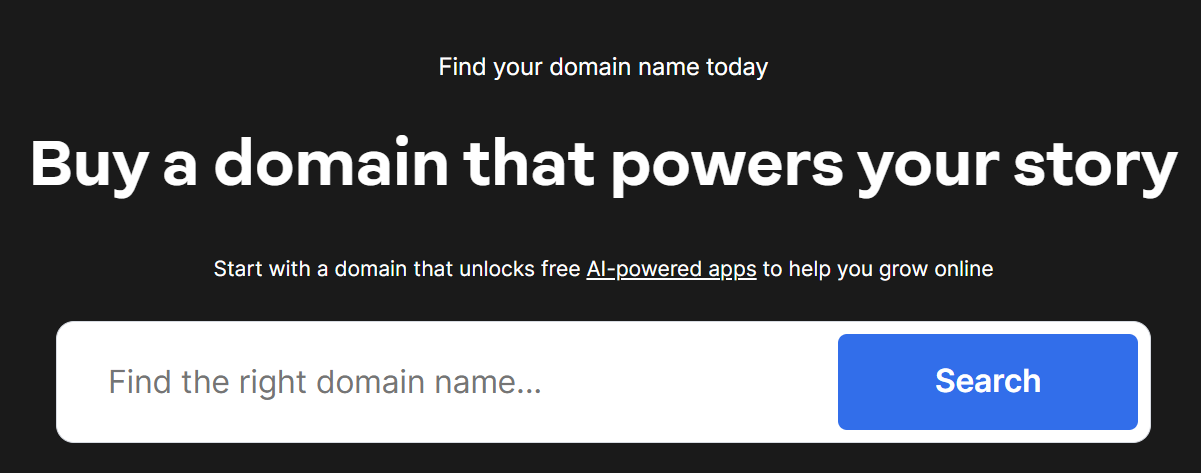
If the exact name is taken, you’ll be shown other extension options and variations, along with their first-year pricing. This makes it easier to compare costs, spot lower-priced extensions, and decide which option fits your plans before moving on to registration.
Step 2: Compare extensions and pricing
Once you’ve searched your domain, review the available extensions and their pricing side-by-side. Pay attention to both the first-year cost and the renewal rate, since some extensions are cheaper upfront but cost more over time.
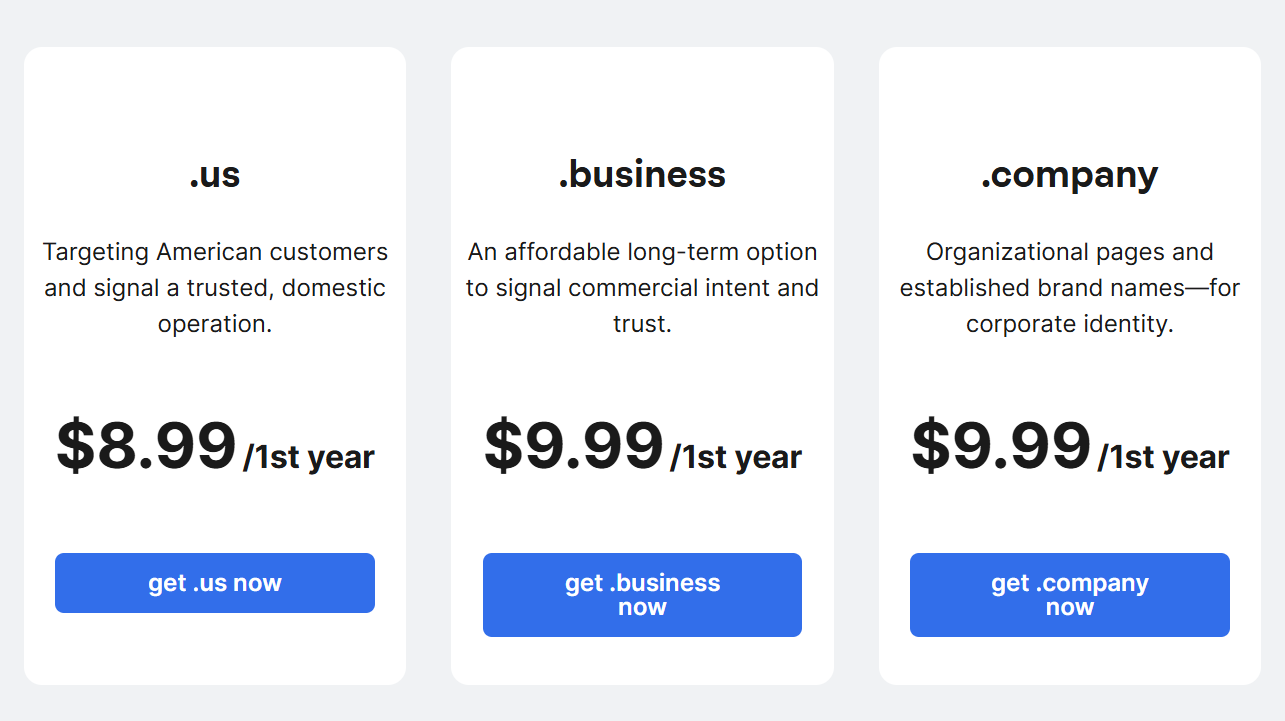
This is also the stage to consider fit. Think about what each extension communicates about your site, who it’s meant for, and whether any registration requirements apply. Comparing price and purpose together helps you choose an option that works now without creating surprises later.
Step 3: Choose your domain package
After selecting your domain and extension, decide how you want to register it. You can purchase the domain on its own or bundle it with a hosting or website builder plan.
This choice affects both cost and flexibility. A standalone domain keeps things separate, while a bundle can lower upfront expenses if you already need hosting. Review what’s included in each option and how long you plan to keep the services before making a decision.
Step 4: Review and complete checkout
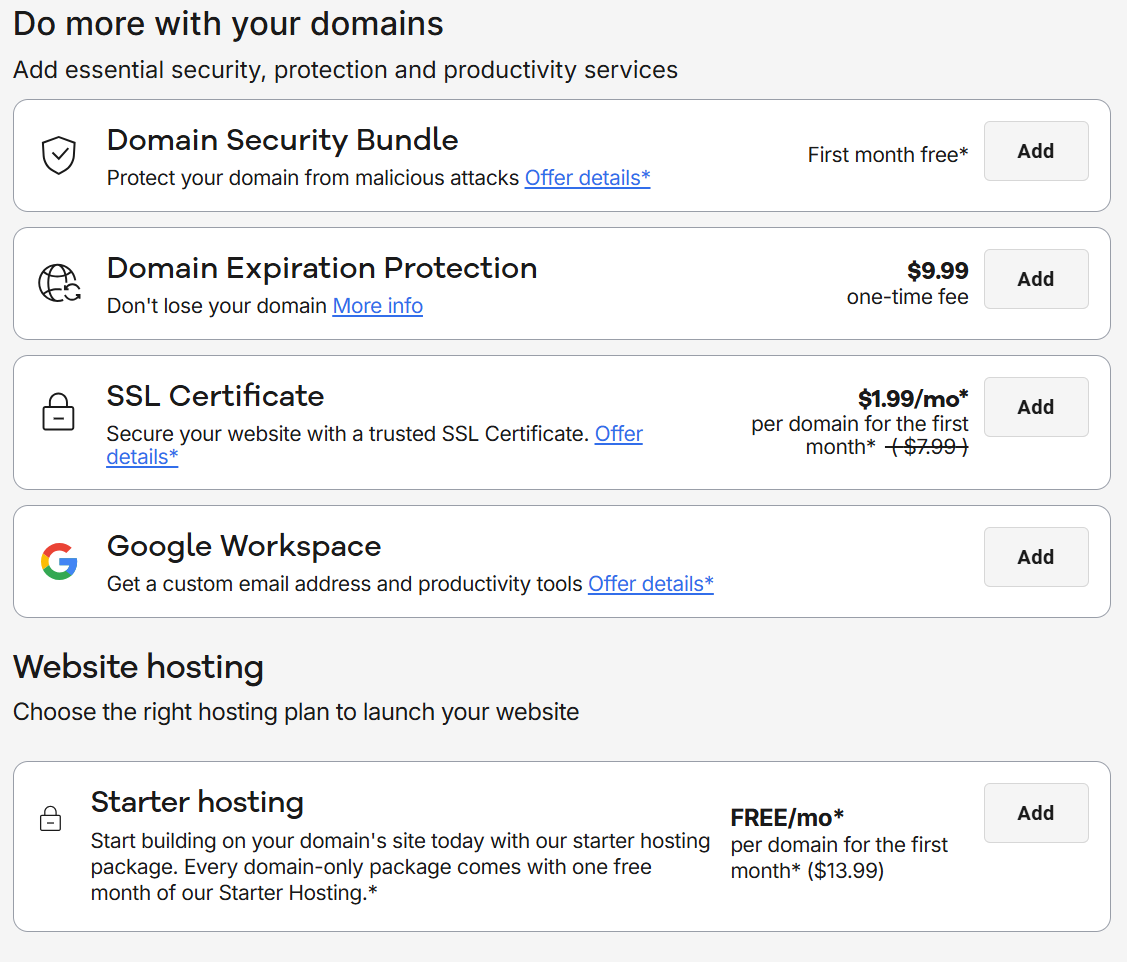
Before completing your purchase, take a moment to review any optional add-ons included with your domain. These may include features such as privacy or security services, which can affect both costs and long-term management.
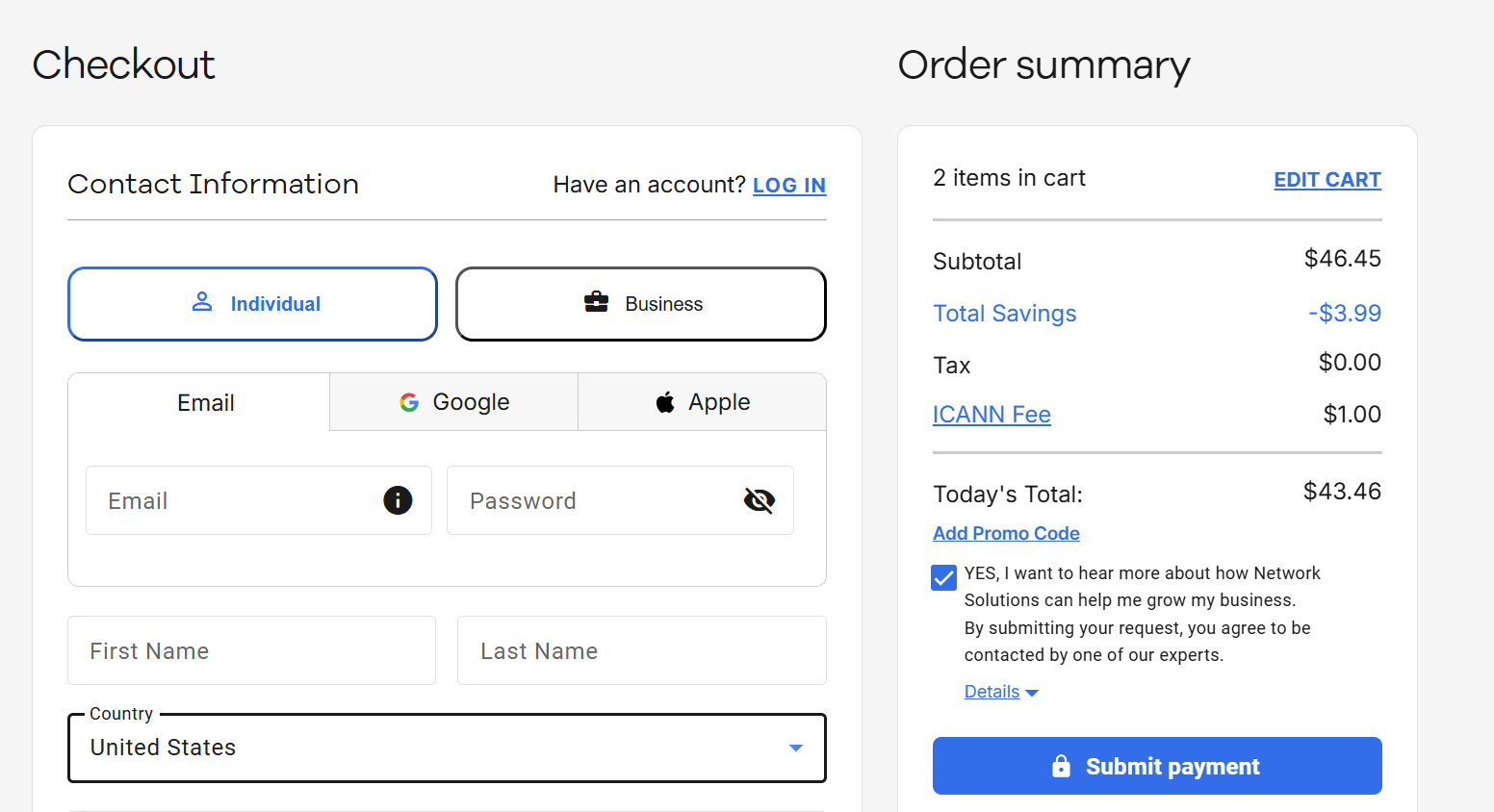
Confirm your selected domain, pricing details, and renewal terms, then proceed to checkout. A quick review here helps ensure there are no surprises after registration.
What are cheap domain names?
A cheap domain name is simply one that costs less than the average going rate, usually under $10 for the first year. There are plenty of affordable options out there, especially if you’re flexible with your domain extension.
Here are some reasons why the domain might be cheap:
- Low upfront cost: Most cheap domains are priced low for the first year, sometimes as little as $0.99.
- Promotional pricing: Some registrars offer steep discounts for new customers or when domains are bundled with hosting.
- Less competitive top-level domains (TLDs): Newer or less common extensions like .xyz, .site, or .online tend to cost less than classic .com.
Why do domain prices vary?
Domain prices swing with demand, extension, and your registrar’s pricing strategy.
Here are some other factors that determine a domain extension price:
- Keyword demand
- TLD choice
- Registrar pricing strategies
- First-year promo vs. Renewal
- Premium and aftermarket domains
Keyword demand
Domains that include popular words or phrases like “travel,” “tech,” or “finance”, are in high demand. The more desirable the keyword, the higher the price since it’s short and easy to remember.
TLD (top-level domain) choice
Some extensions are considered premium. A .com is typically more expensive than a .info or .xyz, simply because it’s more widely recognized and trusted. Country-code TLDs (like .us or .co.uk) and niche extensions (like .tech or .store) may also have varying price points.
Registrar pricing strategies
Each domain provider sets its own prices, which can vary based on promotions, bundles, or volume discounts. Some registrars offer low-cost domains to attract new customers, while others may focus more on long-term value.
First-year promos vs. renewal
Many domains are sold at steep discounts for the first year, sometimes for under $1. But renewal prices in the second year (and beyond) are usually higher. Always check the renewal terms before you register.
Premium and aftermarket domains
Some domains are already owned or considered especially valuable. These might be listed for sale by a third party or marked as “premium” by the registrar, at a much higher upfront purchase price.
Want a closer look at the full breakdown of domain pricing? We cover it in detail in our How Much Does a Domain Name Cost? blog post.
Why do cheap domains matter for your online presence?
A domain name is the front door to your brand. And just because it’s inexpensive doesn’t mean it can’t be strategic. In fact, low-cost domains can give you the flexibility to experiment, launch faster, and still make a strong impression online, because they:
- Are a cost-effective way to launch
- Build credibility without overspending
- Open doors for creative extensions
Cost-effective way to launch
Cheap domains are a smart choice if you’re starting a side hustle, launching a new idea, or running a small business on a tight budget. You can secure your name and start building without worrying about upfront costs.
Even better, affordable domains let you test different brand names or marketing ideas without committing to expensive, long-term purchases.
Build credibility without overspending
Just having a domain, especially one with a recognizable TLD like .com or .net, instantly makes you look more professional. It shows you’re serious about your project, even if you’re just getting started.
You don’t need a premium domain to build trust. A well-chosen, low-cost domain name paired with a clean site design can go a long way toward building credibility.
Open doors with creative extensions
With traditional domains getting harder to find, cheap alternative TLDs like .xyz, .site, or .online offer more room for creativity. These extensions can help your brand stand out—and often come with lower registration fees.
They’re especially useful if your .com of choice is taken or if you want something more unique and memorable.
What to watch out for when buying cheap domain names?
Low upfront pricing can be useful, but it’s worth looking a step ahead before registering a domain. Most surprises come from how “cheap” offers are structured, not from the domain itself. Keeping these common considerations in mind helps you avoid friction later:
- Renewal price increases: Many cheap domains are discounted only for the first year. After that, renewal rates often return to standard pricing, which can be significantly higher. Checking renewal costs early gives you a clearer picture of the long-term expense.
- Feature limitations: Some low-cost domains lack features commonly expected, such as privacy protection or flexible DNS management. These features may be available, but often as paid add-ons, which can change the overall cost.
- Free-domain trade-offs: Free domains are usually tied to another service, like hosting or a website builder. While this can reduce startup costs, it may limit flexibility if you want to switch providers later or manage services separately.
- Transfer restrictions: Certain domains come with rules that delay or complicate transfers, especially during the first registration period. Understanding when and how a domain can be moved helps you avoid being locked into a setup that no longer fits your needs.
Essential products to consider when buying a domain name
Buying a domain name is a great first step, but it’s just one part of getting your website up and running. To keep your website secure, protected, and running smoothly, it helps to bundle in a few key add-ons. These services aren’t always required, but they can save you trouble (and money) down the line.
- WHOIS Privacy
- Domain Expiration Protection
- SSL certificate
WHOIS Privacy
When you register a domain, your personal information, such as your name, email address, and address, is added to the public WHOIS database. This makes it easy for spammers, scammers, and data scrapers to find your contact details.
WHOIS Privacy Protection hides that information by replacing it with generic contact details. It’s an easy way to reduce spam, avoid unwanted solicitations, and keep your personal data private.
Domain Expiration Protection
If your domain expires, even by accident, it can cause serious problems. Your website might go offline, and worst of all, someone else might buy your domain before you renew it.
Domain Expiration Protection helps prevent that by adding extra time to renew your domain if it lapses. It gives you a safety net, so you’re not at risk of losing your domain name over a missed deadline.
SSL certificate
An SSL certificate encrypts the data sent between your website and your visitors. That means login info, contact forms, and payment details stay private and secure. You’ll also get the little padlock icon in the browser bar, which builds trust with visitors.
Some hosting plans include a free SSL certificate, but if not, it’s worth adding one yourself. It’s also a key factor in search rankings, as Google tends to favor secure (HTTPS) sites in search results.
Frequently asked questions
A cheap domain typically costs between $0.99 and $15 for the first year, depending on the extension and promotion. Renewal prices are usually higher, so it’s important to check long-term costs before registering.
Extensions like .xyz, .site, .online, and .info often have the lowest first-year prices. These are frequently discounted, but renewal rates can vary by extension.
Free domains are usually included with an annual hosting or website builder plan. The domain is free for the first year only, then renews at the standard rate.
A cheap domain is purchased separately at a low upfront price, while a free domain is bundled with another service. Free domains reduce initial costs but may limit flexibility if you change providers later.
Yes. All domains use the same ICANN-accredited infrastructure, regardless of price. Reliability depends more on the registrar’s security and DNS management than on the cost of the domain.
No. Search engines do not rank domains based on price or extension. Credibility comes from content quality, security, and how well the domain fits your brand.
Most domains can be transferred after the initial registration period, usually 60 days. Some free or promotional domains may have transfer conditions, so it’s best to review those before registering.
Your site and email may stop working, and the domain can eventually become available to others. Turning on auto-renewal helps prevent accidental loss.
Sometimes, but not always. WHOIS privacy is often optional or offered as a paid add-on, so check what’s included during checkout.

Make the most out of a cheap domain
Choosing a domain name doesn’t have to feel overwhelming or expensive. Affordable domain options give you room to start small, test ideas, and adjust as you learn what works. Whether you opt for a low-cost standalone domain or explore a free domain bundled with hosting, the goal is flexibility—not cutting corners.
We support this approach by offering cheap domain options, hosting, and website builder plans that help keep upfront costs manageable. When you’re ready to take the next step, having reliable tools in place makes it easier to move forward with confidence and build at your own pace.