
Key takeaways:
- Local SEO helps small businesses reach nearby customers who are ready to take action.
- Optimizing your Google Business Profile greatly boosts how easily local customers can find you online.
- Using SEO and analytics tools lets you measure and manage local SEO efforts, so you know what works.
Reaching local customers is one of the quickest ways for small businesses to increase revenue. When your business appears in these searches, you reach people who are nearby, ready to make a decision.
This is why local SEO is such a significant advantage for small businesses, particularly for brick-and-mortar stores that rely heavily on foot traffic and local recognition. Strong visibility in search results enables more customers to find you quickly.
With the right strategy, small businesses can differentiate themselves from larger competitors and attract a steady stream of local customers, even on a limited budget.
In this guide, you’ll learn how to strengthen your presence in local search, use reliable SEO tools, and create a foundation that helps your business get discovered by patrons in your community.
Why small businesses need local SEO
Local SEO enables small businesses to connect with customers who are actively searching for products and services in their local area. It levels the playing field against larger competitors by improving visibility within the community, where it matters most.
Here are five reasons why small businesses should adopt local SEO right away:
- Increased visibility
- Conversions
- Cost-effectiveness
- Trust and credibility
- Competitive edge
Increased visibility
Local SEO enhances your business’s visibility in local search results and map listings, positioning you in front of people searching for your offerings. This increased visibility helps drive foot traffic and online inquiries from customers who already have the intent to purchase. For small businesses, this is often the difference between being discovered and being overlooked.
Conversions
Local searches often come from people ready to act. Since there’s already intent, transactions are more likely to lead to conversions compared to non-local searches. When customers can quickly see your business hours, phone number, reviews, and location, they’re more inclined to inquire or visit.
Cost-effectiveness
Local SEO requires less investment than large-scale advertising, yet it delivers strong, long-term results. Small optimizations to your Google Business Profile, website, or online content can significantly increase visibility without burning through your budget. This makes it an efficient approach for small business owners with limited resources.
Trust and credibility
Accurate information, positive reviews, and consistent online visibility help build trust with local customers. When people see your business appear across reliable platforms like Google Maps, local directories, and social media, they naturally view it as more reputable. Local SEO strengthens this trust by ensuring your business remains ubiquitous across search platforms.
Competitive edge
Strong local SEO enables small businesses to compete directly with well-established brands in their own area. By optimizing for localized searches, you capture customers who prefer options near them or want to support local enterprises. With local SEO in your arsenal, you can still stand out even in highly competitive markets.
How to perform SEO for small local business entities
To strengthen your local presence, focus on helping nearby customers find your business and make it compelling enough for them to choose it over your competitors. A strong local SEO strategy for small businesses combines tactics such as optimizing your Google Business Profile, enhancing your website for local search, utilizing SEO tools for keyword research, and monitoring performance with analytics.
A clear strategy built around the right tools, accurate business information, and ongoing performance tracking helps you attract consistent foot and web traffic and convert it into paying customers.
The steps below break down these tactics and show how each one contributes to stronger local visibility and better results.
Create a Google Business Profile
A Google Business Profile is one of the most powerful tools in local SEO for small businesses. It helps your business appear in Google Maps and the local pack (which appears when a search has local intent). This visibility places your business in front of users who are already searching with local intent.
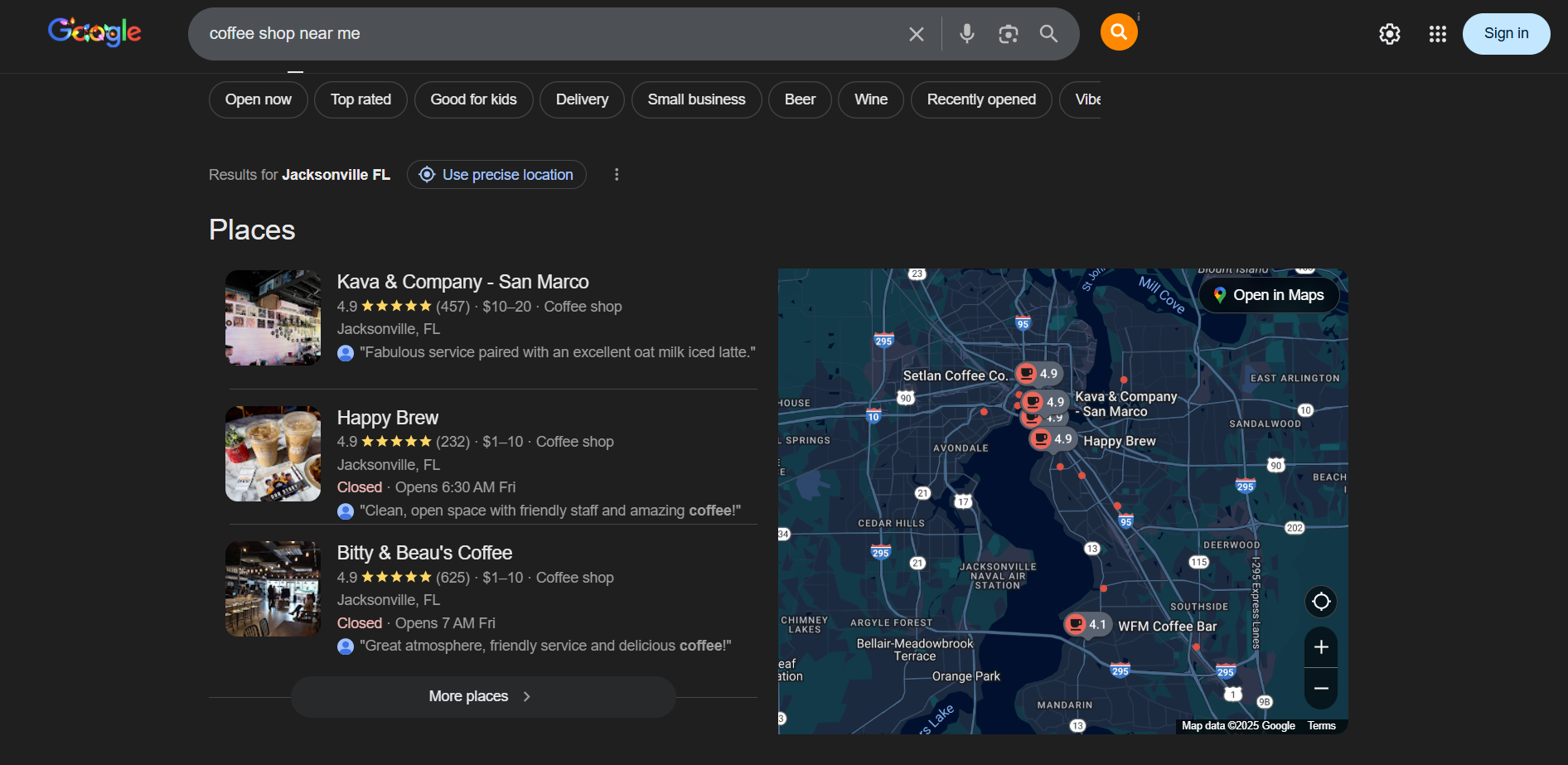
To get started, you need to claim and verify your Google Business Profile. Once claimed, it’s important to keep your name, address, and phone number (NAP) accurate and consistent across your profile and other online platforms.
NAP consistency helps Google accurately identify and trust your business information, which directly influences how often your business appears and how highly it ranks in local search results.
A well-optimized profile also improves your chances of appearing in the local pack. The local pack is a feature in the search engine results page (SERP) that showcases a map and three of the top businesses relevant to the search intent.
This section attracts high visibility and clicks, making it one of the most valuable placements for local businesses. Adding accurate business details, photos, and service descriptions strengthens your presence.
While having both a website and a Google Business Profile offers the strongest foundation for local search success, a stand-alone Google Business Profile can still be beneficial, especially for businesses just starting out or operating with limited resources.
It enables customers to access essential details, such as hours, directions, and reviews, even without a full website.
Build a website and localize it
For local businesses, having a website is one of the most effective ways to reach a wider customer base. It serves as your online storefront and a central hub where customers can learn more about and get in touch with your business.
Even for small or neighborhood-focused businesses, a website helps establish trust and credibility. Many customers search online first to compare options, check reviews, or confirm business details. Without a website, your business risks being overlooked in favor of other local businesses with a stronger online presence.
To strengthen your website’s impact on local SEO, focus on aligning your content with the people and community you serve.
- Define your target audience: Identify who your customers are, what they need, and what influences their buying decisions, so your messaging feels relevant.
- Tap into local culture and preferences: Highlight community involvement, reference local events, and use a tone that reflects the character of your area. Hiring local staff, who best understand the local culture, can help align your content with local expectations.
- Adapt content for local relevance: Use familiar phrases, regional terms, or local idioms where appropriate to make your business feel approachable and connected to the community.
Building a website doesn’t have to be costly or complex. Today’s website builders are affordable and easy to use, making them a practical option for beginners.
If you want a simple way to get started, our Website Builder offers an intuitive, budget-friendly solution designed specifically for small and local businesses.
If you prefer a visual walkthrough, this video shows how to build a branded website using an AI website builder, from layout to customization, in just a few steps.
Set up Google Analytics 4 and Google Search Console
Tracking performance is a key part of SEO. It gives you the insight needed to improve your strategies. Google Analytics 4 (GA4) and Google Search Console (GSC) provide clear visibility into how local customers discover and engage with your website. Having such data visibility enables you to make informed decisions.
GA4 allows you to measure local traffic by showing where users originate, how they navigate your site, and which pages drive engagement. You can also track conversions from local efforts, such as form submissions, calls, or appointment bookings, to understand which actions lead to real business results.
Google Search Console complements this by revealing how your site performs in search. It helps optimize and discover local keywords by showing which local queries trigger your pages, how often your site appears in search results, and where improvements are needed.
Together, GA4 and GSC provide a strong foundation for improving your local search performance over time.
Use complementary SEO tools
Local SEO is more effective when supported by the right SEO tools. These platforms make keyword research, competitor analysis, rank tracking, and opportunity discovery easier.
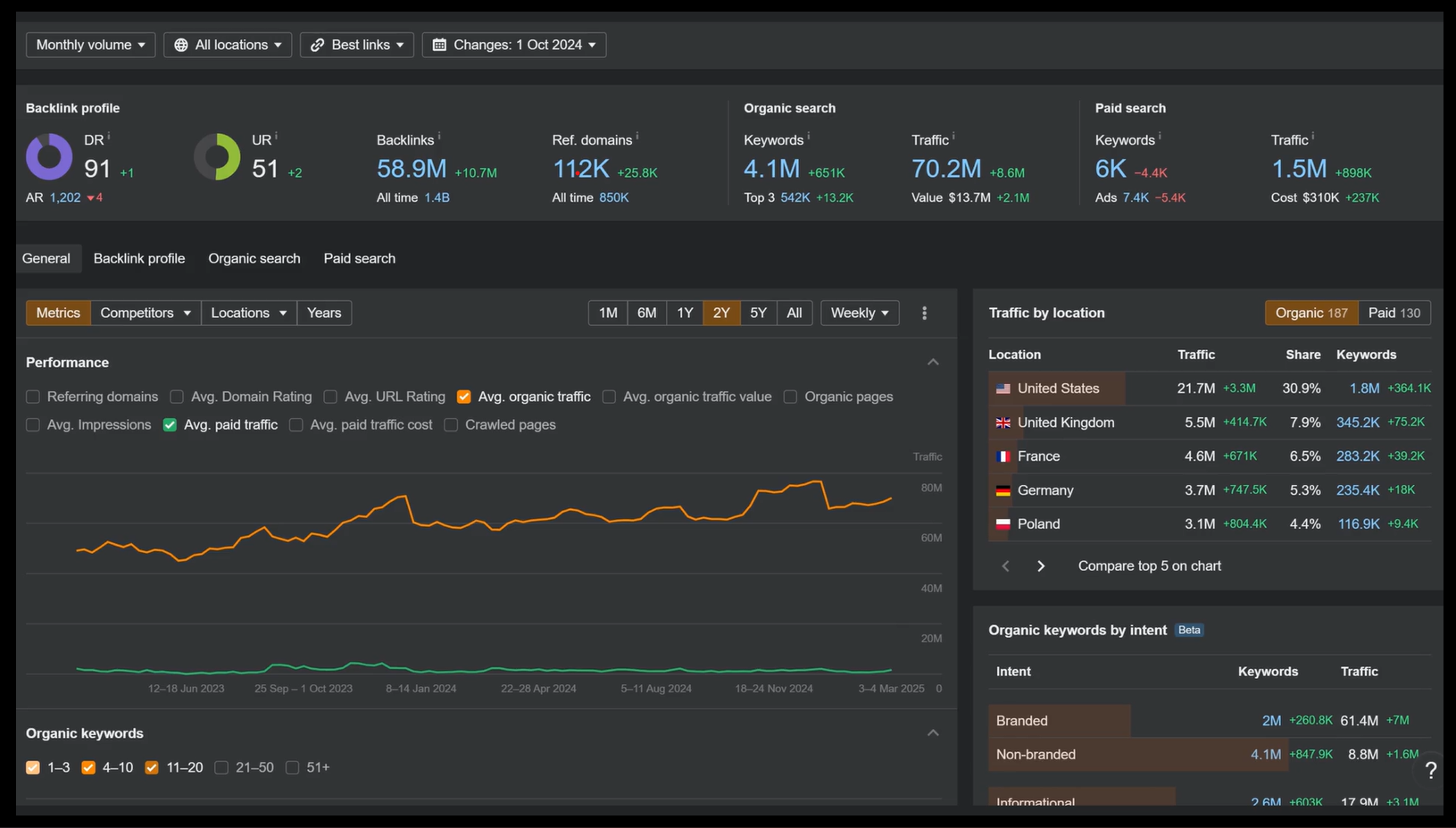
Ahrefs and SEMrush are widely used SEO platforms that offer powerful features for local SEO. They allow you to research location-based keywords, evaluate competitor performance in local search results, audit your website for SEO issues, and monitor keyword rankings over time. These insights help you understand where your business stands and what actions can improve local visibility.
For small businesses looking for a more budget-friendly option, SERanking is a strong alternative. It provides tools for keyword tracking, competitor analysis, website audits, and local rank monitoring at a lower cost.
Using these tools in conjunction with Google Analytics 4 and Google Search Console provides a comprehensive view of your local SEO performance. You can easily spot ranking opportunities and adjust your strategy based on measurable results.
Optimize your website
Website optimization is a core part of local SEO for small businesses. Search engines highly favor a well-optimized site, making it easier for local customers to discover your business.
Here are the key areas to focus on when optimizing your website for local SEO:
- Use SEO-friendly copy: Clearly explain what your business offers and where you operate. Add local keywords naturally in page titles, headings, and website copies so search engines can connect your site to relevant local searches.
- Optimize images: Compress images to improve load speed, use descriptive file names, and add alt text that reflects your services and location when appropriate. Faster pages improve both rankings and user experience.
- Improve your contact page: Include accurate business details such as your address, phone number, and hours, along with a clear call to action. A well-structured contact page helps convert visitors into customers.
- Optimize for mobile: Since Google uses mobile-first indexing, your website must load quickly and function smoothly on mobile devices. A mobile-friendly site improves visibility and keeps users engaged.
- Build quality backlinks: Link building is essential for local SEO. Focus on earning a small number of high-quality links from trusted local sources, such as community websites, local publications, or business associations. These links strengthen prominence, an important local ranking factor.
Leverage local SEO
Local SEO helps your business appear when nearby customers search for the products or services you offer. Instead of trying to reach everyone, it focuses on improving visibility for searches with local intent, where relevance and proximity play a major role.
These steps help strengthen your content for local search visibility:
- Conduct local keyword research: Identify how people in your area search for your products or services by focusing on service-based and location-based terms.
- Use local keywords: Include your city or neighborhood in your website content, page titles, and meta descriptions. By sharing your location, search engines can connect your business with local searches, like when someone types “best bakery in Richmond” or “hair salon near Main Street.”
- Apply keywords naturally: Use relevant local keywords in page titles, headings, and content without forcing them.
- Optimize titles and meta descriptions: Write clear, accurate metadata that helps search engines understand your pages and encourages users to click when your business appears in search results.
- Improve website user experience (UX): Make sure it’s mobile-friendly, fast-loading, and easy to navigate. These encourage visitors to stay longer, which signals to search engines that your site is helpful.
When optimizing for local search, you don’t need to force phrases like “near me” into your content. Google already understands a user’s physical location and prioritizes results closest to them, making those modifiers unnecessary for local SEO rankings.
Instead, focus on providing clear location signals, relevant content, and accurate business information so your pages align with local search intent. This approach improves visibility without over-optimizing or sounding unnatural.
Add schema markup
Schema markup is a type of structured data that helps Google and other search engines understand your business information more clearly and accurately. By adding schema to your website, you provide search engines with explicit details about your business, rather than leaving them to interpret content on their own.
One of the primary benefits of schema markup is its ability to enable rich search results, including review stars, business hours, pricing, and service details. These enhanced listings stand out visually and can increase click-through rates, making schema a valuable addition to any local SEO strategy.
For implementation, Google recommends using the JSON-LD format, which is easier to manage and less likely to interfere with your own website’s design. Local businesses should include key information, such as their business name, physical address, phone number, operating hours, services offered, customer reviews, and geo-coordinates, to strengthen their local relevance.
If you’re getting started, tools like Google’s Structured Data Markup Helper and Schema.org’s LocalBusiness generator can simplify the process. These tools guide you through creating and validating a schema without requiring advanced technical knowledge.
Manage reviews on local rating sites
Online reviews play a major role in how local customers evaluate businesses. Managing reviews across local rating sites strengthens your business’s credibility.
Start by claiming your business profiles on relevant review platforms and using the same core details from your Google Business Profile to maintain consistency. This ensures that potential customers see accurate information, regardless of where they search.
Actively monitor and respond to reviews, both positive and negative, in a timely and professional manner. Thoughtful responses show accountability, build credibility, and signal to customers and search engines that your business is engaged. Even negative reviews, when handled constructively, can strengthen your reputation.
Use social media platforms
Even if you’re not ready to invest heavily in a website, social media can help you build and maintain a strong local presence. Facebook, Instagram, and TikTok allow you to engage directly with your target market, share updates, promote offers, and build relationships with customers in your area.
Social media also supports local SEO by generating local social signals. Mentions, shares, and engagement around your business act as signals that reinforce relevance and authority, helping strengthen your overall search presence. While social activity isn’t a direct ranking factor, it contributes to your overall marketing and SEO efforts.
Sharing locally focused content further demonstrates your connection to the community. Posting about local events, partnerships, or behind-the-scenes moments helps customers see your business as an active part of the area. This relevance makes your brand more recognizable when customers encounter it online.
That said, social media platforms don’t offer full control over your content or audience. Algorithms change frequently, which can affect your reach. This is why social media works best as a complement to your website and local SEO strategy, not a replacement.
Run paid ads
Online ads are one of the most effective tools for local advertising. Even with limited budgets, online ads offer a strong return on investment (ROI) thanks to advanced targeting options.
Many advertisers and businesses refer to them broadly as Pay-Per-Click (PPC) ads, which is a form of online advertising where you only pay when someone clicks on your ad. This makes them cost-effective, perfect for small businesses.
Here are two of the most popular paid ad platforms you can consider:
- Google Ads: offers a variety of formats to help you target local customers effectively. With the right strategy, it can deliver impressive results, and many businesses achieve a 200% return on investment. Here are the most common Google channels/properties when you can advertise:
- Search ads: These ads appear when people search for terms related to your business. It’s great for capturing intent.
- Display ads: These are ads that you see across websites, apps, and YouTube.
- Google Local Services Ads: Perfect for service-based businesses, these ads appear at the top of search results, and you only pay when someone contacts you. Eligible providers even display a ‘Google Verified’ badge after passing Google’s screening.
- Google Shopping ads: These are useful for local retailers with physical products, allowing you to showcase your inventory to nearby searchers.
- Local Facebook ads: This type of ad helps you connect directly with nearby customers. How does it work? You can target audiences based on their location. This is great for promoting in-store events, limited-time offers, or boosting awareness in your area. It’s also important to note that these ads appear on Facebook and Instagram. You can use formats like image ads, video ads, or carousel ads to showcase your products or services.
With the right keywords and geo-targeting, PPC helps you attract local customers who are actively searching for your products or services.
No time to run your search ads? Our Google Ads pros can help.
Start email marketing
Your existing customers are one of your most valuable assets. They already know and trust your business, so maintaining a connection with them is important. It can lead to more repeat visits, referrals, and long-term customer loyalty.
For small local businesses, email marketing remains one of the most effective and affordable ways to stay in touch with customers.
When used consistently, email marketing supports local growth in several ways:
- Generates repeat website traffic: Regular updates, promotions, and reminders through email encourage customers to take action.
- Encourages reviews: Follow-up emails make it easy to request feedback.
- Increases local brand mentions and engagement: Staying top of mind leads to more sharing, referrals, and conversations within your community.
- Improves customer retention and lifetime value: Ongoing communication fosters stronger relationships and enhances the likelihood of repeat business over time.
Why you need to track your local SEO performance
Tracking your local SEO performance shows whether your efforts are driving visibility, traffic, and customer actions in your area. It also helps you identify what’s working, what isn’t, and where to refine your strategy.
The following tools covered earlier support local SEO measurement and analysis:
- Google Analytics 4: Tracks how local users find and interact with your website, helping you understand traffic sources, on-site behavior, and conversions
- Google Search Console: Shows how your site appears in search results, which local queries trigger visibility, and where technical improvements are needed
- Ahrefs: Provides insight into keyword rankings, backlinks, and competitor performance, helping you spot opportunities to improve local visibility
- SEMrush: Supports local keyword research, competitive analysis, and rank tracking, making it easier to refine your local SEO strategy
- SERanking: Offers affordable tools for tracking local search rankings, monitoring competitors, and auditing your website’s SEO health
Used together, these tools help you understand how your local SEO efforts perform, identify gaps or opportunities, and make informed adjustments to improve visibility and attract more local customers.
What is local search engine optimization (SEO)?
Local SEO is the practice of enhancing your online presence so that your business appears in search results for individuals searching for products or services in a specific geographic area.
Unlike broader SEO strategies that aim for global reach, local SEO prioritizes relevance, proximity, and visibility within a defined location. This makes it especially effective for small businesses that serve local communities or operate from physical locations.
Local SEO vs. general SEO
Aspect | Local SEO | General SEO |
|---|---|---|
Target audience | Customers searching within a specific area | Users searching without a location focus |
Search intent | Location-based and action-driven | Informational or broad commercial intent |
Key focus | Google Business Profile, local listings, reviews, maps | Website content, backlinks, and site authority |
Keywords | Localized terms and service-based queries | Broad, non-location-specific keywords |
Ranking factors | Proximity, relevance, prominence | Content quality, backlinks, technical SEO |
Best suited for | Small businesses, brick-and-mortar stores, service areas | Blogs, national brands, content-driven sites |
This distinction helps clarify why local SEO plays such a critical role in promoting small businesses within their communities.
Frequently asked questions
To promote your business for free, consider utilizing free tools like Google Business Profile, creating social media pages, and participating in local community events.
The most effective strategies include building a website, utilizing local SEO, running targeted email campaigns, posting on social media, and participating in local partnerships or events.
You can combine online and offline strategies. For example, building and optimizing a website, running Google ads, distributing flyers, and collaborating with local influencers. These strategies help you reach local customers on the streets and their screens.
Yes, it’s possible to appear in local search results using a well-optimized Google Business Profile. A complete profile with accurate business information, reviews, and regular updates can help your business show up in Google Maps and the local pack. That said, having a website gives you more control, credibility, and long-term growth potential.
Yes. Local SEO allows small businesses to be competitive in their local area. It connects your business with nearby customers who are actively searching, making it one of the most effective ways to drive traffic.
Results vary, but many businesses begin to see improvements within a few weeks to a few months. Factors such as competition, location, and the consistency of your efforts all play a role. Local SEO yields stronger results over time as visibility and trust are established.
Your path to local promotion
Promoting your business locally begins with establishing a solid foundation that enables nearby customers to find, trust, and choose you. Local SEO strengthens that foundation by enhancing your business’s visibility and relevance across organic search results.
A professional website plays an important role in local search success. It gives you control over your marketing and SEO efforts and also complements your Google Business Profile.
If you want a simple way to get started, our Website Builder helps you create a site built for local visibility. And as your business grows, our SEO Tool, SEO Professional Services, and Business Directories help you stay visible, track progress, and remain competitive.
To strengthen your local promotion, take the right steps, use the right tools, and build a presence that works for your business and your community.