


Key takeaways:
- Local SEO helps small businesses improve visibility in search engine results and connect with customers when local searches happen.
- Effective Google Business Profile optimization, consistent business information, and positive reviews can strengthen your presence across local search platforms and local directories.
- A complete local SEO strategy combines location-specific keywords, local citations, website optimization, and performance tracking to increase website traffic and attract relevant local audiences.
Reaching local customers is one of the quickest ways for small businesses to increase revenue. When your business appears in local searches, you reach nearby people who are ready to make a decision.
This is why local SEO is such a significant advantage for small businesses, particularly for brick-and-mortar stores that rely heavily on foot traffic and local recognition. Strong visibility in search results enables more customers to find you quickly.
With the right strategy, small businesses can differentiate themselves from larger competitors and attract a steady stream of local customers, even on a limited budget.
In this guide, you’ll learn how to strengthen your presence in local search, use reliable SEO tools, and create a foundation that helps your business get discovered by patrons in your community.
What is local search engine optimization (SEO)?
Local search engine optimization (SEO) is the process of improving your online presence so your business appears in location-based search results. It helps potential customers find your business when they search for products or services in a specific area, such as “coffee shop in Chicago” or “plumber near me.”
While traditional SEO focuses on improving visibility on a broader scale, local SEO targets nearby customers who are actively looking for solutions in their area. It emphasizes factors such as your Google Business Profile, business listings, customer reviews, local keywords, and geographic relevance.
For small businesses, local SEO is especially valuable because it connects you with people who are often ready to take action, whether that’s visiting your store, calling your business, or booking a service.
If you’re new to the topic, it helps to first understand the basics of SEO and how search engines rank websites. Check out our guide on what SEO is to learn the fundamentals before diving deeper into local search optimization.
Why small businesses need local SEO
Local SEO helps small businesses compete for visibility when nearby customers are actively searching for solutions. Rather than casting a wide net, it focuses your marketing efforts on people within your service area who are more likely to visit, contact, or buy from your business.
The opportunity is there. Nearly 46% of Google searches have local intent, while 76% of people who perform a nearby search on their smartphone visit a business within a day.
Local SEO offers several advantages for small businesses:
- Greater visibility: Helps your business appear in local search results, Google Maps, and other discovery channels.
- Higher conversion potential: Local searches often come from people who are already evaluating a purchase or service provider.
- Cost-effective growth: Many local SEO improvements deliver long-term value without the ongoing costs associated with paid advertising.
- Stronger credibility: Consistent business information and positive reviews help establish trust before a customer makes contact.
- A competitive advantage: Local SEO allows smaller businesses to compete for attention in their geographic market, regardless of company size.
How to perform local SEO for small local business entities
Local SEO works best when multiple components reinforce your business’s relevance within a specific geographic market. While no single tactic guarantees higher visibility, a strong local presence is built through a combination of accurate business information, a well-optimized website, customer trust signals, and ongoing performance tracking.
The following local SEO tips can help improve your visibility in local search results and connect your business with customers in your service area:
- Create a Google Business Profile
- Build a website
- Optimize your website
- Leverage local SEO
- Add schema markup
- Manage reviews on local rating sites
- Use social media platforms
- Run paid ads
- Start email marketing
- Set up Google Analytics 4 and Google Search Console
- Use complementary SEO tools
Create a Google Business Profile
A Google Business Profile (GBP) is one of the most important components of local SEO. It helps your business appear in Google Maps and the Local Pack, giving potential customers a direct way to find your business when searching for relevant products or services in your area.
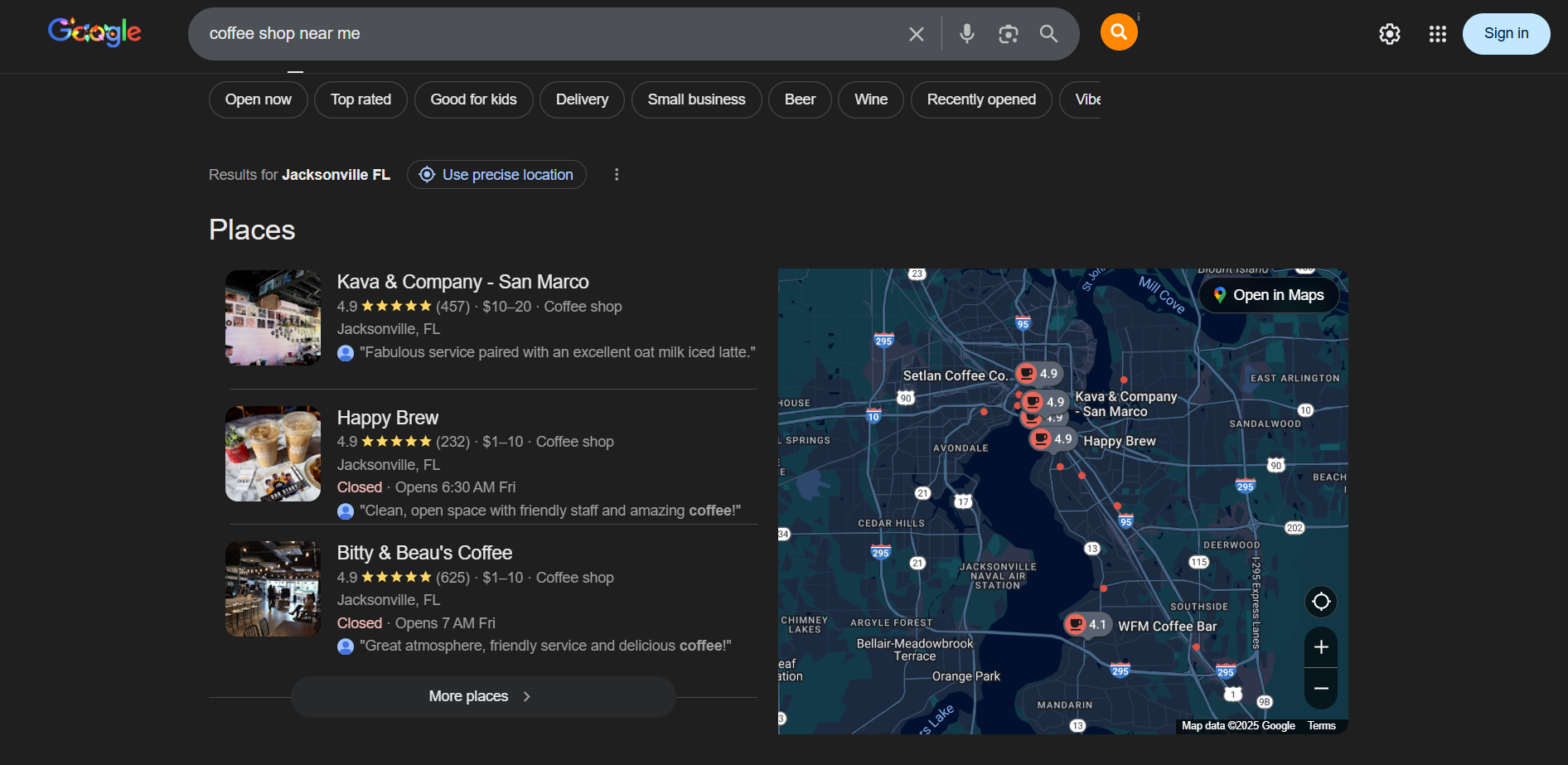
If you haven’t claimed your profile yet, start by learning how to manage your business presence with the Network Solutions Google Business Profile App. You should also claim and verify your Google Business Profile to ensure you have full control over your listing.
Once your profile is verified, keep your business information accurate and up to date. Pay particular attention to your business name, address, and phone number (NAP), as consistency across the web helps search engines confidently associate information with your business.
To strengthen your profile:
- Complete every relevant business detail.
- Add current business hours.
- Upload high-quality photos.
- Include products, services, and business descriptions.
- Encourage customers to leave reviews.
- Respond to customer questions and feedback.
A well-maintained Google Business Profile increases your chances of appearing in prominent local search placements while giving customers quick access to the information they need to make a decision.
Build a website
A website gives your business a permanent online presence that you control. While platforms like Google Business Profile and social media help customers discover your business, your website serves as the central source of information about your products, services, and brand.
For many customers, a website is also a trust signal. It gives them a place to verify your business, learn more about what you offer, and take action, whether that’s making a purchase, requesting a quote, or contacting your team.
Fortunately, building a website is more accessible than ever. Small business owners can use an AI website builder to launch a professional site quickly or work with a web design professional for a more customized solution.
If you want a simple way to get started, our Website Builder offers an intuitive, budget-friendly solution designed for small businesses. If you’d like to see the process in action, watch this guide on how to build a branded website using an AI website builder.
Ready to establish your online presence?
Whether you’re launching your first website or refreshing an existing one, our Website Builder makes it easy to create a professional site tailored to your business.

Optimize your website
An easy-to-use website encourages visitors to stay longer, explore your content, and take action. Beyond supporting local SEO, a positive user experience can improve engagement and increase conversion opportunities.
Focus on these areas when optimizing your website:
- Improve site speed: Fast-loading pages reduce friction and help keep visitors engaged. Compress images, remove unnecessary elements, and use reliable website hosting to improve performance.
- Optimize images: Use descriptive filenames, compress large images, and add alt text that accurately describes the image content.
- Improve your contact page: Make it easy for customers to reach you by displaying accurate contact details, business hours, and a clear call to action.
- Optimize for mobile devices: Ensure your website is responsive and functions smoothly across smartphones and tablets. Many local searches happen on mobile devices, making mobile usability essential.
- Create intuitive navigation: Organize your website so visitors can quickly find important information such as services, pricing, locations, and contact details.
Leverage local SEO
Local SEO helps search engines understand what your business offers, where you operate, and when your business is the most relevant result for a local search. The goal is to strengthen the location signals that influence local visibility without over-optimizing your content.
To improve your local search presence:
- Conduct local keyword research: Identify the search terms local customers use to find businesses like yours. If you’re new to keyword research, check out our guide on how to find the best keywords.
- Use local keywords naturally: Incorporate location-specific terms into your page titles, headings, service pages, and key website content where they fit naturally.
- Create locally relevant content: Publish content that reflects the communities you serve, such as location pages, local guides, community involvement, or industry insights relevant to your market.
- Optimize title tags and meta descriptions: Write clear metadata that communicates both your services and service area while encouraging users to click.
- Build quality local backlinks: Earn links from reputable local organizations, business associations, community websites, and local publications to strengthen your authority.
- Maintain consistent business information: Use the same business name, address, and phone number across your website, Google Business Profile, and online directories.
Note: When optimizing for local search, avoid forcing phrases like “near me” into your content. Search engines already use location data to understand local intent. Instead, focus on creating relevant content and maintaining accurate business information that clearly reflects the areas you serve.
Add schema markup
Schema markup is a type of structured data that helps search engines better understand your business information. By providing that information in a standardized format, you make it easier for search engines to interpret important details about your business.
For local businesses, schema markup can support richer search results that display information such as business hours, customer ratings, contact details, and service information. These enhanced listings can improve visibility and help users find relevant information more quickly.
Focus on including key business details in your schema markup like:
- Business name
- Address
- Phone number
- Operating hours
- Services or products
- Customer reviews
- Geographic location
Google recommends using the JSON-LD format because it’s easy to implement and maintain. If you’re new to structured data, tools such as Google’s Structured Data Markup Helper and Schema.org’s LocalBusiness templates can simplify the process.
Manage reviews on local rating sites
Online reviews influence how customers evaluate local businesses and can affect whether they choose to contact you or a competitor. They also help search engines assess your business’s credibility and prominence within the local market.
Start by claiming your profiles on relevant review platforms and ensuring your business information matches your Google Business Profile and website. Consistency helps customers find accurate information wherever they encounter your business.
To strengthen your online reputation:
- Encourage satisfied customers to leave reviews.
- Monitor reviews regularly across major platforms.
- Respond professionally to both positive and negative feedback.
- Address customer concerns promptly and constructively.
- Thank customers for sharing their experiences.
A steady stream of authentic reviews can strengthen trust, improve visibility, and provide valuable feedback that helps you improve the customer experience.
Use social media platforms
Social media helps local businesses stay visible between customer interactions. While users may discover your business through search engines, social platforms give you additional opportunities to build familiarity, strengthen relationships, and remain part of the local conversation.
A consistent social presence can support local marketing efforts by increasing brand recognition and driving traffic back to your website. It also provides a channel to share business updates, promote local events, highlight community involvement, and showcase customer experiences that reinforce trust.
Although social media contributes to broader visibility, it works best as a complement to your website and local SEO efforts. Unlike your website, you don’t control the platform or its algorithms, so social media should support, not replace, your owned online presence.
To optimize your social media management with your website, we offer a free social media management appwith every domain you purchase with Network Solutions.
Run paid ads
Local SEO builds visibility over time, but paid advertising can help you reach potential customers more quickly. When used strategically, paid ads place your business in front of people who are already searching for products or services in your area.
Platforms such as Google Ads and social media advertising allow businesses to target audiences based on factors like location, search intent, and demographics. This level of targeting can help small businesses make the most of limited marketing budgets while focusing on high-intent prospects.
Paid advertising is particularly useful when launching a new business, promoting a seasonal offer, or entering a competitive market where organic visibility may take longer to establish. While it shouldn’t replace local SEO, it can complement your long-term efforts by generating immediate exposure and traffic.
Need help reaching more local customers?
Our Google Ads specialists can help create and manage campaigns that align with your business goals and budget.

Start email marketing
Local SEO helps customers discover your business, but email marketing helps you stay connected after that initial interaction. It’s one of the most effective ways to build relationships with existing customers, encourage repeat business, and remain top of mind between purchases.
Regular email communication gives you a direct channel to share updates, promote offers, request reviews, and announce upcoming events without relying on search engine rankings or social media algorithms. Over time, those touchpoints can strengthen customer loyalty and increase the likelihood of referrals.
For small businesses, email marketing is also relatively affordable, making it a practical complement to your broader local marketing strategy. Even a simple email newsletter can help turn one-time buyers into repeat customers.
If you’re looking for an easier way to manage customer communications, learn how an email marketing app can help streamline your campaigns and audience engagement.
Set up Google Analytics 4 and Google Search Console
Local SEO is an ongoing process, not a one-time project. To understand what’s working and where improvements are needed, you need visibility into how people find and interact with your website.
Google Analytics 4 (GA4) helps you understand user behavior after visitors arrive on your site. It shows which pages attract the most traffic, how visitors engage with your content, and which actions contribute to business goals.
Google Search Console (GSC) provides insight into your search performance. It shows the queries that bring visitors to your site, how often your pages appear in search results, and opportunities to improve visibility.
Used together, these tools provide a clearer picture of your local search performance. You can make informed decisions based on real user behavior and search data instead of relying on assumptions.
Use complementary SEO tools
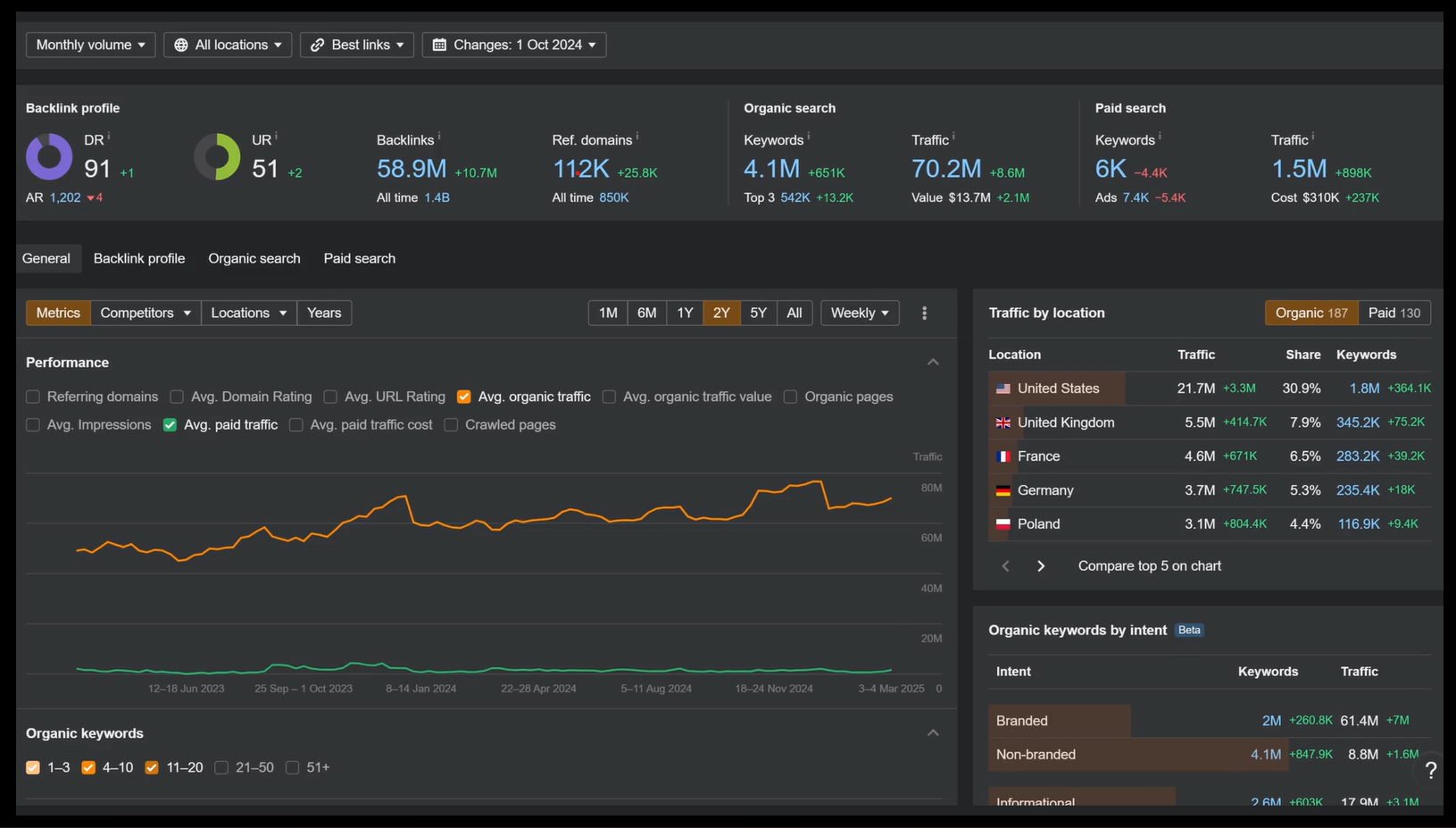
Google Analytics 4 and Google Search Console provide valuable performance data, but complementary SEO tools can help uncover additional opportunities to improve your local search visibility. These platforms are particularly useful for keyword research, competitor analysis, and rank tracking.
Some popular options include:
- Ahrefs: Research local keywords, analyze backlinks, track rankings, and evaluate competitors.
- SEMrush: Monitor keyword performance, audit your website, identify technical issues, and analyze competitors.
- SE Ranking: Track local rankings, conduct site audits, monitor competitors, and measure SEO performance with a smaller budget.
Each platform offers different capabilities, but the goal is the same: helping you make more informed decisions about your local SEO efforts.
If you’re exploring your options, check out our guide to the best SEO tools for small businesses.
Why you need to track your local SEO performance
Local SEO is most effective when it’s treated as an ongoing process. Tracking your performance helps you understand whether your SEO strategy is improving visibility, attracting potential customers, and contributing to business growth.
Without measurement, it’s difficult to know which marketing strategies are generating results and which areas need attention. Regular monitoring allows you to identify opportunities, refine your approach, and make informed decisions based on actual performance rather than assumptions.
Tracking your local SEO performance helps you:
- Determine which marketing strategies generate the most traffic and leads.
- Measure the effectiveness of your SEO strategy over time.
- Understand how potential customers discover your business online.
- Monitor changes in local rankings and search visibility.
- Identify high-performing content and optimization opportunities.
- Demonstrate the return on investment of your local marketing efforts.
The insights you gain can help you allocate resources more effectively, prioritize high-impact improvements, and adapt to changes in customer behavior and local search trends. The more accurately you measure performance, the easier it becomes to build a sustainable local SEO strategy that supports long-term growth.
Frequently asked questions
To promote your business for free, consider utilizing free tools like Google Business Profile, creating social media pages, and participating in local community events.
The most effective strategies include building a website, utilizing local SEO, running targeted email campaigns, posting on social media, and participating in local partnerships or events.
You can combine online and offline strategies. For example, you can build and optimize a website, run Google ads, distribute flyers, and collaborate with local influencers. These strategies help you reach local customers on the streets and their screens.
Yes, it’s possible to appear in local search results using a well-optimized Google Business Profile. A complete profile with accurate business information, reviews, and regular updates can help your business show up in Google Maps and the Local Pack. That said, having a website gives you more control, credibility, and long-term growth potential.
Yes. Local SEO allows small businesses to be competitive in their local area. It connects your business with nearby customers who are actively searching, making it one of the most effective ways to drive traffic.
Results vary, but many businesses begin to see improvements within a few weeks to a few months. Factors such as competition, location, and the consistency of your efforts all play a role. Local SEO yields stronger results over time as visibility and trust are established.
Your path to local promotion
Local visibility creates opportunities. When customers can find your business at the moment they need it, you’re positioned to earn their attention, their trust, and ultimately their business.
That’s why local SEO remains one of the most valuable investments a small business can make. It helps you strengthen your digital presence, compete more effectively in your market, and connect with customers who are actively looking for what you offer.
The path forward doesn’t require a massive budget or a complete marketing overhaul. It requires consistent progress. Start with the fundamentals, build on what’s working, and continue refining your approach as your business grows.
If you want a simple way to get started, our Website Builder helps you create a site built for local visibility. As your business evolves, our SEO Tool, Professional SEO Services, and Business Directories can help you measure performance, strengthen visibility, and stay competitive in local search.
The opportunity is there. The next step is turning local visibility into lasting business growth.