

Key takeaways:
- Pay-per-click (PPC) advertising lets you place your business directly in front of high-intent users, giving you immediate visibility where organic reach may take time to build. You only pay when someone engages, making it a controlled and measurable approach.
- PPC management services work by targeting specific search terms, audiences, and audience behaviors. This allows you to reach the right people at the right time based on what they’re searching for and their online activity.
- The main benefit is scalability with clear performance data. You can test, optimize, and adjust campaigns quickly to improve ROI and support both short-term traffic and long-term growth.
Businesses earn an average of $2 in revenue for every $1 spent on Google Ads, delivering a 200% return on ad spend (ROAS). At the same time, visitors who arrive through PPC ads are 50% more likely to convert than those from organic traffic. Keep in mind that results may vary widely by industry, competition, and campaign quality.
Pay-per-click (PPC) advertising requires active management to stay competitive and profitable. Campaigns left unattended quickly lose efficiency due to wasted ad spend and declining conversion opportunities.
Many businesses treat PPC as a set-it-and-forget-it channel. In reality, it’s an ongoing process that demands consistent optimization, from refining keywords and ad copy to adjusting bids and improving landing pages.
Find the perfect domain
Ready to register a domain name? Check domain availability and get started with Network Solutions today.
What is pay-per-click (PPC) marketing?
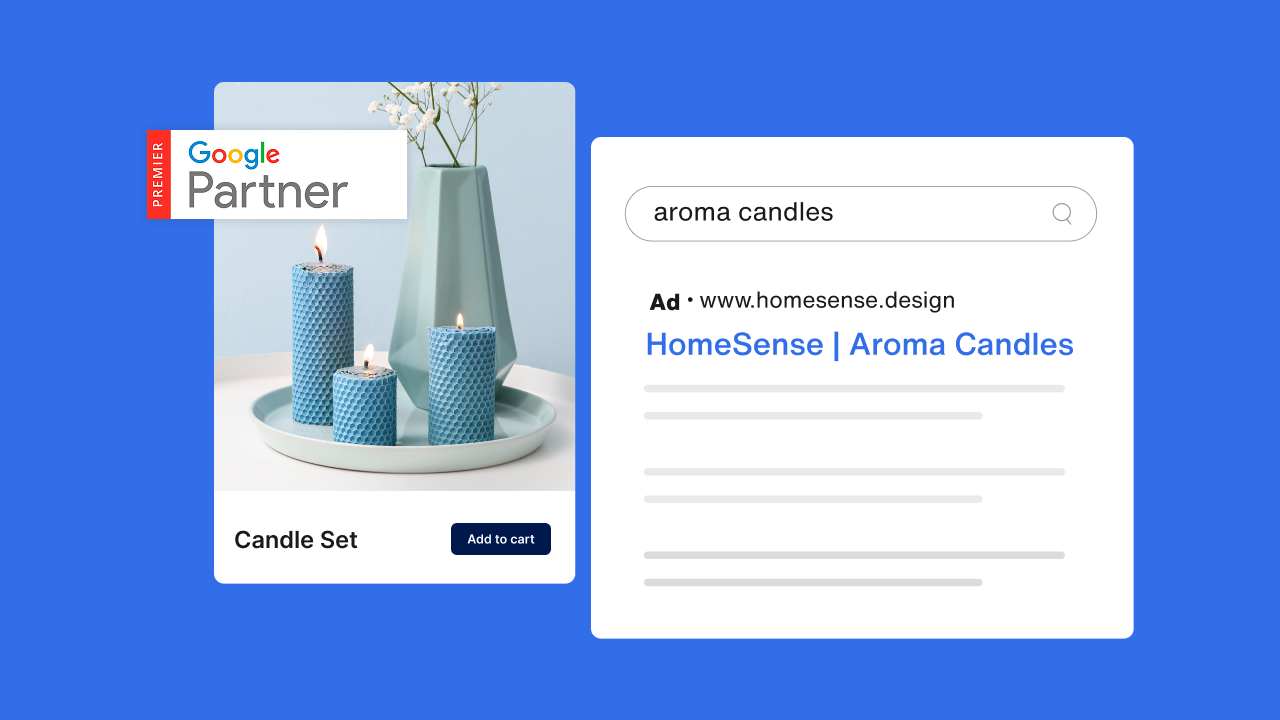
Pay-per-click (PPC) marketing is a digital advertising model where you pay only when someone clicks your ad. In PPC advertising, businesses bid on keywords tied to their products or services so their ads can appear when potential customers search for related terms.
These ads may include headlines, images, prices, ratings, locations, or other details that help users decide whether to click. To understand how PPC campaigns drive results, it helps to look at the auction process behind each search and the path from click to conversion.
If you’re just starting your online business, you first need to secure the essentials like capital and personnel before considering your digital marketing efforts. Our guide on the cost of starting an online business can give you the rundown if you’re just starting out.
How a PPC ad works when someone searches
PPC ads are designed to reach people who are already searching for a specific product, service, or solution. That intent makes them more likely to click, compare options, and convert. Once you understand the process on Google, the same PPC principles apply to platforms like Bing and Facebook.
- A user enters a search query on a search engine.
- A PPC auction automatically takes place behind the scenes.
- The search engine analyzes the relevance and quality of advertisers’ ads.
- The search engine determines which ads to display based on factors such as bid amount, ad quality, and landing page experience.
- If the user clicks on an advertiser’s ad, they are directed to the advertiser’s website.
- The advertiser pays the search engine a predetermined amount based on the bid. This process allows businesses to gain visibility and attract potential customers while paying only when someone clicks their ad.
What are the key components of pay-per-click advertising?
There are several components to PPC campaigns. All of which are necessary to get your business and its message out to potential customers. Let’s get into the details for each item below:
- Keywords
- Ad auction
- Ad groups
- Quality score
Keywords
Keywords act as triggers that allow your ads to appear in search results. When a user enters a query, the platform scans for relevant keywords and matches ads accordingly. For example, if someone searches for “pizza in New York,” ads from businesses targeting keywords like “best pizza in NY” or “New York pizzeria” can appear.
Since keywords dictate ad visibility and cost, targeting irrelevant terms might drive traffic, but it won’t always lead to conversions.
Use tools like Google Keyword Planner, Ahrefs, SEMrush, and SE Ranking to find keywords with strong intent and manageable competition. Prioritize metrics, including CTR, CPC, and search intent, over search volume to discover the best keyword opportunities for your goals.
Long-tail keywords—like “best vegan pizza in Brooklyn”—are highly effective. These specific search phrases usually have lower competition and cost and attract users with higher purchase intent.
Ad auction
An ad auction determines which ads appear and in what order every time a user performs a search. For each search, Google evaluates multiple factors to decide which ads are most relevant and valuable:
- Bid: The maximum amount you’re willing to pay for a click on your ad. Start with competitive bids to gather performance data, then adjust based on results to improve efficiency and control costs.
- Quality score: A measure of your ad’s relevance and usefulness, based on factors like expected click-through rate (CTR), ad relevance (how well the ad matches keywords), and landing page experience (how good the user’s destination page is). Higher quality scores can lower your costs while improving ad position.
- Ad extensions and formats impact: Additional elements, such as your business location, phone numbers, and site links, that appear alongside your ad to enhance visibility and encourage user engagement.
To stay competitive, monitor your impression share regularly. Impression share is the percentage of available times your ads appeared compared to how often they could have appeared. This helps you understand how often your ads appear relative to available opportunities and identify whether you’re missing visibility due to budget or ranking limitations.
Ad groups
Ad groups organize your PPC campaigns by grouping related keywords, ads, and landing pages into a clear structure. Ad groups determine which keywords (search terms) trigger your ads, what messaging users see, and where they land after clicking.
A well-structured account keeps each ad group focused on a specific theme.
- Keyword grouping: Each ad group should contain keywords that share a common intent. Keep groups tightly themed, ideally with 10-20 keywords, to maintain relevance and control.
- Ad alignment: Ads within the group should directly reflect the keywords you’re targeting. This improves click-through rates and ensures your messaging matches what users are searching for.
- Landing page consistency: The destination page should align with both the keywords and the ad copy. A consistent experience increases the likelihood of conversion.
The number of ad groups in a campaign depends on how many distinct keyword themes you’re targeting.
Quality score
The quality score, a number from 1 to 10, measures how relevant and useful your ads are compared to competitors. Relevance means how closely your ad matches the keywords, and usefulness is how likely your ad is to satisfy the searcher’s intent. A higher quality score improves your ad position and lowers your cost per click (the amount you pay each time someone clicks your ad).
It’s calculated based on three core components:
- Click-through rate (CTR): The likelihood that users will click your ad, calculated as the percentage of ad impressions (times your ad was shown) that resulted in clicks. Regularly test different ad copy to improve engagement and identify what resonates with your audience.
- Ad relevance: How closely your ad aligns with the keywords you’re targeting. Tightly matched messaging increases both visibility and performance.
- Landing page experience: This refers to how effective and relevant the page people see after clicking your ad is. Make sure your landing pages match the message in your ad, load quickly, and offer a clear and easy way for visitors to take action, such as signing up or making a purchase.
To maintain a strong quality score, continuously refine your campaigns.
What are the different types of pay-per-click ads?
PPC advertising includes several ad formats, each designed to reach users at different stages of the buying journey. Choosing the right type depends on your goals, audience, and where they are in the decision-making process.
- Search
- Display
- Video
- Remarketing or retargeting
- Other types
Search
Search ads appear at the top of search engine results pages when users enter specific queries. These are intent-driven ads, meaning they target users actively looking for a product or service. Because of this, search ads often deliver high conversion rates and are ideal for capturing demand.
Display
Display ads appear across websites within an ad network, typically as banners or images. They are effective for building awareness and reaching users who may not be actively searching but fit your target profile. While conversion rates are generally lower than with search ads, display ads help keep your brand visible.
Video
Video ads run on platforms like YouTube and appear before, during, or after video content. They are useful for storytelling, product demonstrations, and brand building. Video ads help engage users visually and can influence buying decisions earlier in the funnel.
Remarketing or retargeting
Remarketing targets users who have already visited your website but did not convert. These ads follow users across platforms, reminding them of your offer and encouraging them to return. Since these users have already shown interest, remarketing campaigns typically deliver higher conversion rates.
Other types
Additional PPC advertising formats offer more advanced targeting and automation:
- Remarketing lists for search ads (RLSA) allow you to adjust bids or messaging for users who have previously visited your site when they search again.
- Performance Max campaigns use automation to run ads across multiple Google channels, optimizing placements based on performance data.
- Local search ads help businesses appear in location-based searches, making them ideal for driving foot traffic and local leads.
What are the top PPC management service platforms?
PPC advertising has management platforms and tools that allow businesses to create, run, and optimize paid advertising campaigns across search engines and social media channels. Each platform offers different targeting options, ad formats, and audience reach, making it important to choose based on your goals.
Google Ads
Google Ads is the primary PPC platform for most businesses because it lets you reach customers across search results, display placements, shopping listings, YouTube, and partner sites. It is especially useful for capturing high-intent users who are actively looking for products or services like yours.
Once you create a Google Ads account, you can manage campaigns across the wider Google ad network, including YouTube ads. Many targeting options carry over, such as keywords, demographics, interests, and user behavior. This makes YouTube a natural extension of your PPC strategy, especially when you want to pair search intent with visual storytelling, brand awareness, retargeting, and conversion-focused video campaigns.
Facebook Ads
Facebook Ads focuses on audience-based targeting rather than search intent. It allows businesses to reach users based on demographics, interests, and behavior. This makes it effective for awareness, lead generation, and retargeting campaigns.
Instagram Ads
Instagram Ads operate through Meta’s ad system and focus on visual content. They are effective for brands that rely on strong visuals, such as e-commerce, lifestyle, and service-based businesses. Placement options include feeds, stories, and reels.
Microsoft Advertising
Microsoft Advertising (formerly Bing Ads) places ads on Bing, Yahoo, and partner networks. It often has lower competition and a lower CPC than Google Ads. This makes it a cost-effective option for reaching additional search traffic, especially in specific demographics.
TikTok
TikTok Ads focus on short-form video content and are designed for high engagement. The platform is effective for reaching younger audiences and building brand awareness through creative, trend-driven campaigns.
LinkedIn Ads are designed for B2B marketing. They allow precise targeting based on job title, industry, company size, and professional interests. This makes them ideal for lead generation, recruitment, and high-value services.
X (formerly Twitter)
Twitter Ads help businesses reach users through promoted posts, trends, and accounts. They are useful for real-time engagement, brand awareness, and participating in trending conversations.
Working with a PPC marketing company can get you ahead; however, doing additional research into each platform’s inner workings can inform you at no extra cost. Our guide on social media marketing can help you learn more.
Start building your online presence through our DIY Website Builder!
Establish your personality by launching your website in a matter of minutes, instead of days!

What are the advantages of PPC management services for small businesses?
Standing out in your market is a must, and this is where PPC for small businesses comes in handy. Read on for the advantages that allow you to position yourself ahead of the competition:
- Cost efficiency and budget control
- Reach and visibility
- Targeted reach and audience segmentation
- Measurable key performance indicators (KPIs)
- Flexible adjustments for PPC campaigns
Cost efficiency and budget control
Worried about overspending? PPC gives you direct control over your budget. You can set clear limits at the daily, weekly, or campaign level to ensure your spend stays within defined boundaries.
Because of this, PPC services are favored for their measurability and controllability. You choose your investment, adjust bids, and scale based on performance, all within your limits.
You’re only charged when someone clicks your ad, making PPC management services a cost-efficient way to focus your budget on actual engagement with strong potential for ROI.
Reach and visibility
PPC ads place your business in the most visible positions on search engine results pages. These ads typically appear in positions one to four at the top of the page, above organic listings.
This placement matters. The top of the SERP captures the majority of user attention and clicks, especially for high-intent searches. By appearing here, your business gains immediate visibility to users actively looking for what you offer.
Unlike organic results, which take time to build, PPC services give you instant exposure and allow you to compete for top placement from day one.
Targeted reach and audience segmentation
Precision drives performance in PPC services. It allows you to reach specific audiences at the right time, ensuring your ads are shown to users who are more likely to convert.
- Granular audience targeting: PPC platforms let you refine your audience based on detailed criteria, helping you focus on high-intent users rather than broad, unqualified traffic.
- Demographic targeting: Target users by age, gender, and household income to align your ads with your ideal customer profile and improve lead quality.
- Geographic targeting: Show ads in specific locations, down to a set radius. This is especially valuable for local or brick-and-mortar businesses that rely on nearby customers.
- Exclusion targeting: Filter out audiences who are unlikely to convert, such as existing customers or users outside your service area. This reduces wasted spend and improves efficiency.
- Remarketing: Re-engage users who have already visited your site but didn’t take action. These audiences are typically higher intent and more likely to convert on a second interaction.
With the right targeting strategy, PPC campaigns become more efficient, cost-effective, and focused on driving qualified results.
Measurable key performance indicators (KPIs)
PPC services deliver measurable results you can track in real time. You can monitor conversions, ROI, and key performance indicators (KPIs), then adjust your strategy based on what’s working and what’s not.
- Keyword quality score: This metric measures the relevance and performance of your ads on a scale of one to 10. A score of seven or above is strong, while eight to 10 is excellent. Scores below five often mean you’re overpaying. In fact, the difference between a score of four and eight can reduce your CPC by up to 50%.
- Click-through rate (CTR): The percentage of users who click your ad after seeing it. A higher CTR indicates strong alignment between your keywords, ad copy, and user intent, which, in turn, supports higher-quality scores.
- Conversion rate: This tracks how many clicks result in actual outcomes, such as purchases or inquiries. If traffic is high but conversions are low, the issue often lies in your landing page or offer.
- Ad-to-landing page alignment: Your landing page should match the message in your ad. Consistent messaging confirms relevance, reduces bounce rates, and increases the likelihood of conversion.
- Mobile-optimized design: A large share of PPC traffic comes from mobile devices, and Google uses mobile-first indexing to evaluate websites. If your pages are not optimized for mobile, you risk losing both rankings and conversions.
- Cost per click (CPC): The amount you pay for each click. It varies by industry and competition, but tracking it helps you understand whether your spend is efficient relative to the results you’re generating.
With consistent tracking and optimization, PPC becomes a data-driven channel where every adjustment can improve performance and reduce wasted spend.
Flexible adjustments for PPC campaigns
Working with a PPC agency is a practical investment for small businesses because it offers full control over spend, targeting, and performance. You can adjust campaigns in real time based on data, optimizing for better results without committing to fixed costs.
- Keyword management: Continuously refine your keyword strategy by focusing on high-performing terms and removing underperforming ones. Adjust match types such as broad, phrase, and exact to control how closely searches align with your keywords.
- Bid optimization: Monitor performance and adjust bids accordingly. Increase bids for keywords that drive conversions and reduce spend on those that don’t. Use bid adjustments based on location, device, and time to improve efficiency.
- Budget management: Allocate budget based on demand, seasonality, and campaign performance. Shift spend toward PPC campaigns that generate results and scale back where performance drops.
- Competitive adaptation: Stay responsive to market changes. Adjust bids, keywords, and messaging to remain competitive as new advertisers enter or trends shift.
- Test and learn: PPC allows you to experiment with minimal risk. Test new keywords, ad copy, and targeting strategies, then scale what works and pause what doesn’t.
Small business owners can also invest in a content marketing plan to help minimize expenses. You can optimize your marketing efforts without spending a dime with a concrete goal and framework.
How much does PPC advertising cost?
There is no fixed price, as costs vary depending on industry, keywords, platform, and campaign strategy.
On average, cost per click (CPC) on platforms like Google Ads ranges from $1 to $2 for search ad campaigns, but in competitive industries such as legal or finance, CPC can exceed $50 per click. Display and social ads often have lower CPCs, but may require higher volume to drive results.
Monthly PPC budgets also vary widely. Small businesses may spend anywhere from $500 to $5,000 per month, while more competitive campaigns can exceed $10,000.
If you work with a PPC management service, additional fees apply. Agencies typically charge either a flat monthly fee, a percentage of ad spend (often 10% to 20%), or a performance-based model. Some providers also require minimum ad spend thresholds.
Several factors influence the cost of PPC ads, and understanding them helps you manage your spending more effectively:
- Keyword competition: High-demand keywords increase bidding pressure, which raises CPC Competitive industries tend to have significantly higher CPCs.
- Quality score: More relevant ads and landing pages lead to higher quality scores, which can lower your CPC and improve ad placement.
- Targeting settings: Factors such as location, audience demographics, and device targeting can affect costs, depending on how competitive those segments are.
- Bidding strategy: Manual and automated bidding strategies affect how much you pay per click and how aggressively your ads compete in auctions.
- Industry and niche: Some industries, such as legal or finance, naturally have higher CPCs due to strong competition and high customer value.
- Ad relevance and performance: Ads with higher click-through rates and better engagement tend to perform more efficiently, reducing overall costs.
You don’t have to break the bank to get started on digital marketing. Optimizing ad spend and paid ads for a small business marketing plan can reduce expenses and boost profits.
PPC ads vs. SEO: Which is better for small businesses?
PPC and SEO both help small businesses drive traffic from search engines, but they work in different ways. PPC gives you paid visibility at the top of search results, while SEO helps your website earn organic rankings over time. The better choice depends on your timeline, budget, and business goals.
PPC is often the stronger option when you need immediate visibility. It lets you target high-intent users who are already searching for products or services like yours, control your daily budget, and measure ROI more directly. This makes PPC useful for product launches, seasonal promotions, competitive markets, or campaigns that require fast feedback on keywords, messaging, and landing pages.
On the other hand, SEO is better suited for long-term growth. It helps build brand credibility, brings in traffic without paying for every click, and reaches a broader audience across different stages of the buying journey. A strong SEO strategy can support blog content, service pages, educational guides, and other resources that help customers find your business before they’re ready to buy. If you want support improving your organic visibility, our SEO Tool can help you identify optimization opportunities and strengthen your website’s search performance.
For many small businesses, the best approach is not to choose one over the other but to use both strategically. PPC can drive short-term traffic while SEO builds long-term authority. PPC campaign data can also reveal high-performing keywords, customer intent, and messaging angles that strengthen your SEO strategy. To explore the differences in more detail, read our guide on SEO vs. PPC.
Frequently asked questions
Pay-per-click advertising is a form of online advertising where advertisers pay when someone clicks their ad. These paid search ads can appear on search engines, social media ads, shopping placements, or video ad placements, depending on the ad platform.
PPC advertising works through an ad auction. Advertisers bid on keywords, and platforms use factors such as ad relevance, bid amount, ad rank, and landing page experience to determine which ads appear on the search engine results page.
Search engine optimization focuses on earning organic visibility over time, while PPC uses paid search to place ads in search engine results. SEO supports long-term growth, while PPC can drive faster traffic through paid search campaigns.
Yes, PPC can be useful for small businesses because it lets you control your ad budget, target specific audiences, and measure results. It works best when your PPC strategy focuses on high-intent users, clear offers, and optimized landing pages.
PPC costs depend on your industry, competition, bidding strategy, quality score, and ad spend. Your cost per click (CPC) can change based on how many advertisers compete for the same keywords and how relevant your ads are.
Common PPC platforms include Google Ads, Microsoft Ads (formerly Bing Ads), and social media platforms. Google Ads is often the starting point for paid search, while Microsoft Ads and social media ads can help expand reach across other audiences.
Start with keyword research to understand what potential customers search for before they buy. Use tools like Google Keyword Planner, focus on long-tail keywords, and add negative keywords to prevent your ads from showing for irrelevant searches.
Negative keywords are terms you exclude from your campaigns so your ads do not appear for unrelated searches. They help protect your ad budget, improve targeting, and keep paid ads focused on users more likely to convert.
Track metrics such as clicks, conversions, cost per conversion, click-through rate, and return on ad spend. Tools like Google Analytics can help connect PPC campaigns to website actions, so you can see which ads, keywords, and landing pages drive results.
A PPC management agency can help if you do not have time to manage campaigns, test ad copy, perform keyword research, or optimize landing pages. Experienced PPC marketers can also help improve ad management, reduce wasted spend, and align PPC with your broader digital marketing and search engine marketing goals.
Take control of your PPC strategy
PPC advertising can help small businesses reach high-intent customers, test campaigns quickly, and drive measurable traffic without waiting for organic rankings to build. Whether you manage PPC yourself or work with a PPC management agency, the key is to stay focused on the right keywords, clear ad copy, strong landing pages, and ongoing optimization.
DIY PPC gives you control, but it also takes time, testing, and consistent campaign management. Working with experts can help you move faster, reduce wasted spend, and connect your ad strategy to broader business goals.
We can help you take the next step with our pay-per-click advertising services, website tools, and DIY Website Builder. And when you register a domain with us, you also get access to free marketing tools that can support your online presence as it grows.