

Key takeaways:
- User-generated content (UGC) helps small businesses build authentic connections with customers without breaking the marketing budget
- Running UGC campaigns through branded hashtags, contests, and customer spotlights turns your happy customers into brand ambassadors.
- User-generated content improves conversion rates by helping potential customers see real people using and trusting your products before making a purchase.
When’s the last time you bought something without checking the reviews first? If you’re like most people, the answer is probably never. That’s user-generated content at work.
It’s one of the most effective ways to build trust and grow your brand without spending thousands on professional photoshoots or ad campaigns. In fact, 93% of marketers using user-generated content say it performs significantly better than traditional branded content in their marketing campaigns.
For small business owners like you who juggle multiple responsibilities, UGC offers a sustainable way to keep your marketing fresh while letting your customers do the heavy lifting.
Let’s explore how to make it work for your business.
What is user-generated content (UGC) in marketing?
UGC is content created by customers, fans, or users about your brand rather than by your company. Examples of these are:
- Photos of people using your products
- Video testimonials
- Social media posts tagging your business
- Online reviews, blog posts mentioning your services
- Creative content inspired by your brand
The key difference between UGC and traditional marketing content is authenticity. When a real customer shares their genuine experience with your product or service, it carries more weight than any advertisement you could create.
UGC works because it provides social proof, the psychological phenomenon where people look to others’ actions and experiences to guide their own decisions. When potential customers see real people enjoying your products, they’re more likely to trust your brand and make a purchase.
Types of user-generated content
Small businesses can leverage several types of user-generated content to build their marketing strategy. Here are the following types:
- Photos and images
- Videos and unboxing content
- Customer reviews and testimonials
- Social media posts and mentions
- Blog posts and articles
- Podcasts and audio content
- Contest entries and creative submissions
Photos and images
Customer photos are the most common and accessible form of UGC. It works particularly well for retail, restaurants, fashion, beauty, and travel businesses. For example:
- Product photos shared on social media
- Images from branded events
- Photos of customers using your services
- Lifestyle shots featuring your products in everyday settings
They provide potential customers with a realistic view of what to expect, often showcasing your products in ways that professional photography can’t capture.
Videos and unboxing content
Video content has experienced a surge in popularity across TikTok, Instagram Reels, and YouTube. Likewise, video UGC captures emotion and personality in ways static images cannot. A customer’s genuine excitement when opening your product package or their step-by-step tutorial using your service creates an emotional connection that drives purchasing decisions.
Customer reviews and testimonials
Online reviews remain one of the most influential forms of UGC. Reviews can appear on your website, Google Business Profile, Yelp, industry-specific review platforms, and social media.
Written reviews provide detailed insights into customer experiences, addressing specific features, benefits, and potential concerns. They help potential customers make informed decisions and signal to search engines that your business is legitimate and active.
Social media posts and mentions
Social media UGC includes posts where customers tag your business, stories featuring your products, comments about their experiences, shares of your content, and participation in branded hashtags. They are particularly valuable because they’re public, shareable, and often include authentic enthusiasm.
When a customer posts about your small business to their 500 Instagram followers, you’re gaining exposure to an entirely new audience who trusts that person’s recommendations.
Blog posts and articles
Some customers take their enthusiasm further by writing detailed blog posts, publishing articles mentioning your business, creating gift guides featuring your products, or sharing case studies of their experiences. While less common than photos or reviews, blog content provides in-depth coverage that can drive sustained traffic to your website.
Podcasts and audio content
Audio UGC is an emerging trend where customers discuss your products on podcasts, create voice notes or reviews, participate in audio discussions about your brand, or share their experiences in audio format. While podcasts require more effort to create, they offer intimate, long-form storytelling opportunities.
Contest entries and creative submissions
When you run contests or challenges, customer submissions become valuable UGC. These typically include creative interpretations of your products, entries in design competitions, participation in photo challenges, or submissions to naming contests. Contest-driven UGC generates excitement while giving you permission to use customer-created content in your marketing.
What are the benefits of user-generated content?
Small businesses gain multiple advantages from incorporating user-generated content into their marketing strategy. Here are the benefits you can get from it:
- Builds trust and authenticity: UGC provides genuine experiences from real people. For example, when your customers find genuine photos, honest reviews, and unprompted social media posts about your business, they perceive your brand as trustworthy. And this authenticity can’t be manufactured through traditional advertising.
- Reduces marketing costs: Professional content creation is expensive. UGC dramatically cuts costs by letting customers create content organically while using your products. For small businesses with limited budgets, this cost efficiency is transformative.
- Provides social proof: UGC serves as visible evidence that real people value your products. For instance, a restaurant with hundreds of customer photos signals popularity and quality, while an online store with detailed reviews reduces purchase anxiety.
- Strengthens community: UGC campaigns create opportunities for customers to connect with your brand and each other. When you feature customer content, you build a sense of belonging that transforms transactional relationships into emotional connections.
- Generates fresh content consistently: Instead of struggling to produce daily posts, you can curate and share customer content. This provides a continuous stream of fresh, authentic material that keeps your social media active without burdening your team.
- Improves conversion rates: When potential customers see real people using and enjoying your products, it removes barriers to purchase and addresses doubts they may have.
5 real-life examples of UGC content
Seeing how successful brands leverage user-generated content can inspire your own strategy. Here are five standout examples.
GoPro: Building a brand through customer videos
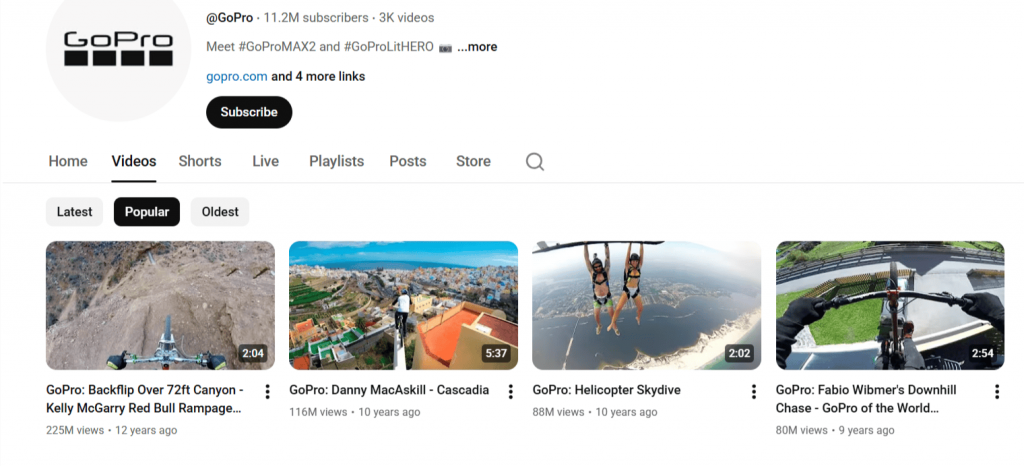
Action camera company GoPro built its entire marketing strategy around user-generated content. The company’s YouTube channel features customer-created videos, with the top three garnering over 420 million combined views. GoPro runs daily photo challenges and an annual awards show where customers submit their best footage, gaining access to incredible content that would cost millions to produce professionally.
Starbucks: The White Cup Contest
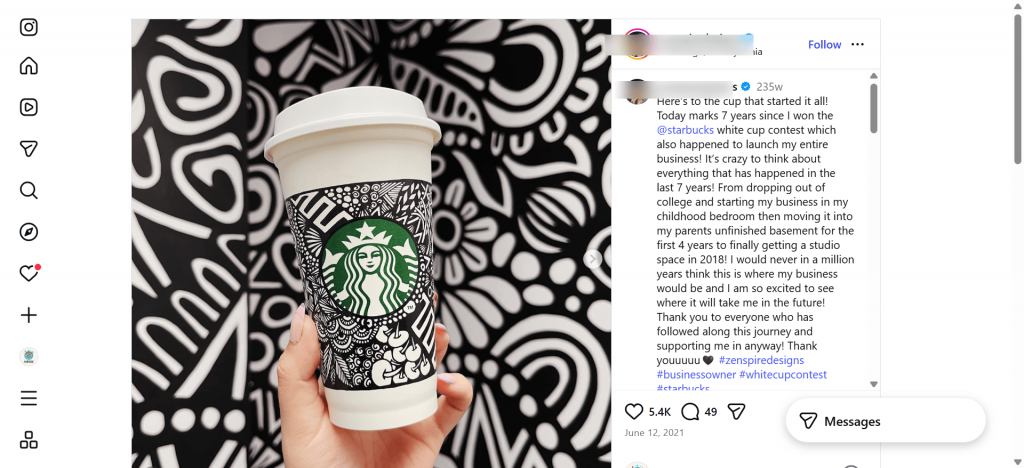
Starbucks invited customers to decorate their white coffee cups and share photos using #WhiteCupContest. In just three weeks, nearly 4,000 customers submitted entries. The winning design was printed on a limited-edition reusable cup. This campaign succeeded by giving customers a creative outlet, offering meaningful prizes, and generating thousands of pieces of shareable content.
Coca-Cola: Share a Coke campaign
Coca-Cola personalized bottles with popular names, encouraging customers to find their name and share photos on social media. The campaign generated massive UGC as people posted photos with personalized bottles and shared them with friends. The genius was making customers feel personally connected to the product, creating moments worth sharing.

ASOS: As Seen on Me
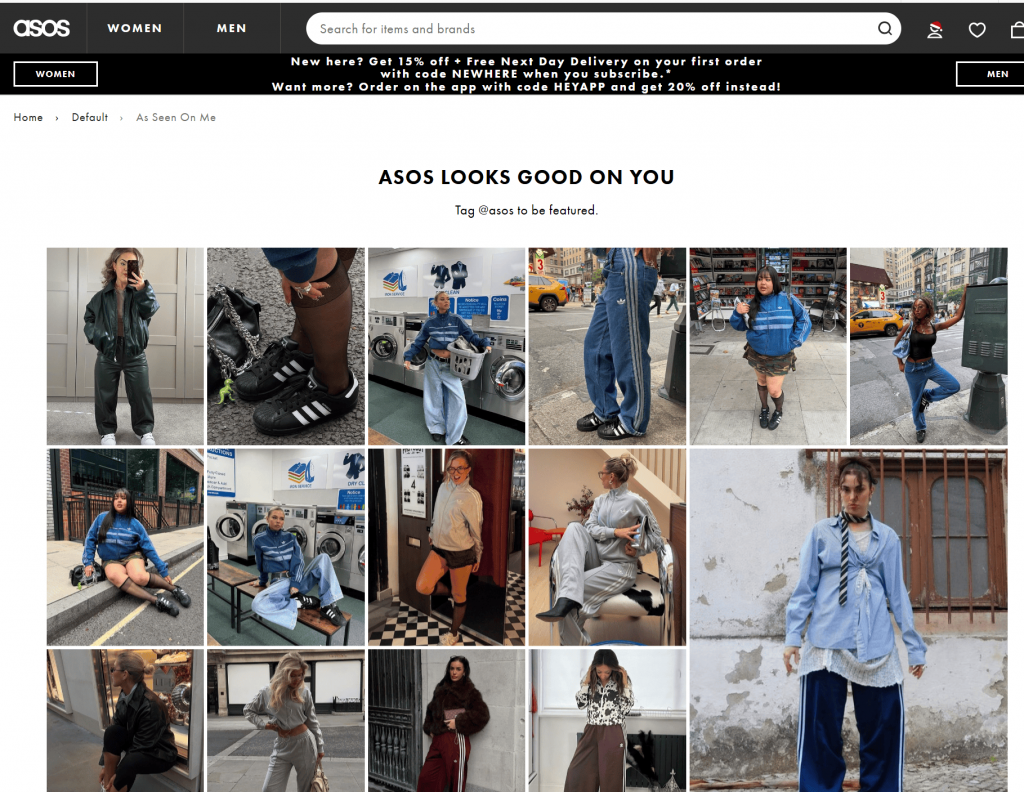
Fashion retailer ASOS created a dedicated website section featuring customer photos of people wearing ASOS clothing. Customers upload photos directly or connect through Instagram using #AsSeenOnMe. This works brilliantly because shoppers want to see how clothes look on real people with diverse body types, providing authentic sizing references and styling inspiration.
Glossier: Beauty in real life
Beauty brand Glossier built its marketing strategy around user-generated content, regularly reposting customer photos of people using its products in everyday settings, without professional lighting or heavy editing. This sets realistic expectations, showing potential customers how products look on real skin in natural light, and creates a loyal community of brand advocates.

How to get user-generated content?
Creating a successful UGC strategy requires more than hoping customers will spontaneously create content. Here are proven ways to actively encourage and collect user-generated content:
- Make it easy to create and share: Remove barriers by providing clear instructions, using simple hashtags, making it obvious how to tag your business, and ensuring your products are visually appealing. Display your social handles prominently on packaging and receipts.
- Create branded hashtags: Develop unique, memorable, short, and easy-to-spell hashtags specific to your brand. Use them consistently across all platforms and include them in social media bios, product packaging, email signatures, and throughout your physical location.
- Run contests and giveaways: Offer photo challenges, video testimonials with specific prompts, creative use challenges, or before-and-after transformations. Make contest rules clear, including what content you’re seeking, which hashtags to use, deadlines, and prizes.
- Ask directly. Request content through follow-up emails after purchases, social media posts encouraging sharing, in-store signage asking customers to tag you, and packaging inserts with sharing instructions. Many satisfied customers are willing to create content if simply asked.
- Engage with customer posts: When customers create content about your business, respond to their posts, like and comment authentically, thank them for sharing, and ask permission to repost. This encourages more UGC because customers see that you notice and appreciate their efforts.
- Feature customer content prominently: Show you value contributions by featuring UGC on your website homepage, product pages, email newsletters, social media, and in physical locations. When customers see their content featured, it validates their contribution and encourages others to share.
- Create shareable moments: Design experiences that naturally inspire sharing through attractive packaging customers want to photograph, unique product presentations, memorable in-store experiences, special events or launches, or personalization options that feel special.
- Offer strategic incentives: Consider discounts for customers who post reviews, entry into exclusive communities for active participants, early access to new products for brand advocates, or small rewards for tagged posts. Keep incentives proportional and authentic.
UGC content best practices
Maximizing the impact of user-generated content requires a strategic approach to implementation. Follow these best practices to get the most value from your UGC efforts.
- Always get permission: Before reposting or using customer content in marketing materials, obtain explicit permission. Reach out directly through comments or messages, explain how you’d like to use their content, and give proper credit when featuring their work.
- Maintain brand consistency: While UGC should be authentic, curate content that aligns with your brand values and aesthetic. Consider image quality, message alignment, diversity and representation, and overall tone when selecting which content to feature.
- Respond to all UGC: Engage with reviews, comments, and mentions, whether positive or negative. Thank customers for positive content, address concerns in negative content professionally, and show genuine interest in all customer feedback.
- Make UGC discoverable: Create dedicated Instagram story highlights for customer content, add a UGC gallery to your website, feature reviews prominently on product pages, and keep branded hashtags active and monitored.
- Use UGC across multiple channels: Repurpose content across your website, social media, email marketing, paid advertising, in-store displays, and product packaging to maximize each piece’s value.
- Track and measure performance: Monitor engagement rates on UGC posts, conversion rates when UGC appears on product pages, growth in branded hashtag usage, and website traffic from UGC sources to understand what works.
- Give credit and celebrate contributors: Always credit original creators by tagging their accounts and including their names. Consider creating customer spotlights, a hall of fame for top contributors, or special perks for active community members.
- Moderate appropriately: Establish clear guidelines for the content you’ll feature, including policies on inappropriate language, images, competitors’ products, false claims, and off-brand messaging. Moderate thoughtfully while keeping content authentic.
- Stay authentic: Don’t over-edit customer photos, fabricate reviews, pay for positive content without disclosure, or manipulate testimonials. Consumers detect inauthenticity, and getting caught can severely damage trust.
- Keep it legal: Understand the legal requirements for UGC, including obtaining permission before using content, understanding copyright and trademark implications, disclosing paid partnerships, and following the FTC guidelines for testimonials.
Frequently asked questions
UGC is a form of consumer-generated content created by existing customers who share authentic and relatable content based on real experiences. Influencer marketing relies on paid partnerships with creators who promote brands to their followers. UGC supports word-of-mouth marketing, builds brand loyalty, and often feels more trustworthy than traditional advertising.
Reach out via comment, direct message, or email and ask clearly whether they are willing to submit content for your marketing use. Specify where the content will be displayed, such as on social media or your website. This approach strengthens your brand’s community and encourages future user contributions.
Negative content can affect brand sentiment, but it also presents an opportunity to demonstrate strong customer engagement. Respond publicly with empathy and a clear solution to show accountability. This signals to your online community that you take feedback seriously.
Organic UGC often performs better than paid content because it feels more genuine. If you offer paid UGC, be transparent and work with clear agreements when collaborating with UGC creators. Non-monetary incentives, such as exclusive access or features, often work well without eroding trust.
Post UGC regularly across your social media channels while balancing it with your own content. The right mix depends on your social media platforms, audience behavior, and content marketing goals. Focus on consistency and relevance to maintain effective UGC across your own channels.
Let your customers do the selling with UGC
User-generated content helps you earn trust by showing real experiences from people who already use your products or services. Instead of leaning on traditional advertising, you rely on honest reviews, photos, and posts that speak directly to potential customers. This gives small businesses a practical way to compete based on credibility rather than budget.
As your customer base grows, so does your UGC. Each shared review or photo contributes to a body of evidence that supports purchasing decisions and fosters long-term loyalty. Over time, this creates a steady cycle where customer experiences continue to drive visibility and trust.
To make UGC effective, your website needs to surface that content clearly and consistently. When reviews, photos, and testimonials are easy to find, they support every stage of the buyer journey. Our Website Builder helps simplify this process by giving you the tools to display customer content, organize feedback, and maintain a professional presence without added complexity.