

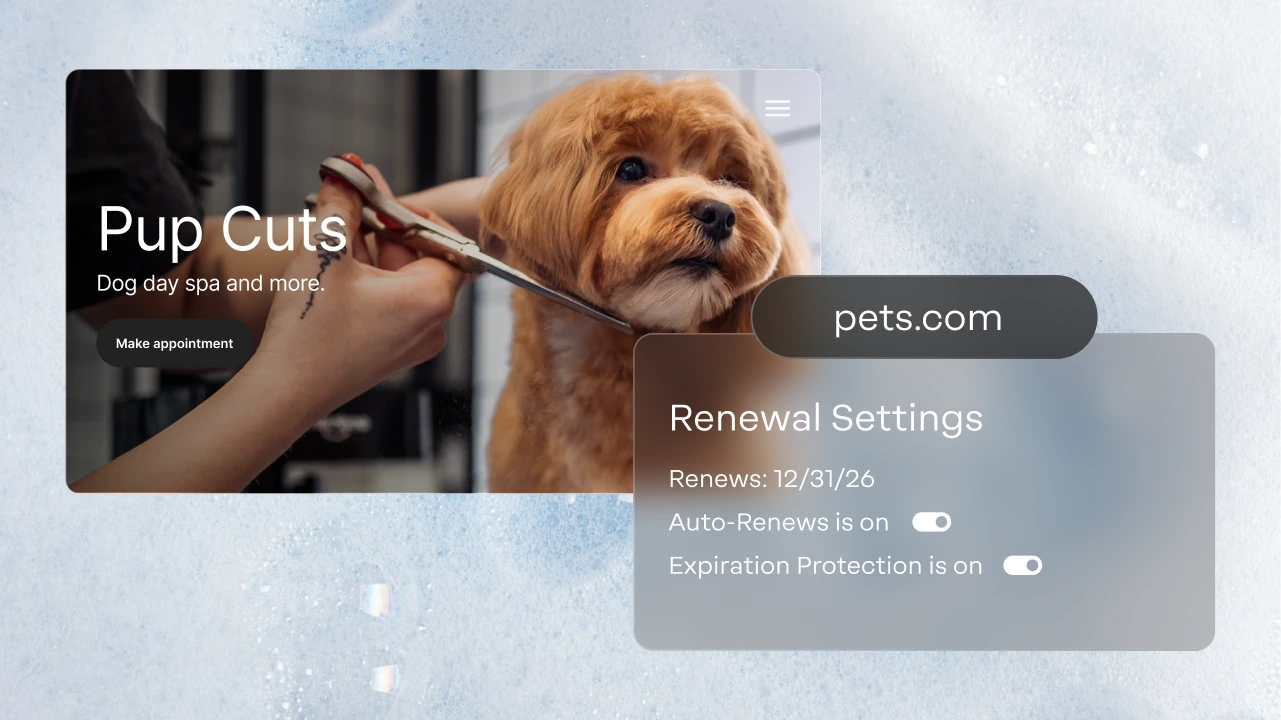

Key takeaways:
- Domain expiration protection (DEP) is worth buying, considering the significant financial and operational consequences of losing a domain.
- DEP is better than basic grace periods, helping prevent your domain from being snatched by others upon expiration.
- Even with DEP, it’s still important to keep an eye on registrations and update account information.
It gives your business a safety net that helps keep your online presence active when a renewal issue gets in the way. While domains require regular renewal, life happens: credit cards expire, billing addresses change, or renewal notices get overlooked. Domain Expiration Protection helps prevent domain loss and minimizes disruption.
Find the perfect domain
Ready to register a domain name? Check domain availability and get started with Network Solutions today.
What is domain expiration protection?
Domain expiration protection automatically renews your domain name to prevent loss due to failed payments or missed renewal dates, keeping your website and online services active.
DEP also offers a grace period, meaning your domain doesn’t become available for others to register immediately after a missed payment. This added time can help you resolve domain renewal issues before your domain is released. For readers who want to understand what happens when a domain expires, we cover that process in our guide to domain name expirations.
For example, if a business owner’s credit card and domain registration expire, DEP steps in to back them up, protecting their web properties from expiration.
Why you need domain expiration protection
When a domain expires, your website, email, and online identity can be put at risk. Domain Expiration Protection helps protect your domain from accidental loss by adding a safety net around missed renewal dates, failed payments, and other billing issues.
Without DEP, your online assets are vulnerable to the following:
- Losing access to your domain and services: Your website will go down, and your email addresses will stop working. Communications will be disrupted, and you may lose potential sales or leads.
- Domain snatching: Expired domains can become available for others to register. Cybersquatters actively monitor these, and they can hold your brand domain name “hostage” or use it maliciously. Reacquiring a snatched domain is often expensive and complex.
- Negative impact on brand and SEO: An inaccessible website affects customer trust and your brand’s credibility. Search engines will notice downtime, which can cause a drop in your SEO rankings.
With DEP, your domain remains in your hands even if you accidentally miss a domain renewal. It helps maintain your online presence by keeping your website and email active, preventing interruptions that result in lost domains or customer confusion.
Aside from maintaining continuity, DEP protects your brand by helping prevent others from registering your domain after it expires. This layer of protection helps lower the risk of domain hijacking, supports customer trust, and lets you focus on your business without worrying about immediate domain loss, especially if you manage multiple domains.
While DEP can act as a first line of defense, you should stay on top of your domain’s renewal schedule. As our Senior Director of Domain Operations, Michael Chattan, said: “Lots of different services out there, but at the end of the day, you are your own best protection. Use auto-renewal, get expiration protection like DEP, and check in on your domain. Just renewed? Perform a Whois/RDAP search to make sure that renewal went through.”
How does domain expiration protection work?
Domain expiration protection secures your domain through automated processes and extended safety nets, including the following features:
- Automatic renewal: DEP triggers a secondary, automated renewal attempt if your primary payment fails, such as from an expired card, insufficient funds, or another payment issue. When a valid payment method is available, your domain renews automatically to help prevent interruption.
- Added grace period: DEP can extend the typical 30-day grace period to up to one year, depending on your domain registrar. This keeps your domain active for longer after a missed renewal and gives you more time to resolve payment issues.
- Protection against billing issues: DEP helps prevent accidental expirations caused by outdated or incorrect billing information. It adds a safety net when payment details change, a card expires, or a renewal notice is missed.
If payment fails, you’ll receive notifications to update your billing information, add a valid payment method, and complete the renewal. DEP helps ensure your domain remains active or recoverable rather than lapsing immediately, so you can fix payment issues without interrupting your business.
How to avail of domain expiration protection
While the exact process may vary by domain registrar, here’s how to add domain expiration protection to an eligible Network Solutions domain from your account:
- Log in to your Account Manager.
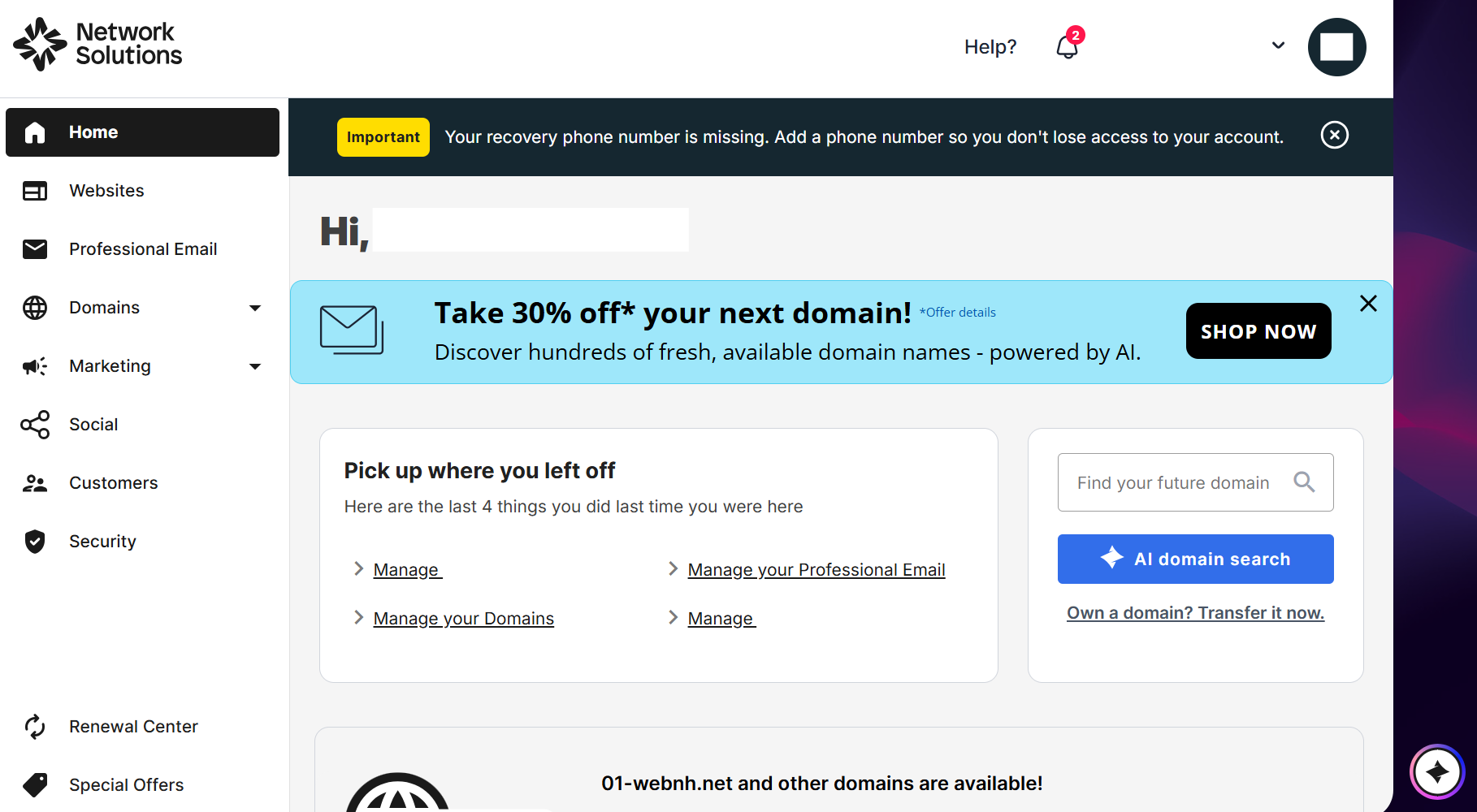
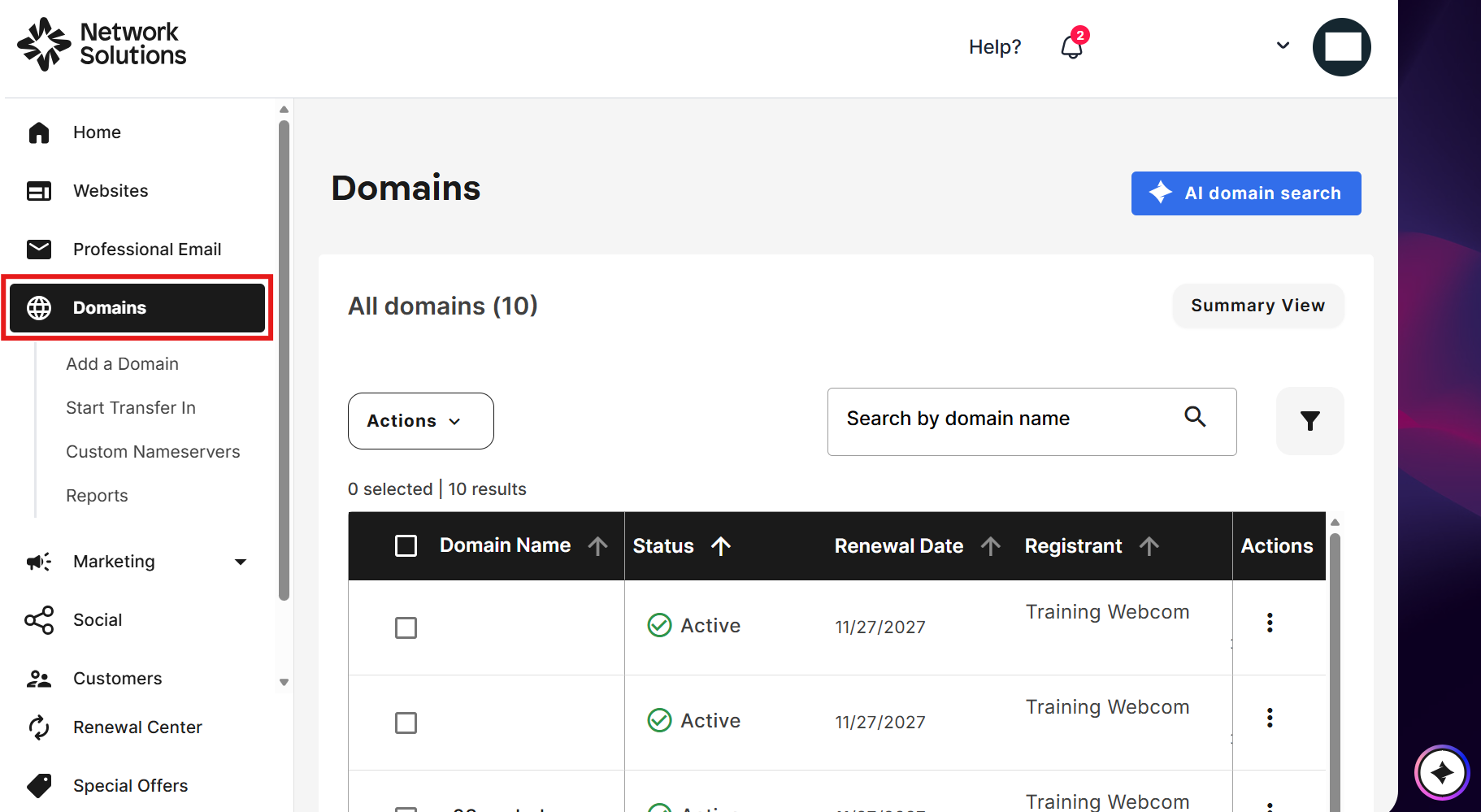
- In your Account Manager, go to Domains > Domain Expiration Protection.
- Check if the specific domain you want to protect is eligible for DEP.
- Select the domain you wish to protect.
- Enable Domain Expiration Protection for your domain.
- Ensure a valid payment method is on file for auto-renewal.
- Review and confirm the activation.
After enabling, regularly check your renewal status, ensure auto-renewal is active, and keep your billing and contact information up to date.
Disclaimer: Process may vary per provider.
Frequently asked questions
When a domain expires, your DNS and nameserver settings can stop working, making your website unreachable and disrupting email tied to that domain. Expired domains can also become available for someone else to register, making recovery harder.
Domain expiration protection is generally available for many common top-level domains, including .com, .net, and .org. Availability can vary by domain registrar, domain extension, and domain registration status.
In most cases, no. Domain expiration protection is an add-on, so you’ll usually need to renew the domain first, then enable protection for future renewal periods.
The cost depends on your domain registrar and the type of domain you own. It’s usually sold as an add-on with a renewal fee, so check your account for the current price before purchasing.
Domain expiry protection is another term for domain expiration protection. It helps protect your domain when a payment issue or a missed renewal puts it at risk.
Protect your domain from expiration with Network Solutions
Your domain name is the center of your business online. With our Domain Expiration Protection, you can protect your domain, help keep ownership secure, and make sure your domain stays safe if renewal issues come up.
Every Network Solutions domain purchase also includes free apps to help your business move forward, including Link in Bio, Social App, Marketing Calendar, Customers App, and Coming Soon Page. It’s proactive protection and practical support, built to help you break through.