

Key takeaways:
- WHOIS is a public database that provides detailed domain information.
- WHOIS lookup results reveal information such as a domain’s registrar, creation date, and expiration date, though some details may be hidden through domain privacy services.
- WHOIS helps individuals, businesses, and law enforcement agencies verify domain ownership, investigate suspicious websites, and manage online assets.
When choosing a domain for building your online presence, it’s important to know that there’s a public directory for all registered domain names. In case somebody has already taken your chosen domain name, you can use this to find out who owns it and explore options for purchasing or negotiating. This WHOIS directory provides detailed information about the ownership and registration of domain names.
The WHOIS lookup is your go-to resource for checking “who is” responsible for a certain domain or IP address. Understanding how it works and what data it provides helps you decide about domain ownership, dispute resolution, and online safety.
In this guide, we will explore the importance and purpose of WHOIS, the information it contains, and how to use it effectively. Towards the end, you’ll have a clear understanding of how WHOIS can help safeguard your online presence.
Find the perfect domain
Ready to register a domain name? Check domain availability and get started with Network Solutions today.
What is WHOIS?
WHOIS is a publicly accessible directory that contains registration information about domain names. Think of it as the internet’s address book for domain ownership, helping users identify who registered a domain and other key details associated with it.
Internet Corporation for Assigned Names and Numbers (ICANN), the organization responsible for coordinating domain name allocations, oversees the systems that make domain registration data available. WHOIS helps maintain transparency and accountability by allowing users to look up information related to a domain’s registration.
The WHOIS system operates using the WHOIS protocol specification, a long-standing method for querying registration records from a WHOIS server. Traditionally, users submit a search request to a WHOIS service, which returns registration information in a human-readable format.
A WHOIS record can include:
- Registrant information: The individual or organization that registered the domain. This may include the owner’s name, organization, and in some cases a physical address, subject to privacy settings and applicable regulations.
- Contact information: Administrative, technical, or registrant contact details, though some information may be hidden through privacy protection services.
- Domain registrar: The company that manages the domain registration.
- Registration date: The date the domain was first registered.
- Updated date: The most recent date when the domain record was modified.
- Expiration date: The date the domain registration is scheduled to expire unless renewed.
- Domain status: The current state of the domain, such as active, locked, or pending transfer.
- Nameservers: The DNS servers that help direct visitors to the correct website or online service.
Depending on the domain extension and provider, records may also contain identifiers such as a registry domain ID and other registration-related details.
Domain registrars and registries maintain WHOIS record information for specific top-level domains (TLDs), such as .com and .net. While WHOIS data is publicly available, many domain owners use privacy protection services to mask personal details from public lookups.
The WHOIS lookup has existed since the early days of the internet. It helps create accountability in the domain registration system by ensuring that every registered domain has a traceable owner, making it a valuable tool for ownership verification, research, and online security.
Your domain can be public. Your details don’t have to be.
Keep your personal contact information out of WHOIS results with Domain Privacy + Protection.

Why was WHOIS created?
The database was created as a directory to store contact information for anyone transmitting data across Advanced Research Projects Agency Network (ARPANET), a precursor to today’s Internet.
WHOIS was created to manage domain name registrations, support IP address allocations, and help ensure the smooth functioning of the DNS. As the Internet grew in the 1980s, a public directory was needed to track domain ownership and contact information.
Over time, organizations such as ICANN and Regional Internet Registries (RIRs) helped standardize the collection and distribution of registration data across the internet.
Anyone online can use the WHOIS lookup. It is a valuable source for business owners to check domain details like domain availability, examine potential infringements, and make data-driven decisions.
What is WHOIS for?
WHOIS serves multiple purposes, providing valuable information about domain ownership. Below are some use cases where WHOIS can be beneficial:
- Verifying domain ownership: WHOIS allows you to verify who owns a domain name. Knowing a domain owner is useful when you’re looking to purchase an existing domain or need to resolve ownership disputes.
- Accessing contact information: WHOIS provides access to domain owners’ contact information, including their email address and contact number. It makes it easier for you to reach out for business, collaboration, or legal matters.
- Tracking domain history: WHOIS can help you track a domain’s history, including when it was registered, who registered it, and whether there have been any changes to ownership. Users can also verify whether domain records contain correct data and identify recent changes to registration information.
- Preventing fraud: WHOIS records can help identify suspicious registration patterns and support investigations conducted by businesses, security researchers, and law enforcement agencies.
How to protect your information on WHOIS
Your domain registration information is publicly visible through WHOIS. If you use your personal information during registration, it’s accessible to anyone. While useful for transparency and accountability, it exposes you to risks such as spam, phishing, or identity theft.
Follow these tips to protect your personal information:
- Use WHOIS privacy protection: Many domain registrars, such as Network Solutions, offer WHOIS privacy protection. This service replaces your contact details with the registrar’s contact information in the WHOIS database.
- Register domains under a business name: If you’re running a business or a professional website, consider using your business information upon registration. This way, your personal details won’t be directly tied to the domain.
- Use an alternate contact email: Register a separate email address for domain-related communications. You keep your personal email address hidden, which reduces the risk of receiving unsolicited or malicious emails.
- Monitor your WHOIS data: Regularly check your WHOIS records to ensure no one has updated them. This can help determine whether someone has exposed your personal details or made unauthorized changes to your registrant information.
- Consider a trusted registrar: Choose a reputable domain registrar with strong privacy policies and reliable WHOIS protection services. Some registrars, like Network Solutions, offer additional security features that can help keep your personal information safe.
How to use WHOIS
Follow these steps to look up domain information and gain insights about a website’s registration details:
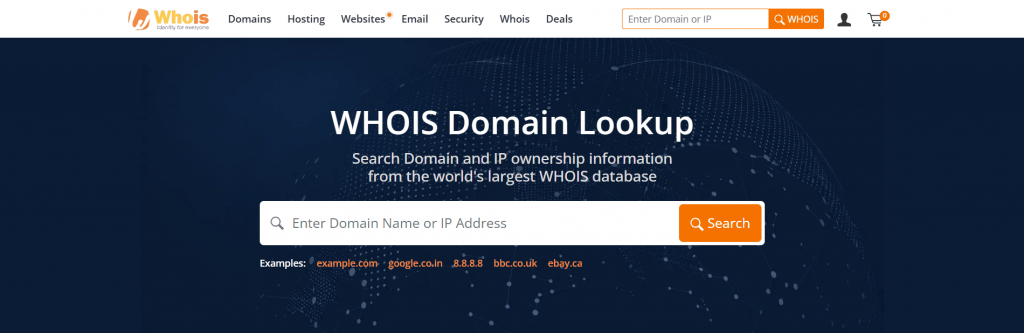
- Choose a WHOIS lookup tool: Several websites offer free WHOIS search services. The most popular for generic top-level domains are ICANN WHOIS, Whois.com, and Who.is.
- Enter the domain name: Once on the WHOIS lookup page, enter the domain name in the search bar and click Search. Make sure to input the correct domain name and domain extension.
- Review the search results: The WHOIS tool will return detailed information about the domain. The result will look like the following for the domain sample.com:
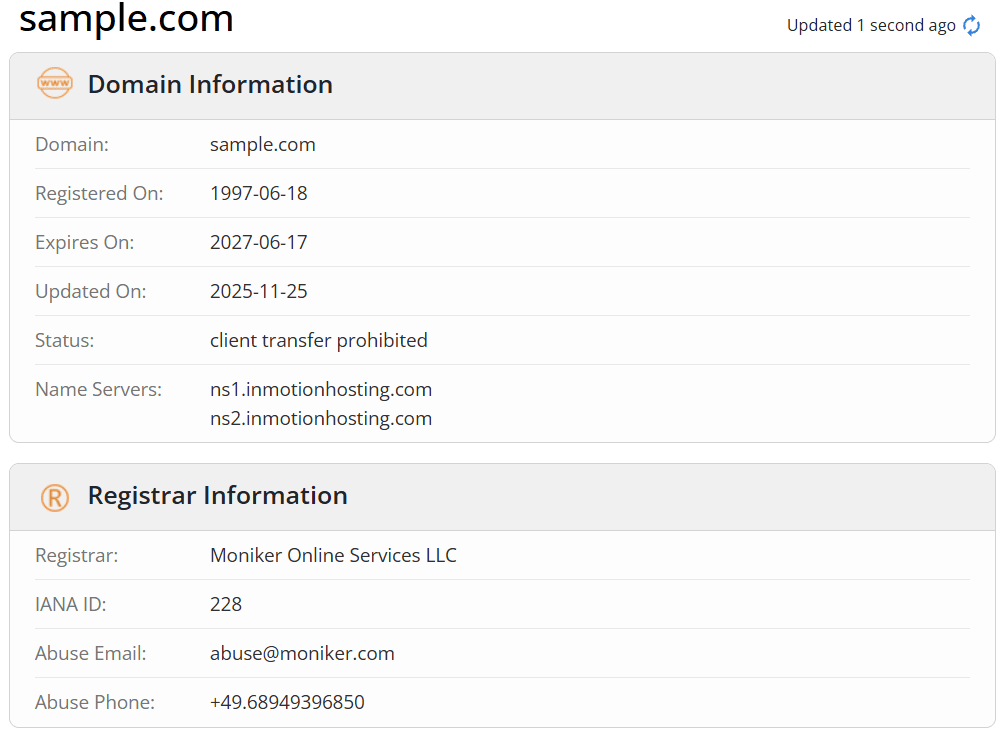
- Interpret the results: Go through the information and check the ones that matter for your purpose:
- Registrar: The company that manages the domain registration.
- Registrant: The entity that owns the domain name.
- Registrar contact information: The email, phone number, and address of the registrar
- Registrant contact information: The email, phone number, and address of the registrant
- Status: This informs whether the domain is active, expired, transferable, or in a redemption period.
- Name servers: Servers associated with the domain that handle DNS queries. They indicate which service provider directs traffic to the domain’s website.
RDAP and the future of WHOIS
As the internet continues to grow, the need for more secure, efficient, and accessible domain registration data has led to the development of the Registration Data Access Protocol (RDAP).
RDAP is a new protocol designed to replace WHOIS. It offers enhanced functionality and addresses some of the limitations of the traditional WHOIS system. RDAP is a more modern, secure, and structured way to access domain registration information. Unlike WHOIS, RDAP delivers data in a standardized, machine-readable format, making it easier for humans and automated systems to interpret and use.
Most of the domain industry still relies on WHOIS because of its simplicity and wide adoption. But RDAP will become the dominant protocol for accessing domain registration information in the future, prioritizing user privacy and data security.
To learn more about RDAP, read our guide on what RDAP is and how it works.
Frequently asked questions
WHOIS data is generally reliable, as it’s managed by accredited registrars and regulated by ICANN. However, the accuracy of the information depends on the registrant. Some may use privacy protection services to hide their details, while others may provide incorrect or outdated information.
If your WHOIS information is incorrect, it can lead to issues like losing ownership of your domain, missing important updates, or having trouble resolving disputes. Make sure to keep your details accurate and updated to avoid potential legal complications.
To change or remove your WHOIS information, contact your domain registrar. Depending on their policy for managing domain records, you can update the details through their control panel or via a form.
WHOIS information helps verify domain ownership, track a domain’s history, access contact details for business or legal purposes, and protect against fraud. It ensures transparency and accountability in the domain registration system.
Take control of your domain’s future
WHOIS gives you a clearer view of the domain landscape. Understanding it helps you make smarter decisions and maintain a stronger online presence.
The choices you make today can affect your website’s security, privacy, and long-term success. That’s why it pays to stay informed and proactive. A simple WHOIS lookup can help you verify domain information, while privacy and protection tools can reduce unnecessary risks as your online presence grows.
What you do with your domain matters. We’re here to help you make the most of it with tools that simplify domain management and help protect what you’ve built. Use our WHOIS Lookup tool to research domain information, keep your personal details private with Domain Privacy + Protection, and stay protected from accidental expiration with Domain Expiration Protection. Every domain registration also includes built-in marketing tools to strengthen your domain’s online presence.