



Key takeaways:
- A strong travel website starts with the right foundation: a memorable domain name, reliable web hosting, and a clean, user-friendly design.
- A successful travel site should make planning easier with clear navigation, high-quality visuals, helpful guides, booking tools, and mobile-friendly pages.
- Growing a travel business online takes consistent SEO updates, targeted promotion, and fresh destination content that attracts potential customers.
The travel market is growing. According to Statista, the online travel market size is expected to reach $800 billion by 2028. Additionally, people could earn around $5,000 per month through affiliate programs like Booking.com. However, earnings vary widely. Beginners often make a few hundred dollars per month, while experienced site owners can scale to several thousand dollars or more over time.
Creating a travel website can be a smart way to turn your travel knowledge, services, or experiences into a profitable business or side hustle. With the right approach, your travel site can help you reach potential customers, promote destinations or packages, and build trust with travelers before they book.
But getting started can feel overwhelming, especially if you’re building your first website. In this article, we’ll walk you through the essentials of creating a travel website, from choosing a domain name to growing your online presence.
Find the perfect domain
Ready to register a domain name? Check domain availability and get started with Network Solutions today.
10 types of travel websites
Travel websites come in many forms, depending on the audience they serve and the services they offer. Some focus on helping travelers book trips, while others provide inspiration, destination guides, reviews, or travel planning tools.
Here are some common types of travel websites:
- Hotel booking websites
- Travel blogs
- Travel planning and itinerary websites
- Flight booking websites
- Travel deals and discount websites
- Adventure and outdoor travel websites
- Local travel guides
- Cruise booking websites
- Travel forums and communities
- Review and rating websites
Hotel booking websites
Hotel booking websites help travelers find and reserve accommodations. They usually include a large database of hotels, resorts, hostels, and vacation rentals, along with prices, reviews, availability, and booking options. Many also include travel tips, destination details, and filters that let users compare stays by budget, location, amenities, and guest ratings.
Travel blogs
A successful travel blog shares personal experiences, practical tips, destination guides, and travel stories. These sites often feature engaging travel posts, original photos, and firsthand insights that help readers plan better trips. Some travel blogs also earn revenue through affiliate links, sponsored posts, ads, or paid access to premium guides and itineraries.
Travel planning and itinerary websites
Travel planning and itinerary websites help users organize trips more efficiently. They may include tools for creating daily schedules, estimating budgets, saving places to visit, and comparing transportation options. Some also provide ready-made itineraries for popular destinations, making them useful for travelers who want guidance without starting from scratch.
Flight booking websites
Similar to hotel booking platforms, these travel agency websites focus on finding and booking flights. Travelers can compare prices, flight options, and even receive alerts for fare drops. Making them ideal for budget-conscious individuals and tourists who want to achieve hassle-free processes.
Travel deals and discount websites
These travel company websites include group travel deals, discounts, and special offers from various providers. They help travelers save money on flights, accommodations, tours, and more.
Adventure and outdoor travel websites
Catering to adventure seekers, these travel and tourism websites specialize in outdoor and adventure travel experiences. They offer information on hiking, trekking, wildlife safaris, and extreme sports, along with tips for adventurous travelers.
Local travel guides
Local experts and travel bloggers create these travel and tourism websites to showcase a destination’s hidden gems and local attractions. They often provide insider tips for a more authentic travel experience.
Cruise booking websites
Cruise booking websites focus on cruise vacations. They help travelers compare cruise lines, destinations, itineraries, cabin options, and pricing. Many also support online travel bookings, making it easier for users to reserve cruise packages and plan related travel details in one place.
Travel forums and communities
These travel websites facilitate discussions among travelers. People can ask questions, seek travel tips and advice, and share their experiences, fostering a sense of community among globetrotters.
Review and rating websites
These travel company websites focus on user-generated reviews and ratings for accommodations, restaurants, attractions, and travel services. They help travelers make informed decisions based on others’ experiences, serving as a valuable resource for travel tips and recommendations.
12 basic features of a successful travel website
A travel website should do more than look good. It should help visitors explore destinations, compare options, find answers, and take action with confidence.
Let’s discuss the must-have features that contribute to the success of a travel website, whether it’s a travel agency website or a travel company website:
- User-friendly navigation
- Attractive visuals
- Search and booking functionality
- Informative content
- Mobile responsiveness
- Interactive maps
- Customer reviews and ratings
- Booking management
- Secure payment options
- Social media integration
- Newsletter signup
- Multilingual support
User-friendly navigation
A successful travel website should be easy to navigate. Visitors should be able to quickly find what they need, whether they’re looking for destination guides, travel tips, tour details, or booking options. Intuitive menus, clear categories, and a logical page structure help improve the user experience.
If you’re building your site yourself, a website builder with a drag-and-drop editor can make this easier. It lets you organize pages, menus, images, and content blocks without needing to code.
Attractive visuals
Visual appeal is important in the travel industry. High-quality images and videos showcasing destinations, accommodations, and activities can captivate visitors. Compelling visuals help travelers envision their experiences, which entice them to book through the travel website.
Search and booking functionality
Travelers visit travel and tourism websites to plan and book their trips. That’s why search and booking functionality is vital. Users should easily search for flights, hotels, tours, or other services, compare options, and make secure bookings directly on your website.
Informative content
Valuable content is the foundation of a successful travel blog website. Informative blog posts, destination guides, tips, and reviews provide travelers with insights and help them make informed decisions. Fresh and engaging content keeps visitors coming back for more.
Mobile responsiveness
Travel websites need to work well on mobile devices. Many travelers research destinations, compare prices, and book trips from their phones or tablets, so your site should load properly and be easy to use on smaller screens.
Mobile optimization also matters for search visibility. A mobile-friendly design helps keep users engaged while making it easier for search engines to understand and rank your pages.
Interactive maps
Incorporating interactive maps helps travelers visualize destinations, attractions, and accommodations. They can explore the area, plan itineraries, and understand the proximity of different points of interest.
Customer reviews and ratings
Travelers appreciate feedback from fellow globetrotters. Including customer reviews and ratings for accommodations, tours, and services builds trust. It also provides valuable insights for potential travelers. According to a study from Exploding Topics, consumers are pursuing a more authentic travel experience, which can make reviews and ratings more meaningful.
Booking management
For travel agency websites, an efficient booking management system is essential. It allows the agency to handle reservations, manage itineraries, and communicate with clients effectively.
Secure payment options
Travelers need assurance that their financial information is safe. Providing secure payment options and displaying trust seals can instill confidence in the booking process.
Social media integration
Travel is often a social experience, and travelers like to share their adventures through social media posts. Integrating social media sharing buttons enables visitors to easily share tips, blog posts, and experiences with their networks.
Newsletter signup
Encouraging visitors to subscribe to newsletters can help build a loyal audience. You can provide subscribers with tips, exclusive offers, and updates on blog posts.
Multilingual support
Catering to an international audience? Offering multilingual support or content can broaden your website’s reach and appeal.
How to create a travel website
Website building has become user-friendly enough that tools can help users with no design or coding know-how launch a website within a day.
Here’s what you need to do to publish your own travel website:
- Choose a domain name.
- Choose a reliable web hosting provider.
- Pick a website design template (or use our AI tools).
- Launch your website.
- Promote your website.
- Publish informative and engaging content.
- Keep your website up to date.
Step 1: Choose a domain name
Your domain name is your online brand identity, so choose it wisely. It should be relevant to your travel niche and easy to remember.
Here are some tips to help you select a memorable and effective domain name:
- Keep it short and simple: Short domain names are easier to remember and type. Avoid long, complex names that can lead to typos.
- Make it relevant: Your domain name should reflect the content and purpose of your travel website. Incorporate keywords related to travel or your specific niche.
- Easy to spell and pronounce: Choose a name that is easy to spell and pronounce. Complex or unusual spellings can confuse visitors.
- Avoid special characters and hyphens: Stick to letters, numbers, and hyphens (if necessary). Special characters can be confusing and make your domain harder to remember.
- Use keywords: Include relevant keywords in your domain name. This can improve your website’s search engine visibility.
- Brandable: Your domain name should be unique and brandable. It should stand out and leave a lasting impression.
- Consider your target audience: Think about the preferences and interests of your target audience. Your domain name should resonate with them.
- Avoid copyright issues: Ensure your domain name doesn’t infringe on trademarks or copyrights. Check for existing trademarks in your chosen name.
- Think long-term: Consider how your domain name will age. Will it still be relevant and meaningful in the future?
- Check domain availability: Before finalizing your choice, check if the domain name is available for registration. Many domain registrars offer search tools for this purpose.
- Choose the right domain extension: Decide on the domain extension (e.g., .com, .net, .travel). Pick an extension that matches your website’s purpose and helps people easily understand what your site is about.
- Avoid numbers and hyphens: Numbers and hyphens can lead to confusion. They’re often misunderstood when spoken and can be easily mistyped.
- Conduct a trademark search: Ensure your chosen domain name doesn’t infringe on trademarks or copyrights. This can help you avoid legal issues down the road.
- Be unique: Your domain name should be distinctive and not easily confused with existing websites. Avoid copying or mimicking other domain names.
- Test it out: Share your potential domain name with friends, family, or colleagues to get their feedback. They can provide valuable insights.
- Renewal fees: Check the domain registrar’s renewal fees. Some registrars offer low initial prices but charge significantly higher renewal fees.
- Privacy and security: Consider domain privacy protection to keep your personal information confidential.
If you’re having a hard time creating an on-brand, relevant, and catchy domain name, use our AI Domain Name Generator tool. All you have to do is enter a few prompts, and then you’ll have a list of domain names in just seconds!
Find a domain name that takes your travel brand places
Your travel website starts with a name travelers can remember. Search and register your domain with Network Solutions, then use our free tools to start building an online presence that’s built to help you break through.

Step 2: Choose a reliable web hosting provider
Choosing the right web hosting provider is important for the success of your travel website. Look for hosts that support website hosting for travel blogs and agencies.
Here are some tips on how to make an informed decision:
- Assess your website’s needs: Consider factors your website needs, such as traffic volume, content type, and specific software or platforms you’ll use.
- Uptime and reliability: Look for a hosting provider with a track record of high uptime (99.9% or higher). Downtime can deter visitors and harm your website’s reputation.
- Speed and performance: Speed matters for user experience and SEO. Choose a host with fast servers and optimization features, such as content delivery networks (CDNs), for faster page load times.
- Scalability: Ensure your hosting plan allows for scalability. As your travel website grows, you’ll need the flexibility to upgrade your resources and accommodate increased traffic.
- Customer support: Responsive customer support is vital, especially if you’re not tech-savvy. Test their support channels (live chat, email, phone) to ensure timely assistance when needed.
- Security features: Security is paramount, especially for websites that handle user data. Look for hosts that offer SSL certificates, firewall protection, and regular security updates.
- Backup and recovery options: Choose a host that provides automatic backups and easy recovery options. This helps protect your content in case of data loss or issues.
- Pricing and contracts: Compare pricing plans and contract terms. Be cautious of providers offering exceptionally low prices, as they may compromise on quality.
- User-friendly control panel: A user-friendly control panel, like cPanel or Plesk, makes it easier to manage your website, databases, and domains.
- Reviews and recommendations: Read reviews and seek recommendations from fellow travel bloggers or website owners. Personal experiences and insights can be valuable.
- Hosting features: Check the features offered, such as the number of domains you can host, email accounts, and databases. Ensure these align with your needs.
- Server location: If your target audience is primarily in a specific region, consider choosing a server location close to your audience to reduce latency.
- Money-back guarantee: Opt for a hosting provider that offers a money-back guarantee. This allows you to try their services risk-free and ensures you can get a refund if you’re not satisfied.
- Environmental responsibility: Some hosting providers are committed to eco-friendly practices. If this aligns with your values, consider a green hosting option.
If you’re looking for website hosting solutions, consider our scalable hosting plans, which offer various perks and inclusions tailored to your travel website.
Step 3: Pick a website design template (or use our AI tools)
A good website design attracts visitors and keeps them engaged. It helps your travel blog look professional and easy to navigate.
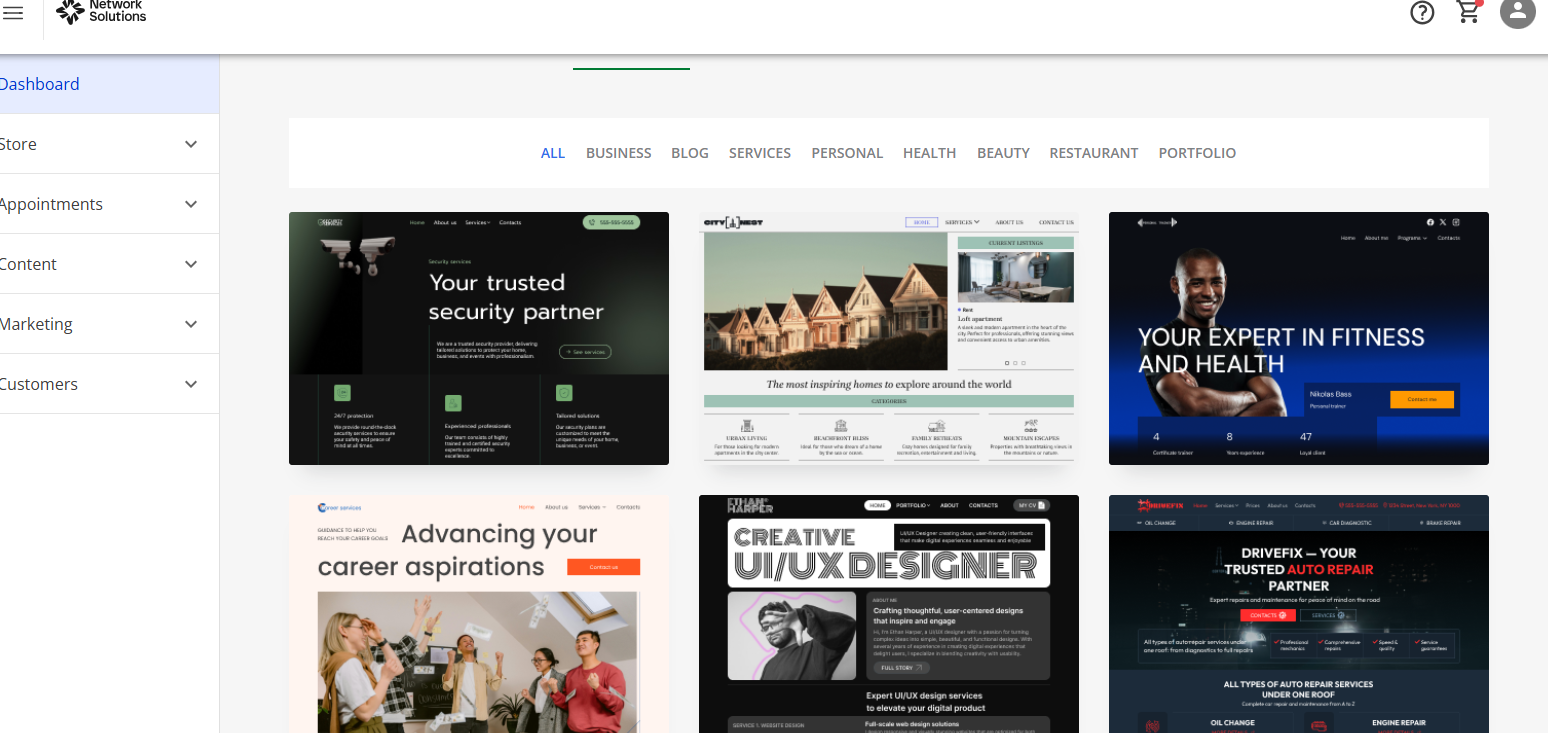
Our Website Builder lets you start with professionally designed and customizable travel templates. You can adjust layouts, colors, and features to match your brand and niche. These templates make it easy to build a site that looks great and works well.
Step 4: Launch your website
When your site is ready, make sure it works smoothly before going live. Test it on different devices to ensure everything loads properly and functions as it should. Fix any issues you find during testing to give your audience a good first impression.
As part of the launch, create an XML sitemap and a robots.txt file. These technical tools help search engines understand and rank your site:
- XML sitemap: This lists all the pages on your site so search engines can find and index them easily. Use tools or plugins to generate your sitemap and submit it through the search engine webmaster tools.
- Robots.txt file: This tells search engines which pages to crawl and which to ignore. Use it to block duplicate or sensitive content, but double-check that you’re not accidentally blocking important pages that affect rankings.
With a tested, user-friendly design and these technical steps in place. Your website will be well-prepared for search engines and ready to attract visitors from day one.
Step 5: Promote your website
Getting people to visit your travel blog means spreading the word. Use social media, email newsletters, and SEO to help your blog reach more readers. Ask your audience to share your posts and stories with their friends, too.
Don’t forget about link building. Backlinks from trusted travel websites, writing guest blogs for other sites, and submitting your blog to travel directories can all help more people find your site. These steps also boost your blog’s ranking in search engines, bringing in even more visitors.
Step 6: Publish informative and engaging content
Good content is the heart of a travel website. Write helpful blog posts, destination guides, and tips that your readers can use. Add stories and pictures to make your content interesting and easy to connect with.
Try using listicles and videos to keep things fun and fresh. Listicles, like “10 Best Beaches to Visit This Year,” are simple to read and easy to share. They break down information into clear, bite-sized pieces.
For tips on writing great lists, check out HubSpot’s guide. Videos are also a great way to show off destinations. They can help your readers see and feel what a place is like. Mixing these formats makes your blog more interesting and helpful.
Step 7: Keep your website up to date
Update your travel website regularly with fresh content, expert tips, and the latest news about your adventures and destinations. An active site keeps visitors engaged and encourages them to return.
When creating new content, focus on your audience’s needs. Think about their traveler intent. Are they looking for ideas, planning a trip, or ready to book? Tailor your posts to answer these questions and provide value.
For example:
- Informational intent: Write posts like “Top 10 Beaches in Greece.”
- Navigational intent: Include guides such as “Best flights to Thailand.”
- Transactional intent: Add content like “How to book hotels in Canada.”
Use keyword research tools like Google Keyword Planner, Ahrefs, SEMrush, or Moz Keyword Explorer to find the best keywords for each intent. This helps your content rank higher in search results and attracts more visitors.
Keeping your site updated with audience-focused content will improve your engagement and enhance your visibility in search engines.
Frequently asked questions
Start by choosing a domain name that reflects your travel niche or business. Then, select a reliable hosting provider, choose a website builder or design template, add important pages, and publish helpful travel content. Your site should have clear navigation, mobile-friendly pages, strong visuals, and secure booking or contact options.
It would depend on your audience, location, and business model. Luxury travel, destination weddings, adventure travel, family travel, eco-tourism, wellness retreats, and group tour packages can all be profitable because they often serve travelers with specific needs and higher purchase intent.
Costs vary significantly, ranging from just a couple of hundred dollars for a basic travel blog using a premium plugin to tens of thousands for a complex, custom-coded booking platform. A basic informational site with essential booking functions typically starts at $5,000 to $10,000.
Yes, you can build a basic travel website for free using platforms like Google Sites. However, free versions often come with limitations, such as platform ads and restricted features, and you will still need to pay for a custom domain name.
The best builder for a travel agency depends on your requirements for complexity and deployment speed, but for a fast, easier setup, our Website Builder is a great option. It offers AI tools that can simplify the process and generate a full, ready-made website for your business in minutes; the AI Writer, which spins up compelling website copy and content; and the AI Logo Builder, which creates a custom, eye-catching logo to establish your brand.
Based on SEMrush global traffic data for the “Travel and Tourism” category, Booking.com is consistently ranked as the number one travel website. It typically receives hundreds of millions of monthly visits, positioning it far ahead of other major online travel agencies and review sites, such as Trip.com and TripAdvisor.
Streamline your travel website-making today!
You shouldn’t hold back from creating your travel website, because your competitors have also taken their businesses online. You don’t want to be behind and risk losing your customers to them. That’s why you need a reliable website builder to simplify your website-making.
Use our AI Website Builder to launch your travel website in minutes.
No time to DIY? Our Website Design Services team of experienced website designers are ready to help you.