

Key takeaways:
- Domain backordering lets you attempt to register an expired domain.
- Success isn’t guaranteed—if multiple people backorder the same domain, it typically goes to a private auction.
- Choosing the right backorder provider involves evaluating its services to align with your budget and priorities.
When buying a domain or during a domain registration, it’s possible that someone else already owns your desired domain. If you’re set on a specific name and don’t want an alternative, a domain backorder is your next best option. Using a backorder lets you reserve a registered domain name for when it becomes available.
This guide explains the steps behind how domain backorders work, sets clear expectations, and helps you take control of your next domain search.
What is domain backordering, and why does it matter?
A domain backorder is a service that allows you to attempt to register a domain name as soon as it becomes available. Put simply, when you backorder a domain, you place a request with a provider who attempts to secure the domain the instant it drops.
This matters for small business owners because the best domain names often get taken early. Many sit unused, held by previous owners or investors.
That’s why domain backordering gives you another chance to secure a brand-aligned, backorder domain name, though it does not guarantee ownership.
Why use domain backorders?
Some people consider using domain backorders to secure premium domains that would otherwise cost significantly more at auction. It’s also a common tactic for future projects, indirect SEO gains, or brand protection against competitors.
If multiple buyers want the same domain name, having a backorder in place gives you a competitive edge over manual registration.
Here are the common motivations behind why people use domain backorders:
- To secure a desired name: Get a brandable, keyword-relevant, or short domain already registered by someone else
- To automate acquisition: Let the service monitor expiration dates and attempt the registration for you
- To save on costs: Potentially avoid high auction prices or paying a domain squatter
- To have a strategic advantage: Reserve domains for future ideas before anyone else can get them
- To get SEO value: Capture older domains with a clean history that may offer SEO benefits, though ranking improvements are never guaranteed
- To help build a brand: Strengthen recognition with a memorable domain
Real-world scenarios where backordering helps
Domain backordering solves practical problems for small businesses in competitive markets, such as:
- Brand protection: A local artisan finds that someone registered her exact brand name, but it’s now inactive. She sets a backorder to claim it if it expires.
- Product expansion: A retailer launching a new line wants the matching product domain. It’s currently unavailable, but placing a backorder ensures she gets a chance if the registration lapses.
- SEO value: An expired keyword-rich domain still gets backlinks and traffic. A marketer places a backorder, acquiring a domain to capitalize on its legacy of authority.
Find the perfect domain
Ready to register a domain name? Check domain availability and get started with Network Solutions today.
How domain backordering works (step-by-step)
The domain backorder process involves taking action at various stages of a domain’s lifecycle, where you:
- Track the domain’s status.
- Choose a backorder service.
- Place your backorder.
- Monitor auction activity.
A reliable backorder service will help you monitor these phases closely and attempt registration the exact moment the domain drops. So it helps to understand what happens after the expiration lifecycle begins.
Step 1: Track the domain’s status
Domains move through a predictable expiration cycle before becoming available for registration. Understanding this timeline helps you plan your backorder strategy effectively.
The lifecycle begins when a domain reaches its expiration date.
- Grace period (30-45 days): The owner can renew a domain without penalty.
- Redemption period (30 days): If the current owner misses the grace period, they have another opportunity to renew, but with a penalty fee.
- Pending delete status (five days): Once the redemption period expires, the domain enters a processing stage before the registry deletes it and re-entered into the availability pool.
Use WHOIS lookup tools to check a domain’s current status and expiration date. These tools display registration details, nameserver information, and important dates that help you time your backorder placement effectively.
For added security after acquiring a domain, consider Private Domain Registration to protect your personal information from public WHOIS databases.
Step 2: Choose a backorder service
Different backorder services offer a range of features and price points. Popular options include SnapNames, DropCatch, and NameJet, which specialize in monitoring expired domains and attempting rapid registration the second it is no longer registered to its previous owner.
When you choose a domain backorder service, you’re hiring a specialized provider that watches your target domain closely and tries to register it with a registrar the instant it becomes available. These services use automated systems to process faster than manual registration.
Likewise, we provide domain services that help you manage your domain portfolio effectively. If you already own domains elsewhere, you can consolidate them through Domain Transfer to simplify management.
Step 3: Place your backorder
Placing a backorder puts you in a queue for a specific domain. The service uses monitoring tools and automated bots to attempt to register the domain the moment it drops.
You’ll typically pay an upfront fee to place the backorder. The cost covers the service’s attempt to acquire the domain after submitting your request—this fee doesn’t guarantee success.
The automated system continuously checks the domain’s status and triggers registration attempts during the narrow window when it becomes available. This happens in milliseconds, reinforcing the importance of automation for a timely registration attempt.
Important: Domain backorder services frequently adjust their pricing and auction rules. Always confirm the final price directly on the service’s website before placing an order through your account.
Step 4: Monitor auction activity
When multiple people backorder the same domain, it triggers a private auction among those who placed backorders. A private auction is a time-limited bidding process where only backorder participants can bid, not the general public (unlike standard public auctions).
Here’s how the typical auction process works:
- You receive a notification when the auction begins. The bidding window usually lasts 72 hours, though this varies by platform.
- Participants submit bids during this period, and the highest bidder wins and purchases the domain.
- Domain prices ranged based on desirability. Expect to pay anywhere from tens to hundreds of dollars or more, depending on competition and the domain’s perceived value.
Note: Backordering does not guarantee you’ll win the domain. Multiple factors affect success rates, including competition, timing, and auction dynamics. Plan your budget accordingly and have backup options ready.
To avoid losing valuable domains in the future, consider getting Domain Expiration Protection for domains you already own.
Ready to register a domain name?
Check domain availability and get started with Network Solutions today.

What to consider when choosing a domain backorder service
When selecting a backorder service, you should consider factors that affect your experience and success rate during the process, such as:
- Refund policy
- Dashboard and alerts
- Transparency of auction rules
- Backorder volume and success rate
- Notification system and support
- Platform automation and speed
Refund policy
Every backorder service handles failed attempts differently. Some platforms return your backorder fee as account credits if you don’t win or choose to cancel, letting you try again on a different domain. Others keep the money regardless of the outcome, meaning refunds are not universally granted.
That’s why, before committing, check whether the service offers compensation for unsuccessful backorders. This affects your overall cost if you need to backorder multiple domains before succeeding.
Dashboard and alerts
If you’re managing multiple domains or tracking dozens of expirations, choose a platform with a user-friendly dashboard and domain alerts. A clean interface saves time and reduces the risk of missing important notifications.
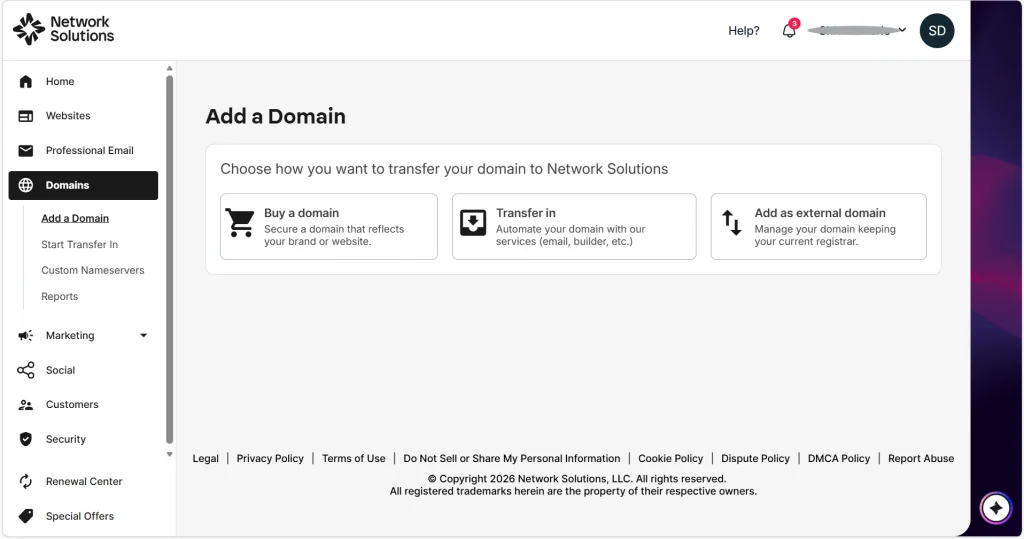
Look for platforms that let you monitor all your backorders in one place, check status updates at a glance, and set custom alerts for key events so you’re notified immediately. We offer an intuitive domain management dashboard that helps you efficiently track and organize your domain portfolio.
Transparency of auction rules
Auction rules vary widely across platforms. Some services automatically enroll you in a private auction when multiple people backorder the same domain. Others notify you first and let you decide whether to participate and place a bid.
Check how transparent the platform is about starting bids, auction duration, and bidding increments. Clear rules help you budget appropriately and avoid surprise costs during the auction process.
Backorder volume and success rate (if available)
Larger platforms often have higher success rates because they use faster, more sophisticated systems to handle many domains simultaneously. These platforms can attempt registration more quickly when a domain becomes available.
The trade-off is increased competition. Popular services attract many users, which means multiple people might backorder the same domain you want. This drives up auction prices and reduces your odds of winning at a lower cost.
Choose based on your priority and budget. If the domain is important to your business, a platform with proven speed might justify higher auction costs. For less urgent needs, smaller services may offer better value.
Notification system and support
Customer support and notifications are important to non-technical users who require guidance throughout the backorder process.
A reliable service ensures you’re promptly notified and your account doesn’t miss bidding opportunities. Quality support helps you understand complex situations, such as unexpected auction rules or status changes for your backordered domains.
Platform automation and speed
Faster systems attempt registration the instant a domain becomes available, often within milliseconds. This speed advantage increases the likelihood that the domain will be successfully registered before others, which is why a professional backorder system is more effective than manual registration.
Look for clear indicators of high-quality service, such as:
- Consistent drop-time performance
- Real-time status updates
- Reliable queueing without requiring technical knowledge.
These features signal that the platform invests in robust infrastructure.
Faster platforms may catch more names, but they also attract more bidders. Be ready for potential auctions and higher final prices when using premium services.
Keep expectations realistic. No service can guarantee a catch. Speed improves odds but doesn’t ensure outcomes, especially for highly desirable domains where competition is fierce.
What happens if you don’t win the domain?
Losing a backorder auction doesn’t mean your opportunity ends. Alternatives, such as running anew search or exploring expired domain auctions, can help you secure a viable domain.
Some services offer credit rollover, letting you apply your backorder fee toward a different domain attempt. Check your platform’s policy to understand what happens to your investment after an unsuccessful bid.
The domain you lost may be relisted on public auctions where anyone can bid, not just backorder participants. You can still attempt to purchase it there, though competition typically increases in public auctions.
Consider these alternatives if backordering doesn’t work:
- Negotiate directly with the current owner if the domain doesn’t expire. Many domain owners are willing to sell registered domain names for the right price, especially if they’re not actively using them.
- Use domain brokers who specialize in acquisition negotiations. Brokers handle outreach, negotiation, and transfer logistics for a fee or percentage of the sale price.
- Rebrand strategically by choosing a different domain extension or variations of your desired name. When your first choice is unavailable, sometimes a .net or .co extension works just as well for your business goals.
Common misconceptions about domain backorders
Understanding what domain backordering can and cannot do helps set realistic expectations and prevents disappointment during the registration process.
Many have incorrect assumptions, particularly about expired domains. Here are some common misconceptions to clarify:
- Domain backordering is illegal.
- Backordering guarantees ownership.
- All domains are eligible for backordering.
- You aren’t notified about auctions.
Domain backordering is illegal
Domain backordering is completely legal. The practice involves registering domains that have expired and returned to the available pool, which is a legitimate part of domain registration.
However, ethical considerations matter. Avoid backordering domain names that clearly infringe on active trademarks or target brands with the intent to extort money from the rightful owners. These practices, known as cybersquatting, can lead to legal disputes and financial penalties.
Always respect the intellectual property of the original owner during registration.
Backordering guarantees ownership
Placing a backorder creates an opportunity to register a domain, not a definitive guarantee that you will become the new owner.
Success depends on multiple factors, including competition, platform speed, and auction outcomes.
When multiple people backorder the same domain, a competitive process ensues. The domain goes to the highest bidder in the private auction, not necessarily the person who placed the backorder first.
All domains are eligible for backordering
Certain domains cannot be backordered due to registry restrictions, legal holds, or special status designations. Premium domains, those in legal disputes, or names in redemption with active owners pursuing to renew registration, may be unavailable.
Verify the domain’s current status before placing a backorder. Domains in certain top-level domains (TLDs) may have different expiration rules that affect backorder eligibility.
You aren’t notified about auctions
Some backorder services automatically enroll you in auctions without prior notification. You may receive an alert only after the auction has already begun, leaving limited time to adjust your bidding strategy.
Proactively monitor your account and status so you stay informed and notified. Review your service’s notification policies carefully. Understand when and how you’ll be contacted about auction activity to avoid missing important opportunities or facing unexpected charges.
How to maximize your chances of success
Strategic planning improves your odds of securing a backordered domain. Follow these tactics to increase your chances of a successful domain backorder.
- Use services with fast, automated dropcatching systems: Speed matters when domains become available. Platforms with proven automation can attempt registration within milliseconds of a domain dropping, giving you a significant advantage in acquiring.
- Monitor domain status closely or use alert tools: You shouldn’t rely solely on the backorder service for updates. Set up your own monitoring using WHOIS tools or domain tracking services to stay informed about expiration dates and status changes of your desired perfect domain name.
- Backorder early rather than waiting until the last phase: Last-minute backorders may miss the window entirely if the domain drops earlier than expected. Placing your backorder weeks before the expected drop date ensures you’re in the queue.
- Avoid trademarked or highly competitive names unless you’re prepared to bid: Many domains with obvious commercial value or trademark connections attract more competition and higher auction prices. Budget accordingly to save up if you’re targeting these premium names.
- Consider bundling with services like private registration or domain protection: Once you successfully acquire a domain through backorder, protect your investment with security features like domain privacy protection to prevent unauthorized transfers and keep your registration information private.
Frequently asked questions
A domain backorder monitors an expiring domain and automatically attempts to register it as soon as it becomes available. If multiple people backorder the same domain, it is put up for a private auction where the highest bidder wins.
The timeline varies based on the domain’s expiration cycle, typically taking 60-75 days from initial expiration to final drop. You’ll need to monitor the domain through the grace period, redemption, and pending delete phases.
No, domain backorders are not guaranteed. Success depends on competition, platform speed, and auction outcomes if multiple people backorder the same domain.
Most expired domains can be backordered, but some are ineligible due to registry restrictions, legal holds, or premium status designations. Check the domain’s status before placing a backorder.
When multiple people backorder the same domain, it triggers a private auction among backorder participants. The highest bidder within the auction window wins the domain.
Secure your perfect domain and start building your brand
A domain backorder provides a path to acquiring domains that are currently unavailable. While success isn’t guaranteed, it remains an excellent strategy for pursuing high-priority domains that align perfectly with your website, brand, or business goals.
We provide the tools and support you need to confidently manage your domain portfolio. Plus, every domain purchase includes access to marketing tools to jumpstart your online presence, including Link in Bio, Social App, Marketing Calendar, Customers App, and a Coming Soon Page.
Whether you’ve successfully acquired a domain through backordering or you’re protecting names you already own, we help you build a strong foundation.
Ready to find the perfect domain for your business? Search for and buy domain names with us today.